
In the Kansas City metro, the right time to turn on your irrigation system is after the last frost — usually late April in Olathe and Johnson County — once overnight temperatures stay reliably above freezing and the ground has fully thawed. Start too early and you risk cracked pipes; rush the valves and you risk a burst line. This checklist walks you through a safe spring start-up, step by step.
Winter is hard on a sprinkler system even when it’s properly blown out. Freeze-and-thaw cycles shift heads, crack fittings, and loosen the backflow preventer. A careful start-up catches that damage before it floods your yard — and gets your lawn watering efficiently for the season ahead.
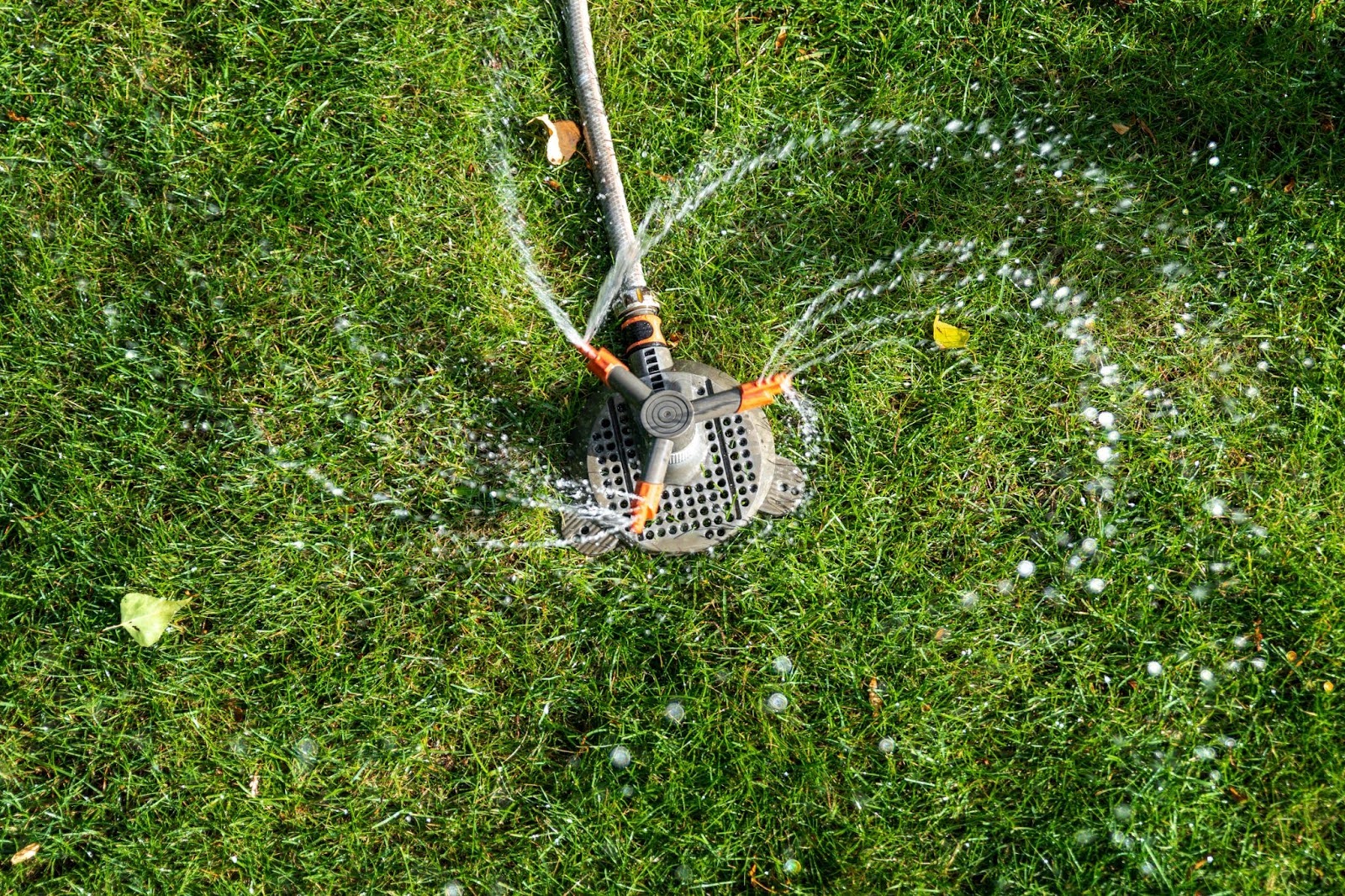
When should you turn on your sprinklers in Kansas?
Wait until the last frost has passed — in the Olathe area that’s typically late April, though a cold snap can push it into early May. Two quick checks before you start:
- Overnight lows are consistently above freezing with no frost in the forecast.
- The ground is thawed — dig down about 12 inches; if you hit frozen soil, wait another week or two.
Turning on while the ground is still frozen is the single most common (and most expensive) mistake — water left in the lines can freeze and crack pipes you just paid to protect.
The spring start-up checklist
- Walk the property and inspect for winter damage. Before any water flows, look for shifted or broken sprinkler heads, cracked valve boxes, exposed or heaved pipes, and loose backflow components. Note anything that needs attention.
- Set the controller to manual mode. You’ll be testing zones one at a time, so you want manual control — not the automatic schedule — while you inspect.
- Close the backflow bleeder valves. The small bleeder screws on your vacuum breaker are opened for winter; use a flathead screwdriver to close them (turn until perpendicular) before pressurizing.
- Open the main valve slowly. Find the main shutoff (often in the basement, crawl space, or a ground-level box) and open it a quarter-turn at a time, pausing about 15 seconds between turns. Opening it all at once causes a “water hammer” — a pressure surge that can blow fittings and pop heads.
- Pressurize the backflow preventer gradually. Open its large valves a quarter-turn until parallel with the pipe, and watch for drips, spray, or hissing that signal a hidden leak.
- Test each zone, one at a time. Let the lines fill, then run each zone individually. Confirm every head pops up, sprays evenly, and isn’t leaking at the base.
- Check and adjust the heads. Heads shift over winter; a tilted head waters the driveway instead of the lawn. Straighten, clear, or flag any that need replacing.
- Program your schedule and monitor. Set your watering times — start with shorter run times than mid-summer, since spring lawns need less — then watch the system over the next one to two weeks for leaks or dry spots.
Mistakes to avoid
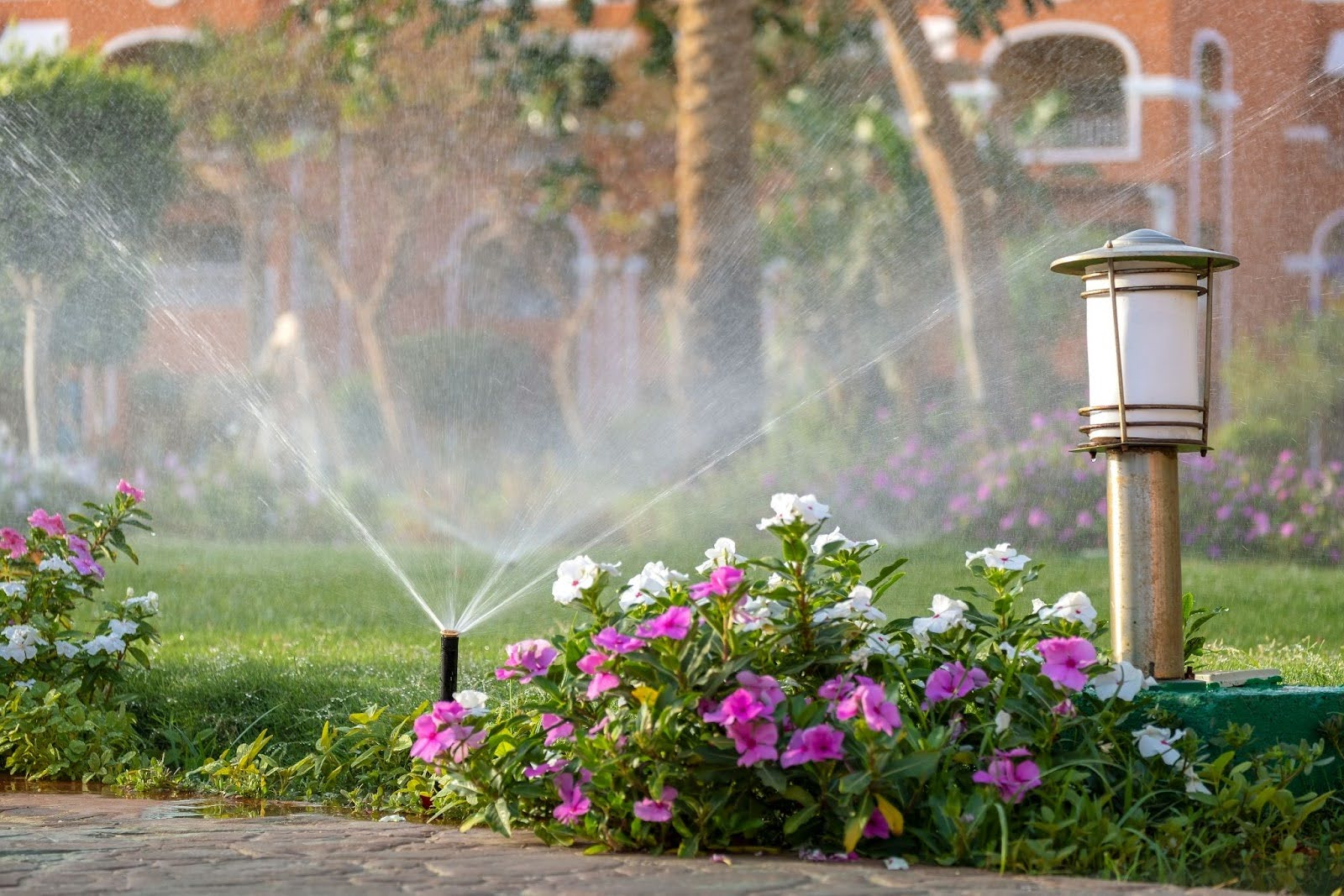
Two errors cause most spring start-up damage: turning on too early (frozen ground cracks pipes, and over-watering cool-season grass invites runoff, a higher water bill, and fungal disease), and opening the main valve too fast (the resulting water hammer is a leading cause of blown fittings). Go slow on both and you avoid the vast majority of repair calls.
When to call a pro
If your system was winterized by a pro, it’s often easiest to let them open it back up. And if your walk-through turned up damage — a cracked line, a leaking backflow, a zone that won’t run — that’s the point to stop and get it diagnosed. Misjudging a valve or backflow repair usually costs more than the fix itself.
MW Lawn & Landscape handles professional sprinkler start-up & backflow testing across Olathe and Johnson County, so your system comes online safely and watering evenly. If start-up reveals a problem, here’s how to spot signs your irrigation system needs repair, and our full professional irrigation services in Olathe cover everything from diagnostics to drip irrigation for Olathe lawns.
We’ve kept lawns green across Olathe and Johnson County for 25+ years. Request a free quote or call (913) 829-4949 — and come fall, don’t skip your fall sprinkler blowout so next spring’s start-up is just as easy.
FAQs
When should I turn on my irrigation system in Kansas?
Wait until after the last frost — typically late April in the Olathe and Johnson County area, sometimes early May after a cold snap. Make sure overnight temperatures stay above freezing and the ground has fully thawed before you start, or you risk cracking pipes.
How do I turn on my sprinklers after winter?
Inspect for winter damage, set the controller to manual, close the backflow bleeder valves, then open the main valve slowly (a quarter-turn at a time) to avoid a water hammer. Pressurize the backflow, test each zone one at a time, adjust any shifted heads, and program your schedule.
Why shouldn’t I open the main valve all at once?
Opening it fully and quickly creates a water hammer — a sudden pressure surge that can burst pipes, loosen fittings, and pop sprinkler heads off. Open it gradually, pausing about 15 seconds between quarter-turns.
How do I know if my system was damaged over winter?
Walk the property before turning on the water and look for shifted or broken heads, cracked valve boxes, exposed pipes, and a leaking backflow preventer. When you test the zones, watch for low pressure, uneven spray, or leaks at the base of the heads.
Can I turn on my sprinkler system myself, or should I hire a pro?
You can handle a basic start-up if you’re comfortable with the main valve and backflow preventer. If your system was professionally winterized, or if you find damage during the walk-through, it’s worth having a pro open it and make repairs. Call (913) 829-4949 for help.