
For years, the standard fall advice was simple: cut everything in the beds down to the ground before winter. We now know that’s not the best approach and in some cases it actively hurts your plants and the beneficial insects and birds that depend on them. The smarter method is to cut back what needs it and leave the rest standing until spring. Knowing which is which is the whole game, and it’s what turns a fall bed cleanup from a blind haircut into real plant care. Whether you do it yourself or have a professional fall bed cleanup handle it, here’s the checklist.
Below: what to cut back now, what to leave standing until late winter, why ornamental grasses are their own case, and how to cut back correctly.
THE SHORT ANSWER Don’t cut everything back in fall. Cut back perennials that are diseased, pest-prone, or mushy after frost peony, bearded iris, hosta, garden phlox, bee balm. Leave ornamental grasses and seedhead perennials (coneflower, black-eyed Susan, sedum) standing through winter for the birds, pollinators, crown protection, and winter interest, then cut those back in late winter before new growth. Ornamental grasses especially should NOT be cut in fall. |
Cut Some, Leave Some: the Modern Approach
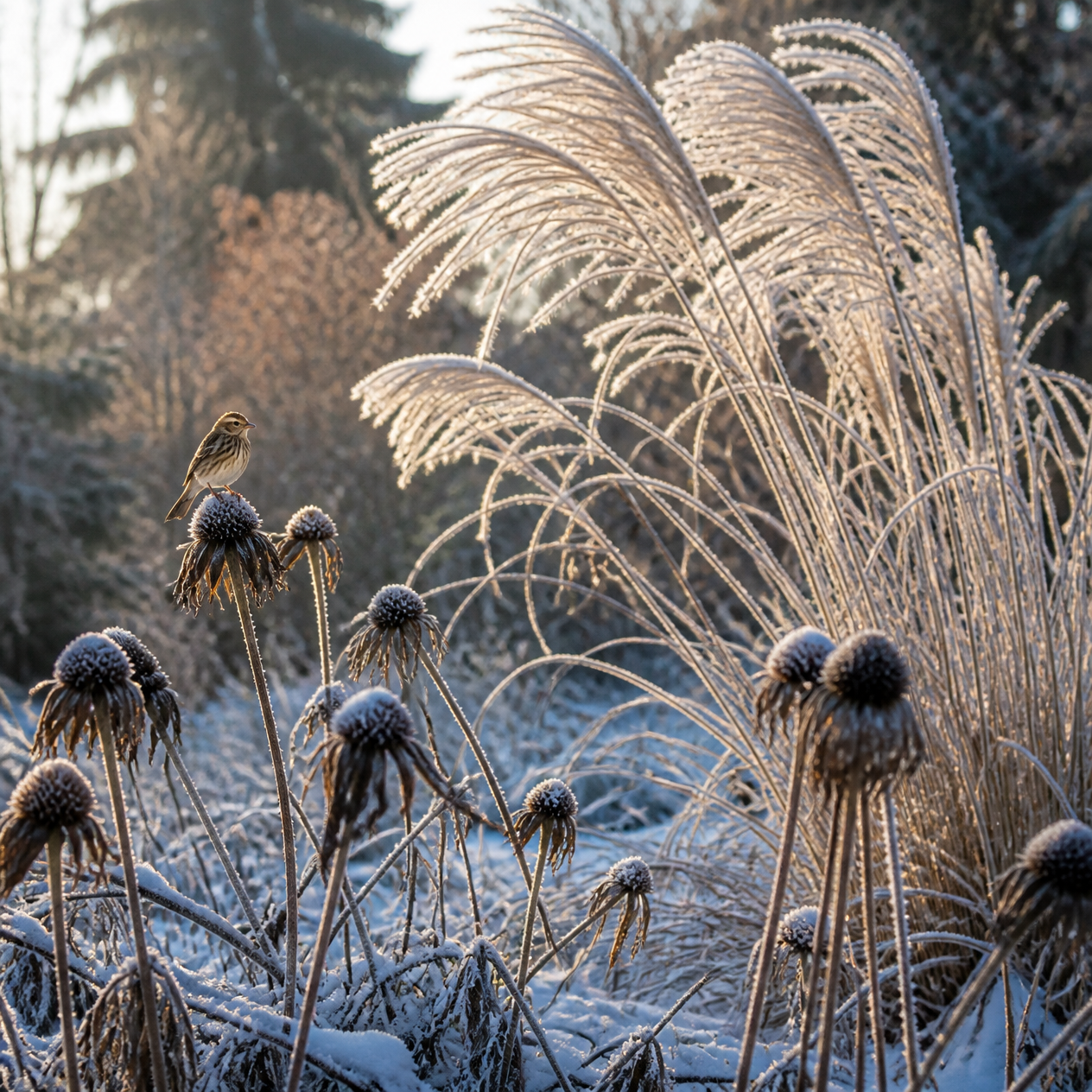
The reason the old ‘cut it all down’ rule has fallen out of favor is that standing perennials do real work over winter. Their hollow stems shelter native bees and other beneficial insects through the cold. Their seed heads feed birds goldfinches live on coneflower and black-eyed Susan seeds in winter. Their standing foliage catches snow that insulates the plant’s crown, and in a Kansas winter that protection matters. And they look good: ornamental grasses and seed heads catching frost and snow are most of what gives a winter garden any life at all.
So the goal of a fall bed cleanup isn’t to strip the beds bare. It’s to remove the plants that cause problems if left standing disease carriers and mushy, flopped foliage while leaving the ones that help. Kansas native-plant experts, including the Dyck Arboretum, make exactly this case for leaving grasses and seed heads up through winter.
What to Cut Back in Fall
These are the plants worth cutting now. Most are on the list because leaving them standing invites disease or pests, or because they simply turn to mush after the first hard frost:
| Cut back in fall | Why |
|---|---|
| Peony | Cut to the ground removing the foliage prevents botrytis and leaf blight from overwintering |
| Bearded iris | Trim fans and clear debris to deny the iris borer a place to lay eggs |
| Hosta | Collapses to mush after frost; removing it denies slugs an egg-laying site |
| Garden phlox & bee balm | Prone to powdery mildew cut and remove to reduce next year’s spores |
| Daylily | Tidy up the spent, floppy foliage once it browns |
| Anything diseased or mushy | Remove and bag it (don’t compost diseased material) to stop it spreading |
| Not sure what to cut and what to leave? We do the thinking and the work the beds come out clean and the right plants stay standing. Professional fall bed cleanup request a free quote or call (913) 829-4949. |
What to Leave Standing Until Spring
These earn their keep over winter. Leave them up, enjoy the winter interest, and cut them back in late winter February or March just before new growth starts:
| Leave standing | Why |
|---|---|
| Ornamental grasses | Winter interest + crown protection; cutting in fall risks crown rot (see below) |
| Coneflower & black-eyed Susan | Seed heads feed goldfinches and other birds all winter |
| Sedum (Autumn Joy, etc.) | Sturdy seed heads hold snow and look striking through winter |
| Russian sage, lavender, butterfly bush | Semi-woody cut these in spring; a fall cut can kill them |
| Mums & marginally hardy perennials | Leaving the foliage protects the crown through a hard winter |
| Native perennials with hollow stems | Shelter overwintering native bees and beneficial insects |
The pattern is easy to remember: if a plant is diseased, pest-prone, or turns to mush, cut it; if it has sturdy stems, seed heads, or winter structure, leave it.
Ornamental Grasses Are Their Own Rule
Ornamental grasses miscanthus, switchgrass, feather reed grass, little bluestem are the most common fall-cleanup mistake. They should not be cut in fall. Left standing, the dormant clump protects its own crown from winter wet, and the plumes are the best winter interest in the garden. Cutting a grass down in fall exposes the crown to sitting water and ice, which can cause rot, and strips the one thing that looks alive in a January bed.
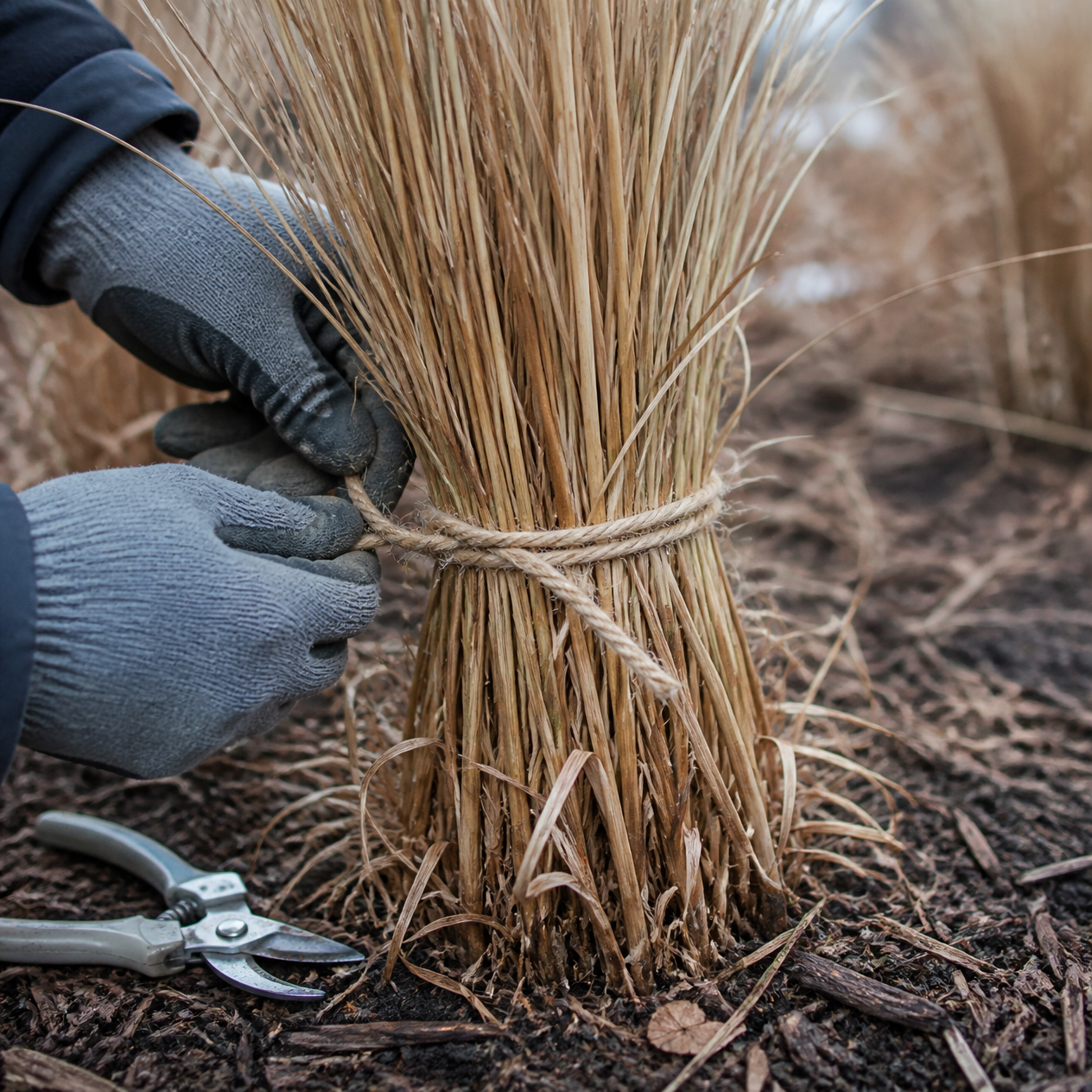
Instead, cut grasses back in late winter late February into March to about four to six inches, before the new green growth pushes up. A practical trick: tie the clump into a bundle with twine first, then cut below the tie, so the whole thing comes off clean in one piece instead of scattering everywhere.
How to Cut Back Correctly
For the plants that do get cut in fall, a few details make the difference between plant care and plant damage:
- Wait until the plant is dormant. Cut back after a hard frost has knocked the top growth down, not while the plant is still green and feeding its roots.
- Cut to a few inches, not the crown. Leave two to four inches of stem to mark the plant’s spot and protect the crown don’t scalp it to the soil.
- Sanitize tools between diseased plants. Wipe blades with alcohol so you’re not spreading disease from one plant to the next.
- Bag diseased material don’t compost it. Powdery mildew, botrytis, and borer eggs survive a home compost pile and come back next year.
The Rest of the Fall Bed Cleanup
Cutback is the centerpiece, but a complete bed cleanup also means pulling the last of the weeds before they seed, clearing fallen leaves out of the beds so they don’t mat on the crowns, cutting a clean edge, and refreshing mulch where it’s thin to insulate roots through winter. Handling the beds at the same time as fall leaf removal and the rest of the yard means the whole property goes into winter clean and comes out of it ready for spring, not buried under a season of neglect.
When to Do It in Kansas City
The right window for the fall cutback is after a hard frost has sent the perennials dormant typically mid-to-late November in Johnson County and before heavy snow makes the beds inaccessible. The plants you’re leaving standing wait until late winter: late February into March, cut just before the new growth emerges. Trying to do everything in one fall pass is the mistake; the beds are a two-visit job, fall and late winter, and that split is exactly what keeps the plants healthy.
Why Homeowners Hand Off the Beds
Bed cleanup is more judgment-heavy than leaf removal it’s not just labor, it’s knowing what each plant needs. That’s where it’s easy to get wrong on your own, either by cutting back something that should have stayed up or leaving disease to overwinter. A crew that knows the plants does it right the first time, hauls the debris, and comes back in late winter for the grasses and the plants that waited so you get healthy beds without having to memorize which perennial is which.
Why Overland Park Homeowners Choose MW Lawn & Landscape
Bed care rewards knowing the plants, not just clearing them:
- 25+ years in Johnson County. We know which perennials to cut, which to leave, and the right timing for our winters.
- Plant care, not a blind haircut. We cut the disease carriers and leave the grasses and seed heads standing then return in late winter to finish.
- The whole bed, hauled away. Cutback, weeding, edging, leaf clearing, and mulch debris leaves with us.
- One call for the whole property. Beds, lawn, cleanup, and plant health the full fall button-up from one team.
Family-owned, licensed, and insured, serving Overland Park and Johnson County since 2000.
Serving Overland Park, Lenexa, Olathe, and Johnson County
MW Lawn & Landscape provides fall bed cleanup and perennial cutback across Overland Park, Lenexa, Olathe, and the surrounding Johnson County communities. We’ll cut back what needs it, leave what helps, and have your beds ready for winter and spring. Request a free quote or call (913) 829-4949.
Frequently Asked Questions
Should I cut back my perennials in fall or spring?
Both it depends on the plant. Cut back the disease-prone and mushy perennials in fall (peony, bearded iris, hosta, garden phlox, bee balm) to stop disease and pests overwintering. Leave seed-head perennials and ornamental grasses standing through winter for the birds, pollinators, and crown protection, and cut those back in late winter before new growth.
Should I cut ornamental grasses back in fall?
No. Leave ornamental grasses standing through winter the dormant clump protects its own crown from winter wet, and the plumes provide the best winter interest in the garden. Cut them back in late winter (February–March) to about four to six inches, before new green growth emerges. Cutting in fall can expose the crown to rot.
What perennials should I NOT cut back in fall?
Leave ornamental grasses, coneflower and black-eyed Susan (their seeds feed birds), sedum, and semi-woody plants like Russian sage, lavender, and butterfly bush, which should be pruned in spring. Also leave marginally hardy perennials and natives with hollow stems, which shelter overwintering bees. Cut these back in late winter instead.
Why leave some plants standing over winter?
Standing perennials do real work: hollow stems shelter native bees and beneficial insects, seed heads feed birds through winter, and the foliage catches snow that insulates the plant’s crown against hard cold. They also give the winter garden structure and interest. Cutting everything to the ground removes all of that.
When should I cut back perennials in Kansas City?
Do the fall cutback after a hard frost has sent the plants dormant usually mid-to-late November in Johnson County and before heavy snow. The plants you leave standing get cut in late winter, late February into March, just before new growth starts. Bed cleanup is really a two-visit job split across fall and late winter.
How far back should I cut perennials?
Cut to about two to four inches above the soil, not down to the crown. Leaving a short stub marks the plant’s location so you don’t dig into it later and gives the crown a little protection. Wait until the plant is dormant after a hard frost rather than cutting while it’s still green.
Can I compost the material I cut back?
Healthy foliage, yes. But bag and discard anything diseased powdery mildew, botrytis from peonies, and iris borer eggs survive a typical home compost pile and will reinfect your beds next year. When in doubt with disease-prone plants, keep that material out of the compost.
Do you offer fall bed cleanup in Overland Park and Johnson County?
Yes. We provide fall bed cleanup and perennial cutback across Overland Park, Lenexa, Olathe, and the surrounding communities cutting back what needs it, leaving what helps, weeding, edging, mulching, and hauling the debris. We can also return in late winter for the grasses. Call (913) 829-4949 for a free quote.