
If your lawn limped out of summer thin, patchy, and tired, fall is your chance to fix it and in Johnson County, it’s the single best time of year to do it. A fall lawn renovation rebuilds a struggling lawn into a thick, healthy one, using the cool nights and warm soil that make autumn perfect for new grass. But “renovation” isn’t one task it’s a sequence of the right steps in the right order: assess, aerate, overseed, fertilize, and water. Skip a step or get the order wrong and you waste seed, money, and a season. This guide walks the full process start to finish so you know exactly what a proper fall renovation involves, what it costs, and whether to do it yourself or hire it out. The two services at the heart of it professional aeration and overseeding and a fall fertilization program are exactly what we do for Olathe homeowners every fall.
THE SHORT ANSWER
The 5 steps: (1) assess the lawn, (2) core aerate to relieve compaction, (3) overseed with cool-season grass, (4) fertilize to feed new growth, (5) water consistently to establish it. When: early-to-mid fall in Johnson County warm soil, cool air, less weed pressure. Why it works: aeration + overseeding + feeding done together rebuild the lawn far better than any one alone. The payoff: a thick, green lawn next spring.
What is a lawn renovation (and do you need one)?
A lawn renovation is the process of rejuvenating an existing, struggling lawn without tearing it out and starting over. Instead of replacing your turf, a renovation revives it by relieving compaction, adding fresh grass to thin areas, and feeding it to fill back in thick. It’s the middle ground between limping along with a patchy lawn and the expense of a full tear-out and re-sod.
You’re a good candidate for a fall renovation if your lawn shows any of these:
- Thin, patchy, or bare spots left over from summer heat and drought.
- Hard, compacted soil (common in Johnson County clay and newer construction) where water pools instead of soaking in.
- More weeds creeping in a sign the turf has thinned enough to let them establish.
- A lawn that just looks tired, dull, and worn out despite regular mowing and watering.
If that sounds like your yard, the good news is that fall renovation is the fix and the timing is on your side right now.
Why fall is the best time to renovate in Kansas
Timing is the difference between renovation that takes and renovation that fails. For our cool-season lawns (fescue and bluegrass), early-to-mid fall is the ideal window, for a few reasons: the soil is still warm from summer, which drives fast seed germination, while the cooling air is gentle on tender new seedlings. Weed competition drops off in fall, so your new grass isn’t fighting crabgrass for space. And renovating in fall gives the new grass two cool growing seasons fall and the following spring to establish deep roots before it faces another Kansas summer. Spring renovation can work too, but fall is better here; if spring is your only option, here’s how renovating a lawn in spring compares. For a fall renovation, the window is real but short it’s worth acting while the soil is still warm.
The 5 steps of a fall lawn renovation
Here’s the full process, in the order that makes each step build on the last.
Step 1: Assess the lawn
Every good renovation starts with an honest look at what you’re working with. How much of the lawn is thin versus bare? How compacted is the soil? Is there heavy thatch? Are weeds a factor? This assessment decides the plan a lawn that’s 30% thin needs a different approach than one that’s mostly bare, and heavy weeds may need addressing before you seed. Getting this right is why a professional walks the lawn before quoting: the renovation is only as good as the plan behind it.
Step 2: Core aerate
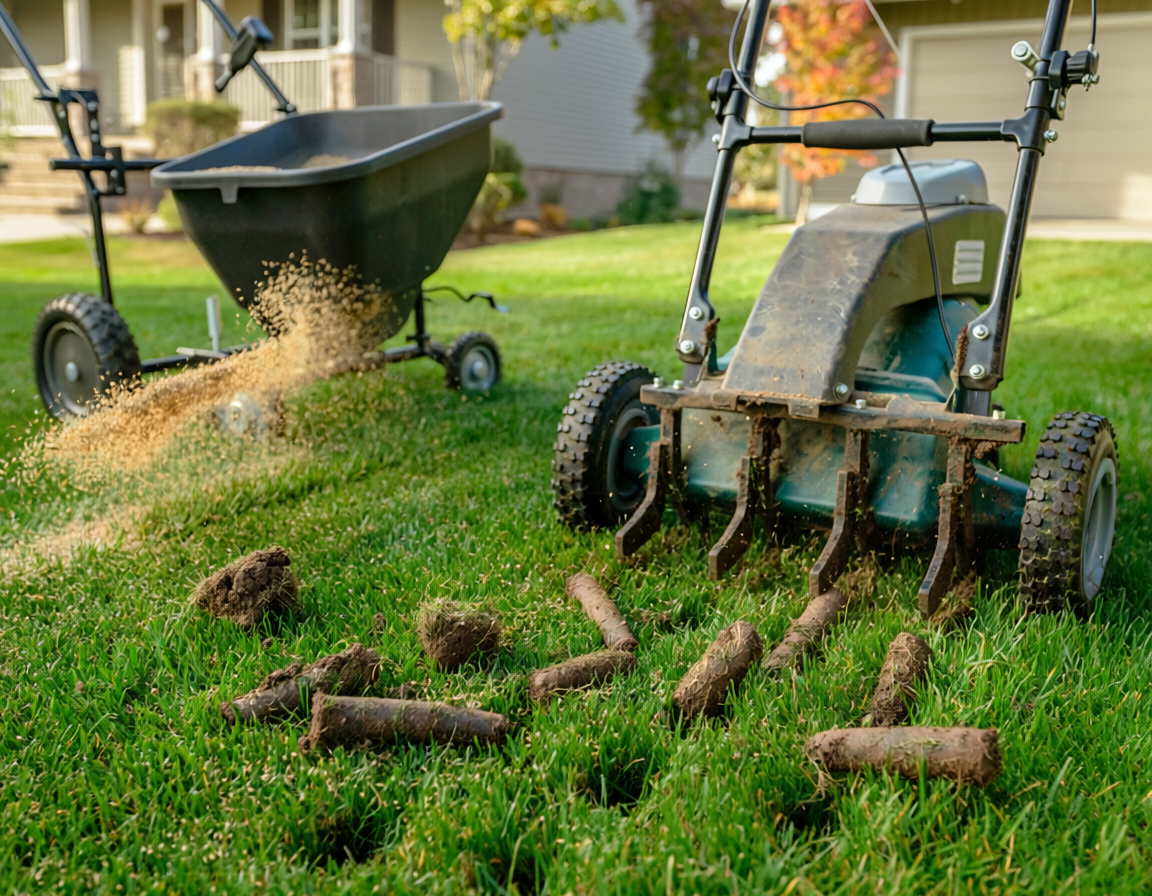
Next comes core aeration pulling small plugs of soil from the lawn to relieve the compaction that chokes roots and blocks water. This is especially critical in Johnson County’s heavy clay, where compacted soil is often the root cause of a struggling lawn. Aeration opens channels for air, water, and nutrients to reach the root zone, and just as importantly, it creates the perfect seedbed: the holes give overseeded grass ideal seed-to-soil contact. This is why aeration and overseeding are done together the aeration sets up the seed. It’s the foundation the rest of the renovation is built on.
Step 3: Overseed
With the soil opened up, fresh cool-season grass seed is spread across the lawn heaviest in the thin and bare areas. Overseeding introduces new, often more disease- and drought-resistant grass varieties, thickening the turf and filling gaps. The seed settles into the aeration holes, where it makes contact with soil and germinates. Quality seed matters here (cheap seed can carry weed seed), as does matching the seed to your existing lawn. Done right, overseeding is what actually turns a thin lawn thick.
Step 4: Fertilize
New seed and existing grass both need food to grow in strong, so the renovation includes a fall feeding. The right fertilizer at this stage helps new seedlings establish and drives the root growth that gets the whole lawn through winter and into a strong spring. This is where a fall fertilization program fits into renovation fall is the most important feeding of the year for cool-season lawns, building roots now for green-up later. A starter-type feeding supports the new seed without pushing soft, weak growth.
Step 5: Water to establish
The final step is the one homeowners most often get wrong: consistent watering. New seed must stay consistently moist to germinate and establish that means light, frequent watering (often once or twice a day) for the first few weeks, not a heavy soak every few days. Let the seedbed dry out at the wrong moment and germination stalls. Once the new grass is established, watering tapers back to normal. This establishment period is where a renovation is won or lost, so it’s worth getting right.
Want the whole renovation handled assessed, aerated, seeded, and fed the right way? Book a free lawn renovation quote or call (913) 829-4949.
What does a fall lawn renovation cost?
Renovation cost depends on your lawn’s size and condition and which steps it needs, but here’s a realistic guide to the pieces:
| Service | Typical range | Notes |
|---|---|---|
| Core aeration | $75 – $200 | By lawn size; often bundled with overseeding. |
| Overseeding | $0.09 – $0.25 / sq ft | Varies with seed quality and rate. |
| Aeration + overseed (bundled) | $150 – $500+ | The core of most renovations; priced together. |
| Fall fertilization (per app) | $50 – $100 | Part of a season-long program. |
| Full renovation (typical lawn) | $300 – $800+ | All steps together on an average Olathe lot. |
The bundled aeration-and-overseed is the heart of the renovation and the best value the two steps are done in one visit and work together. Feeding folds into your ongoing program. Exact pricing depends on square footage and how much of the lawn needs work, which is why an on-site look gives the accurate number.
DIY vs. professional lawn renovation
A determined homeowner can renovate a small lawn, but several steps are where DIY commonly falls short. The honest comparison:
| Factor | DIY | Professional |
|---|---|---|
| Aeration | Rent a core aerator (heavy, awkward in clay) | Commercial aerator, done in one pass |
| Seed choice | Easy to buy the wrong or weed-carrying seed | Quality seed matched to your lawn |
| Timing | Easy to miss the fall window | Timed to the ideal germination window |
| Even coverage | Hard to spread seed and fertilizer evenly | Calibrated equipment, uniform results |
| Watering guidance | On your own to figure out | A clear establishment plan you can follow |
| Result | Mixed works if every step is right | Consistent, warrantied thick lawn |
The pattern: renting an aerator for a small, flat yard and seeding it yourself is a legitimate weekend project if you nail the timing and watering. But because renovation is a chain each step depends on the one before a single weak link (wrong seed, poor coverage, missed watering) can waste the whole effort and a season with it. For a larger or badly struggling lawn, professional renovation is usually the surer path to an actually-thicker lawn.
Why Olathe homeowners choose MW Lawn & Landscape
Lawn renovation is what we do best in fall, and after 25+ years in Johnson County we’ve renovated a lot of tired lawns into thick ones:
- We assess before we quote. We walk your lawn, read the compaction and thin spots, and build a renovation plan for your yard not a one-size template.
- Aeration + overseeding, done together. Our professional aeration and overseeding [/aeration-overseeding/] relieves compacted clay and thickens the lawn in one coordinated visit the single best fall service for a greener yard next year.
- Feeding timed right. Fall is the key feeding, and our a fall fertilization program [/lawn-fertilization-program-olathe-ks/] (built on K-State guidance for cool-season lawns) supports new seed and drives root growth without pushing weak top growth.
- Quality seed, even coverage. Good cool-season seed matched to your lawn, spread with calibrated equipment for uniform fill no wasted seed, no patchy results.
- Family-owned, licensed, and insured, serving Olathe since 2000 local accountability on a lawn you’ll judge next spring.
Serving Olathe, Overland Park, and Johnson County
MW Lawn & Landscape renovates tired lawns across Olathe, Overland Park, and the surrounding Johnson County communities aeration, overseeding, and fall feeding done as one coordinated renovation. If summer left your lawn thin and tired, fall is the window to bring it back. We’ll assess your yard, build the right plan, and set your lawn up to come back thick and green next spring the way we have for local homeowners since 2000.
Frequently Asked Questions
How do I renovate my lawn in the fall?
A fall lawn renovation follows five steps: assess the lawn’s condition, core aerate to relieve compaction, overseed with cool-season grass, fertilize to feed new and existing growth, and water consistently to establish the seed. In Johnson County, early-to-mid fall is ideal because the soil is still warm for germination while cooler air protects new seedlings. Doing all the steps together, in order, is what rebuilds a thin lawn into a thick one.
What does a lawn renovation include?
A renovation rejuvenates an existing, struggling lawn rather than replacing it. It typically includes core aeration to open compacted soil, overseeding to fill thin and bare areas with fresh grass, and fertilization to feed the new growth, followed by a consistent watering period to establish the seed. For MW Lawn, renovation is essentially aeration, overseeding, and feeding done together as one coordinated service.
When is the best time to renovate a lawn in Kansas?
Early-to-mid fall is the best time for cool-season lawns (fescue and bluegrass) in Johnson County. The soil is still warm enough for quick germination, cooler air reduces stress on new seedlings, and weed competition drops off. Fall renovation also gives new grass two cool seasons to establish deep roots before the next summer. Spring is a workable second choice, but fall produces better results here.
Do I need to aerate before overseeding?
It’s strongly recommended. Core aeration relieves compaction and, just as importantly, creates ideal seed-to-soil contact the overseeded grass settles into the aeration holes where it germinates best. That’s why aeration and overseeding are almost always done together. Overseeding without aeration, especially in Johnson County’s clay, leaves much of the seed sitting on hard soil where it struggles to establish.
How much does a fall lawn renovation cost?
For a typical Olathe lawn, a full renovation generally runs $300 to $800 or more, depending on size and condition. The core aeration-and-overseed bundle the heart of the renovation often falls in the $150 to $500 range, and fall fertilization adds $50 to $100 per application as part of a program. An on-site assessment gives an accurate number based on your square footage and how much of the lawn needs work.
Can I renovate my lawn myself?
Yes for a small, flat lawn if you rent a core aerator, buy quality seed, and are diligent about timing and watering. But renovation is a chain of steps that each depend on the one before, so a single weak link the wrong seed, uneven coverage, or missed watering during establishment can waste the whole effort and a full season. Larger or badly struggling lawns are usually a surer result with a professional.
How long does it take to see results from a lawn renovation?
New grass typically begins germinating within one to three weeks of a fall renovation, and the lawn noticeably fills in over the following weeks as the seedlings mature. The biggest payoff shows the next spring, when the renovated lawn greens up thick and strong after establishing deep roots through fall. Patience during the establishment period especially consistent watering is key to the result.
What’s the difference between overseeding and a full renovation?
Overseeding is one step spreading new grass seed to thicken a lawn. A renovation is the whole process: assessing, aerating, overseeding, fertilizing, and establishing the new grass together. Overseeding alone helps a mildly thin lawn, but a struggling, compacted, or patchy lawn needs the full renovation particularly the aeration that makes the overseeding actually take.
Will a lawn renovation get rid of weeds?
Indirectly, over time. Renovation doesn’t kill existing weeds directly, but by thickening the turf it crowds out weeds and denies them the bare space they need to establish a dense, healthy lawn is the best long-term weed control. If weeds are heavy going in, they may need to be addressed before or alongside the renovation so they don’t compete with the new seed. A fertilization program with weed control supports this over the season.