
Every spring, homeowners across Overland Park wage the same losing battle: spray the weeds, watch them come back, spray again. Here’s the hard truth the weed-killer aisle won’t tell you you can’t out-spray a weak lawn. The single most effective weed control you have isn’t a herbicide at all; it’s a thick, healthy, well-fed lawn that simply leaves weeds nowhere to grow. This guide explains the science of why dense turf crowds weeds out, how fertilization and weed control work together (and in what order), and the seasonal plan that actually keeps a Johnson County lawn weed-free. When you want it handled on a proven schedule, a professional fertilization and weed control program builds the dense turf that defends itself, timed for our tall fescue lawns.
THE SHORT ANSWER
The thesis: a dense, well-fed lawn is the single best weed control thick grass shades the soil and outcompetes weeds for light, water, and nutrients, so weed seeds can’t germinate. The pairing: fertilization builds the density (long game); weed control protects it (pre-emergent to stop seeds, post-emergent for active weeds). The order: control existing weeds first, then feed so the nutrients go to your grass, not the weeds. The mechanism: fill the gaps (bare, thin, compacted areas) with aeration and overseeding that’s where weeds live.
Why a thick lawn is your best weed control
Weeds are opportunists. They don’t invade a healthy, dense lawn they move into the gaps: bare patches, thin turf, and compacted soil where grass is struggling. As one turf scientist puts it, if the turf can’t outcompete germinating weed seedlings for space, water, nutrients, and light, the environment favors the weed, not the lawn. Flip that around and you have the whole strategy: make the lawn so thick and vigorous that weeds never get the chance.
A dense, well-fed lawn controls weeds two ways at once. First, it shades the soil a thick canopy of grass blocks the sunlight that weed seeds need to germinate, so most never sprout. Second, it outcompetes vigorous grass claims the water, nutrients, and root space that weeds would otherwise use. The result is a lawn that defends itself, with far less reliance on chemicals over time. Turf experts are unanimous on this: the best defense against weeds is always a dense, healthy, competitive stand of grass.
Why you can’t out-spray a weak lawn
Here’s the mistake that keeps homeowners on the spray-and-repeat treadmill: treating weeds as the problem instead of the symptom. Weeds are a symptom of thin, weak turf. You can kill every weed in the lawn today, but if the turf is still thin and the soil still bare, new weed seeds will germinate into those same gaps within weeks because nothing’s stopping them. Spraying without building density is like bailing a boat without patching the hole.
That’s why the real fix is fertilization, not just herbicide. A well-fed lawn grows thick enough to close the gaps weeds exploit and the thicker it gets, the less spraying it needs. Skipping fertilization, on the other hand, hurts the grass more than the weeds: it creates exactly the thin, weak turf that weeds are best positioned to take over. The goal isn’t a lawn you constantly rescue with chemicals; it’s a lawn dense enough to not need rescuing.
How fertilization and weed control work together
Dense turf is the long game, but it takes a full season to build so while the lawn is thickening up, weed control protects that investment. The two aren’t alternatives; they’re partners:
- Fertilization builds the density. Properly timed feeding drives the thick root and leaf growth that crowds weeds out over time the permanent fix.
- Pre-emergent weed control stops seeds. Applied in early spring, a pre-emergent creates a barrier that prevents crabgrass and other annual weed seeds from germinating in the first place.
- Post-emergent weed control handles what’s already there. Targeted treatments knock out active, growing weeds clearing the space so your fertilizer feeds grass, not invaders.
That last point is key: if you fertilize a weedy lawn, you’re feeding the weeds right alongside the grass and in a thin, weedy lawn, the aggressive weeds may grab the nutrients first. Weed control ensures your fertilizer investment goes to the turf you want.
Should you fertilize or do weed control first?
A common question with a clear answer: in most cases, control the weeds first, then fertilize. Here’s why weeds compete directly with your grass for nutrients, so if you feed first, the existing weeds absorb the fertilizer right alongside (or ahead of) your lawn. Knock the weeds back first, and the nutrients then flow to the grass you’re trying to thicken. A typical rule of thumb is to wait about a week after a post-emergent herbicide before fertilizing, to let the treatment do its work. Pre-emergents are different they’re often applied alongside an early-spring feeding, since they stop seeds rather than competing with your grass. This sequencing is one of the details a professional program gets right automatically.
| Situation | Order | Why |
|---|---|---|
| Active weeds present | Weed control first, feed ~1 week later | Clear the weeds so nutrients go to grass |
| Early spring (crabgrass prevention) | Pre-emergent + feeding together | Pre-emergent stops seeds; feeding starts green-up |
| Thin, weedy lawn | Control weeds, then feed + overseed | Fill the gaps so weeds can’t return |
| Thick, healthy lawn | Feed on schedule; spot-treat as needed | Density is already doing the heavy lifting |
Tired of spraying the same weeds every year? Build a lawn that beats them for you. Get a free lawn evaluation or call (913) 829-4949.
Filling the gaps: where weeds actually live
Since weeds exploit bare, thin, and compacted areas, the fastest way to weed-proof a lawn is to eliminate those gaps and in Johnson County, that means two things. First, relieve the compacted clay that keeps grass thin and stressed. Second, thicken the thin and bare spots with fresh grass. Both are accomplished by aeration and overseeding to fill the gaps. Core aeration opens up compacted soil so grass can root deeply, and overseeding fills the thin areas with new, competitive turf. This is the literal mechanism behind “dense turf crowds out weeds”: you’re physically closing the openings weeds need. Fall is the ideal time to do it, which is why aeration, overseeding, and feeding are the backbone of a weed-resistant lawn. A pre-emergent in spring, density-building in fall, and feeding year-round is the combination that actually wins.

The seasonal weed-control-through-feeding plan
Winning against weeds is about timing the right action to the right season:
| Season | Action | What it does |
|---|---|---|
| Early spring | Pre-emergent + light feeding | Stops crabgrass before it germinates; starts green-up |
| Late spring | Feeding + broadleaf weed control | Feeds growth; knocks out dandelions and clover |
| Summer | Eased feeding + spot weed control | Maintains density without heat stress |
| Fall | Key feeding + aeration/overseed + broadleaf control | Builds density and fills gaps the biggest weed-prevention move |
| Late fall | Winterizer feeding | Stores energy for a thick, early spring green-up |
Notice the pattern: weed control shows up at the right moments, but feeding and density-building run all year. That’s because the herbicide handles today’s weeds while the fertilization handles next year’s by making the lawn too thick for them to return.
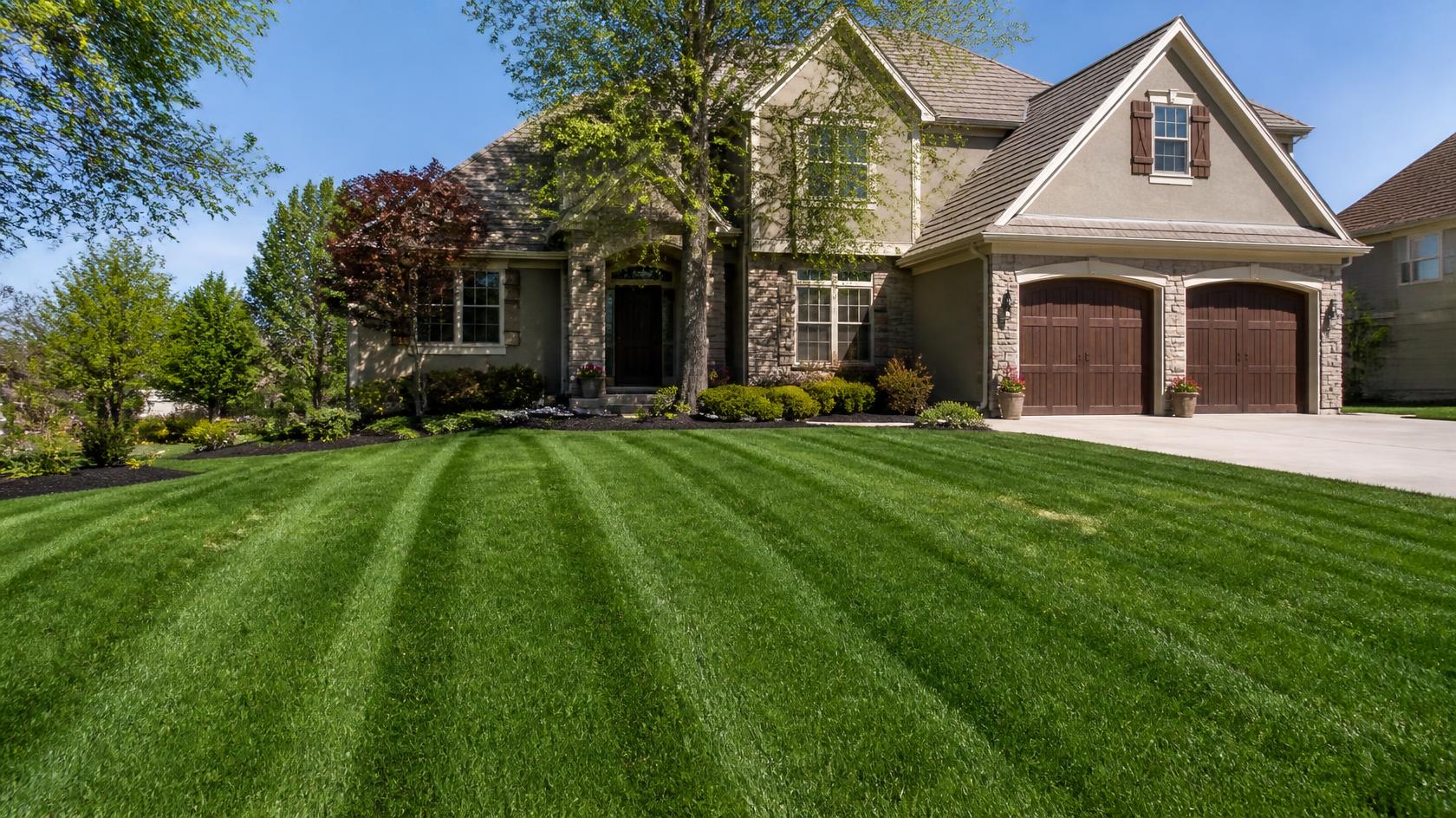
DIY vs. a professional program
You can run this playbook yourself, but it’s demanding: the pre-emergent window is narrow (miss it and crabgrass wins the year), post-emergents have to be matched to the weed and the season, and the feeding has to be timed and applied without burning the lawn. Get the sequence wrong feed a weedy lawn, or spray and then fertilize too soon and you waste both. The value of a professional fertilization and weed control program is that the whole sequence is handled on a proven schedule: pre-emergent in the right window, targeted post-emergents when weeds are vulnerable, and feeding timed to build density all season plus professional-grade products that aren’t sold over the counter. The outcome is a lawn that gets denser (and lower-maintenance) every year, instead of one you fight every spring.
Stop fighting weeds and start crowding them out. Get a free lawn evaluation or call (913) 829-4949 feeding + weed control on a schedule that works.
Why Overland Park homeowners choose MW Lawn & Landscape
Beating weeds is about building density, not just spraying and after 25+ years in Johnson County, that’s how our program works:
- We build density first. Feeding and weed control are paired and timed so the lawn gets thick enough to defend itself the permanent fix, not just this week’s weeds.
- Right product, right time. Pre-emergent in the spring window, targeted post-emergents when weeds are vulnerable, feeding timed to our tall fescue with professional-grade products you can’t buy retail.
- We fill the gaps weeds exploit. aeration and overseeding to fill the gaps out.
- A lawn that improves every year. Density compounds so each season you spray less and enjoy a thicker, cleaner lawn.
- Family-owned, licensed, and insured, serving Overland Park and Johnson County since 2000.
Serving Overland Park, Lenexa, Olathe, and Johnson County
MW Lawn & Landscape builds dense, weed-resistant lawns across Overland Park, Lenexa, Olathe, and the surrounding Johnson County communities pairing properly-timed fertilization and weed control so your lawn crowds weeds out on its own. If you’re tired of spraying the same weeds every spring, the answer is a thicker lawn. We’ll build it the way we have for local homeowners since 2000.
Frequently Asked Questions
Does fertilizing help control weeds?
Yes significantly. A well-fertilized lawn grows thick and dense, which is one of the most effective forms of weed control there is. Dense turf shades the soil (blocking the sunlight weed seeds need to germinate) and outcompetes weeds for water, nutrients, and space. Fertilization doesn’t kill existing weeds, but it builds the density that prevents new ones, which is why feeding is the long-term fix and herbicide is the short-term one.
Why do weeds keep coming back no matter how much I spray?
Because weeds are a symptom of thin, weak turf not the root problem. You can kill every weed today, but if the lawn is still thin and the soil still bare, new weed seeds germinate into those same gaps within weeks. You can’t out-spray a weak lawn. The lasting fix is building dense, healthy turf through proper fertilization (and aeration and overseeding) so weeds have nowhere to establish.
Should I fertilize or do weed control first?
In most cases, control existing weeds first, then fertilize about a week later. Weeds compete directly with your grass for nutrients, so if you fertilize a weedy lawn, the weeds absorb the fertilizer alongside (or ahead of) your grass. Clearing the weeds first ensures the nutrients go to the turf you want to thicken. The exception is spring pre-emergent, which is often applied together with a feeding since it stops seeds rather than competing.
How does a thick lawn prevent weeds?
Two ways. First, a dense grass canopy shades the soil surface, blocking the sunlight that most weed seeds need to germinate so they never sprout. Second, vigorous, healthy grass outcompetes weeds for water, nutrients, and root space, leaving no room for them to establish. Turf scientists agree the best defense against weeds is always a dense, healthy, competitive stand of grass, which is built through proper feeding and overseeding.
What’s the difference between pre-emergent and post-emergent weed control?
Pre-emergent weed control is applied before weeds sprout typically in early spring and creates a barrier that stops weed seeds like crabgrass from germinating. Post-emergent weed control targets weeds that are already growing, knocking out active dandelions, clover, and other broadleaf weeds. A complete program uses both: pre-emergent to prevent, post-emergent to clean up what’s there, and fertilization to build the density that prevents future weeds.
Does aeration and overseeding help with weeds?
Yes it’s one of the most effective weed-prevention steps. Weeds thrive in bare, thin, and compacted areas, and aeration relieves compacted clay while overseeding fills thin and bare spots with new, competitive grass. Together they close the gaps weeds exploit, which is the literal mechanism behind ‘dense turf crowds out weeds.’ Done in fall, aeration and overseeding set up a thicker, more weed-resistant lawn for the following year.
Will I still need weed control if my lawn is thick?
Much less, but some targeted control is still smart. A dense lawn dramatically reduces weed pressure by preventing most seeds from germinating, so you’ll spray far less than with a thin lawn. But a spring pre-emergent remains worthwhile insurance against crabgrass, and occasional spot-treatment handles any weeds that slip through. The goal is a lawn thick enough that weed control becomes maintenance rather than a constant battle.
How long does it take to build a weed-resistant lawn?
Building dense, weed-resistant turf is a season-to-season process rather than an overnight fix. A full year of properly-timed fertilization, weed control, and fall aeration and overseeding produces a noticeably thicker lawn, and density compounds over multiple seasons each year the lawn gets thicker and needs less spraying. Most homeowners see a real difference within the first full season on a consistent program.