
Fresh mulch is one of the best-value upgrades you can make to a property it makes the whole yard look cared-for, and it does real work holding moisture and blocking weeds through a Kansas summer. But when you start pricing it out, the numbers are all over the place, from a few dollars a bag to hundreds for a delivery. Here’s the clear version for Olathe. In 2026, professional mulch installation runs about $70 to $130 per cubic yard delivered and spread, or roughly $1 to $3 per square foot, with most homeowners spending $200 to $900 on a typical project. This guide breaks that down by the yard, by project size, and by mulch type plus the bagged-versus-bulk math that saves real money and how to know when to hire out. When you’re ready for professional mulch installation, we’re glad to give you a free, itemized quote.
THE SHORT ANSWER
Per cubic yard installed: about $70–$130 (material + delivery + spreading). Per square foot: roughly $1–$3 installed. Typical project: $200–$900 depending on bed size. Coverage: one cubic yard covers about 108 sq ft at a 3-inch depth. Money tip: buy bulk, not bagged, for anything over ~2 yards.
How much does a yard of mulch cost installed?
Mulch is sold by the cubic yard, and “installed” pricing bundles three things: the material, delivery, and the labor to spread it. Put together, most Olathe-area installations land in the $70 to $130 per cubic yard range, with standard hardwood mulch at the lower end and premium or dyed products higher. Here’s how that breaks down so you can read a quote intelligently:
Cost component | 2026 range (per cubic yard) | Notes |
|---|---|---|
Mulch material (bulk) | $30 – $60 | Standard hardwood cheapest; dyed, cedar, cypress more. |
Delivery | $40 – $100 per load | Flat per-load fee; most suppliers want a 3–5 yard minimum. |
Labor to spread | $20 – $50 | Hand spreading; blowing runs a bit more but is faster. |
Total installed | ~$70 – $130 | Most homeowners land around $72–$94/yd for hardwood. |
A quote that gives you one lump number without breaking out material, delivery, and labor tells you almost nothing always ask for the components so you can compare bids fairly.
Mulch installation cost by project size
Most homeowners think in beds, not cubic yards, so here’s what typical Olathe projects run:
Bed size | Typical installed cost | Roughly |
|---|---|---|
Small beds (100–300 sq ft) | $150 – $350 | ~1–3 cubic yards |
Medium yard (400–800 sq ft) | $300 – $650 | ~4–7 cubic yards |
Large / full property | $700 – $1,200+ | 8+ cubic yards |
Per square foot (any size) | $1 – $3 installed | At a standard 3-inch depth |
Add-ons change the total: bed edging, weeding, removing old mulch, or installing a weed barrier all add labor. Many companies bundle mulching into a spring or summer cleanup that includes edging and weeding which is where the crisp, finished look comes from, and it’s worth understanding how mulching and bed detailing pays off beyond just the mulch itself.
How much mulch do you need? (Coverage math)
Before you can price a job, you need to know the volume. The math is simple:
- Formula: cubic yards = (bed square footage × depth in inches) ÷ 324.
- Example: 400 sq ft at 3 inches = (400 × 3) ÷ 324 ≈ 3.7 cubic yards.
Or use these quick coverage figures for one cubic yard:
Depth | One cubic yard covers |
|---|---|
2 inches | ~162 sq ft |
3 inches (standard) | ~108 sq ft |
4 inches | ~81 sq ft |
Three inches is the standard depth for most beds deep enough to hold moisture and block weeds without smothering the soil. Add about 10% for settling and uneven ground so you don’t come up short.
Skip the math and the guesswork. Get a free mulching quote or call (913) 829-4949 we’ll measure your beds and give you one clear price.
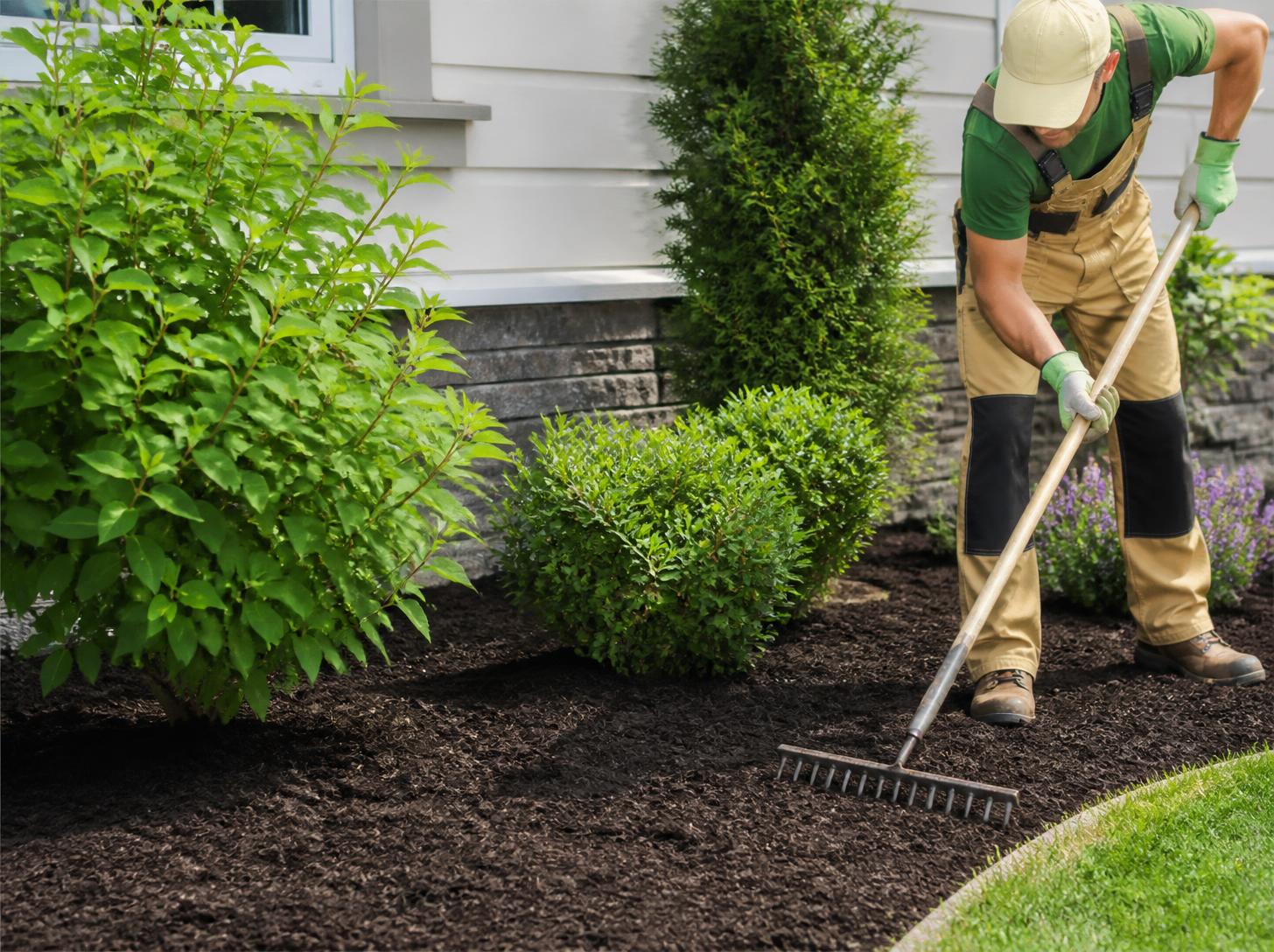
Bagged vs. bulk mulch: the money math
This is where a lot of homeowners overpay without realizing it. Bagged mulch feels cheaper because each bag is only a few dollars but a standard bag holds just 2 cubic feet, and it takes 13.5 bags to equal one cubic yard. Do the math and the picture flips:
Option | Cost per cubic yard equivalent | When it makes sense |
|---|---|---|
Bagged (13.5 bags/yd) | ~$40 – $95 | Only for very small beds under ~2 cubic yards |
Bulk (delivered) | ~$30 – $60 + delivery | Almost always cheaper for larger projects |
The rule of thumb: for anything over about two cubic yards, bulk wins clearly even after the delivery fee. Bagged only makes sense for a single small bed where a delivery minimum would be overkill. If you’re mulching a whole property, bagged mulch can cost you hundreds more for the exact same result.
Mulch cost by type
The material you choose is the biggest swing in your per-yard price. Standard hardwood is the workhorse and the value pick; the premium and dyed options cost more but hold color longer:
Mulch type | Material cost per cubic yard | Notes |
|---|---|---|
Shredded hardwood | $30 – $50 | The standard, best-value choice for most beds. |
Dyed (black / brown / red) | $35 – $60 | Holds color longer; popular for curb appeal. |
Cedar | $45 – $75 | Naturally aromatic and insect-resistant. |
Cypress | $45 – $80 | Durable and slow to break down. |
Rubber | $80 – $160 | Long-lasting but doesn’t enrich soil; the outlier on price. |
For most Olathe homeowners, a quality shredded hardwood or a dyed hardwood gives the best balance of appearance, soil benefit, and cost. Rubber and stone last longer but don’t feed the soil the way organic mulch does.
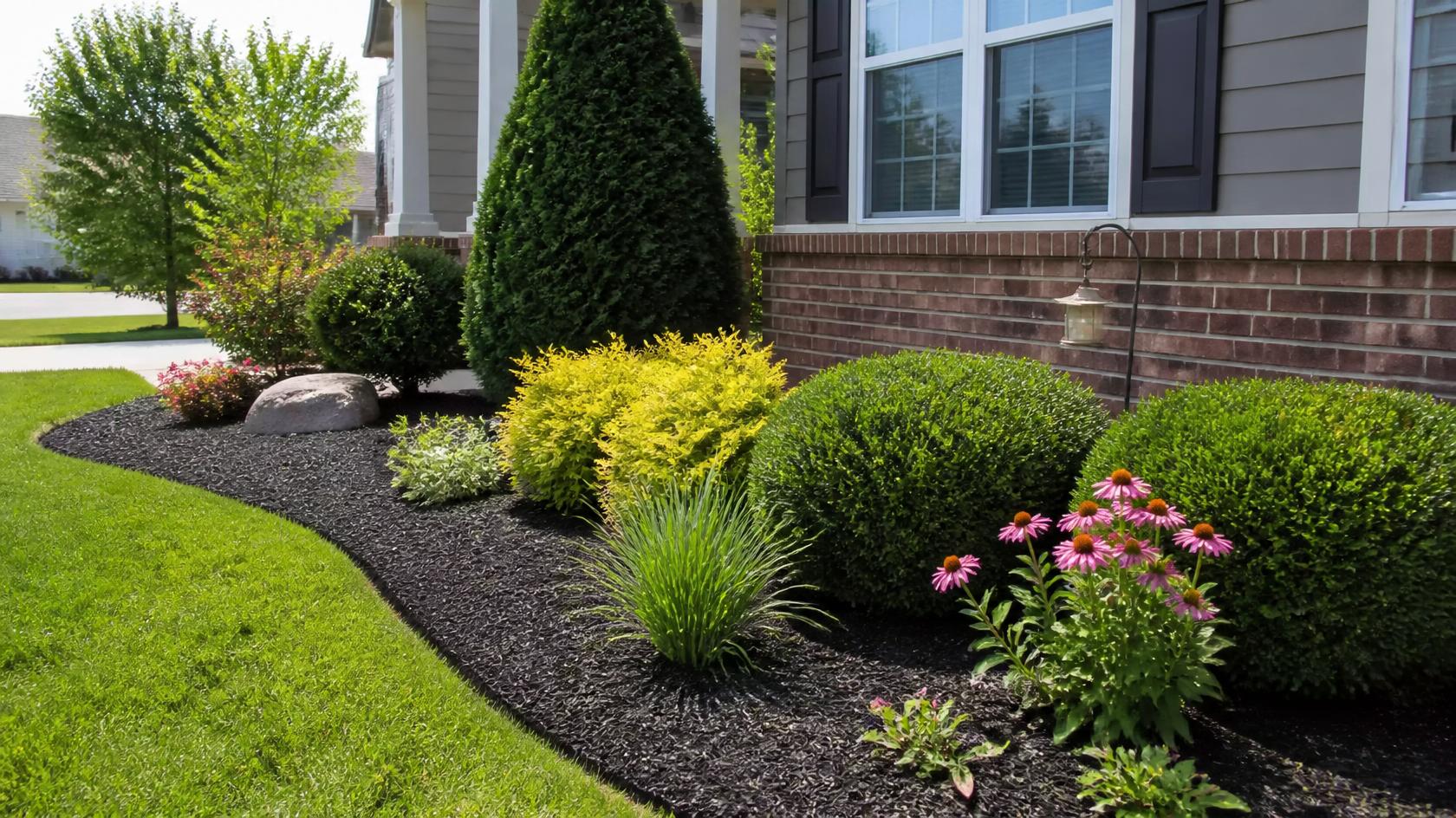
A faster option for big beds: mulch blowing
For large properties or beds a wheelbarrow can’t easily reach backyards behind fences, steep or tight spaces some companies offer mulch blowing, which uses specialized equipment to spray mulch precisely where it’s needed. It runs a bit more than hand spreading (roughly $45–$85 per yard versus $30–$65), but it’s dramatically faster and can place mulch where a barrow simply can’t go. For a small front bed it’s overkill; for a large or hard-access property it can be the difference between a one-day job and a weekend ordeal.
DIY vs. professional mulch installation
Mulching is genuinely one of the more DIY-friendly landscape jobs but the labor is heavier than it looks, and the savings shrink fast on a big property. Here’s the honest comparison:
Factor | DIY | Professional |
|---|---|---|
Material cost | Bulk (cheap) or bagged (pricey per yard) | Bulk delivered, often at better rates |
Labor | ~1 hour of spreading per cubic yard, by hand | Done for you; blowing available for big jobs |
What you save | $20–$50/yd in labor real on a 9-yard job | — |
Technique | Easy to over-pile or build mulch volcanoes | Correct 2–3” depth, kept off trunks and stems |
Extras | Edging, weeding, old-mulch removal on you | Bundled edging, weeding, and cleanup |
Best for | A single small bed and a free afternoon | Whole properties, many yards, or hard-access beds |
The honest bottom line: for one small bed, DIY is hard to beat on price it’s a wheelbarrow and an afternoon. For a full property, once you count the delivery, the many trips, and a weekend of hauling in the heat, professional installation often costs little more than doing it yourself and comes out cleaner, at the right depth, and correctly kept off your trees.
Want it done right and done today? Get a free mulching quote or call (913) 829-4949 delivery, spreading, edging, and cleanup handled.
How to save money on mulch installation
- Buy bulk, not bagged, for anything over two cubic yards the single biggest saving.
- Choose quality hardwood over premium dyed or exotic types unless color longevity matters to you.
- Don’t remove old mulch if it’s still in good shape top-dress a fresh 1–2 inches over it instead of paying to haul it away.
- Bundle mulching with a spring or summer cleanup so edging and weeding share one visit.
- Order in the off-season or split a bulk delivery with a neighbor to hit the bulk discount.
- Measure carefully so you buy the right volume no second delivery fee, no leftover pile.
Why Olathe homeowners choose MW Lawn & Landscape
Mulching is simple to do and easy to do badly. After 25+ years in Johnson County, we do it in a way that protects your plants and holds up all season:
- Correct depth, every bed. A proper 2–3 inches enough to work, not so much it smothers and kept off trunks and stems so it never becomes a plant-killing mulch volcano.
- Detailing included. We edge and weed your beds first, so the finished look is crisp and the mulch stays put not just dumped.
- Quality material, fair pricing. Premium hardwood that holds its color, delivered in bulk at a better rate than you’d pay bagged.
- One clear, itemized quote. Material, delivery, and labor spelled out and mulching folds naturally into professional mulch installation and the rest of your seasonal care.
- Family-owned, licensed, and insured the same crew and standards on every visit.
Serving Olathe, Overland Park, and Johnson County
MW Lawn & Landscape provides mulch delivery, installation, and bed detailing across Olathe, Overland Park, and the surrounding Johnson County communities from a single-bed refresh to a full property. We’ll measure your beds, recommend the right mulch and depth, and give you one clear price with no surprises.
Frequently Asked Questions
How much does mulch installation cost?
In 2026, professional mulch installation runs about $70 to $130 per cubic yard delivered and spread, or roughly $1 to $3 per square foot. Most homeowners spend $200 to $900 on a typical project depending on bed size small beds run $150 to $350, medium yards $300 to $650, and full properties $700 to $1,200 or more.
How much is a yard of mulch installed?
A cubic yard of mulch installed including material, delivery, and spreading typically costs about $70 to $130, with most homeowners paying around $72 to $94 for standard hardwood. The material itself is $30 to $60 per yard in bulk, delivery adds $40 to $100 per load, and labor to spread runs $20 to $50 per yard.
How much area does a yard of mulch cover?
One cubic yard covers about 162 square feet at a 2-inch depth, 108 square feet at the standard 3-inch depth, and 81 square feet at 4 inches. To calculate what you need, multiply your bed’s square footage by the depth in inches and divide by 324, then add about 10% for settling.
Is bagged or bulk mulch cheaper?
Bulk is almost always cheaper for larger projects. A standard bag holds only 2 cubic feet, and it takes 13.5 bags to equal one cubic yard so bagged mulch works out to roughly $40 to $95 per yard-equivalent versus $30 to $60 for bulk. Bagged only makes sense for a single small bed under about two cubic yards where a delivery minimum would be overkill.
What is the cheapest type of mulch?
Shredded hardwood is the cheapest and most popular choice at about $30 to $50 per cubic yard, and it’s an excellent all-purpose mulch. Dyed hardwood costs a little more ($35 to $60) but holds its color longer. Cedar, cypress, and especially rubber cost more per yard.
How deep should mulch be installed?
Two to three inches is the standard, with three inches most common. That’s deep enough to retain moisture and block weeds without smothering the soil or repelling water. Just as important, mulch should be kept a few inches away from tree trunks and shrub stems piling it against them can rot and kill the plant.
Is professional mulch installation worth it?
For a single small bed, DIY is hard to beat it’s a wheelbarrow and an afternoon. For a full property, professional installation often costs little more once you factor in delivery, many trips, and a weekend of hauling, and you get correct depth, proper technique around trees, and bundled edging and cleanup. Larger or hard-to-reach properties are where hiring out clearly pays.
What affects the cost of mulch installation?
The main factors are bed size (square footage and volume needed), mulch type (hardwood is cheapest, dyed and specialty cost more), depth, delivery distance, and prep work like edging, weeding, or removing old mulch. Access matters too hard-to-reach beds may need mulch blowing, which costs a bit more than hand spreading.
How often do I need to reinstall mulch?
Plan on refreshing mulch once a year, usually in spring or early summer. Good hardwood can last up to two years, but its color and weed-blocking and moisture benefits fade as it breaks down, so an annual 1 to 2 inch top-dress over the existing layer keeps beds looking and working their best without a full replacement.