
It usually happens gradually. A shrub that once sat neatly under the window creeps higher every year. Bushes that framed the entry now crowd it. The foundation plantings that looked great when the house was newer have grown out of scale blocking windows, hiding your home’s best features, and making the whole place look older and more tired than it is. If that’s your front yard, you’re not alone, and fall is the ideal time to fix it. This guide walks through when foundation plantings need replacing, why fall is the best season to do it, the step-by-step process, and how to get the new landscaping right so you’re not doing this again in five years. When you’re ready, our professional landscape design and installation handles the whole renovation removal, design, and planting backed by a one-year warranty on new plants.
THE SHORT ANSWER
When to replace: foundation plantings last about 10–15 years before they outgrow their space and need a refresh. Why fall: cool air and warm soil give new plants the best start. The process: remove the overgrown plants, prep and re-level the beds, then replant in scale with the house. The payoff: foundation planting can add 10%+ to home value and transforms curb appeal. The key: choose right-sized plants so it stays proportionate.
Signs it’s time to replace your foundation landscaping
Standard foundation landscaping has a lifespan of roughly 10 to 15 years when well cared for, after which shrubs tend to outgrow their space and look out of scale. Here’s how to tell yours has reached that point:
- Shrubs are blocking or covering windows, or crowding the front entry and walkways.
- Plants are pressing against the siding which traps moisture, invites mold, and can damage the exterior.
- Bushes have been sheared into tight balls for years and are now woody, bare inside, or misshapen.
- The landscaping hides your home’s architecture instead of framing it.
- You’ve got dead, half-dead, or dated plants left from the original builder installation.
- The whole front just looks tired, overgrown, and older than the house actually is.
Foundation plantings are meant to show off your home, not cover it up. When they’ve crossed from framing to hiding, trimming only buys time it doesn’t change how those oversized plants will keep growing. Replacement is what restores the balance.
Why replace instead of just trimming?
It’s a fair question why not just keep pruning? Because trimming an overgrown shrub is a short-term fix for a permanent mismatch. A plant that has outgrown its space will keep trying to reach its mature size no matter how often you cut it, so you’re locked into constant hard pruning that leaves plants woody and bare. Worse, repeatedly shearing a shrub into a ball kills the interior over time, so you end up with a green shell over dead wood there’s nothing left to cut back to.
Replacing overgrown plants with properly-sized varieties fixes the root problem: the new plants are chosen to grow into their space and stay proportionate, so the beds look intentional and stay manageable for years. It’s the difference between fighting your landscaping forever and having it work for you.
Why fall is the best time to do it
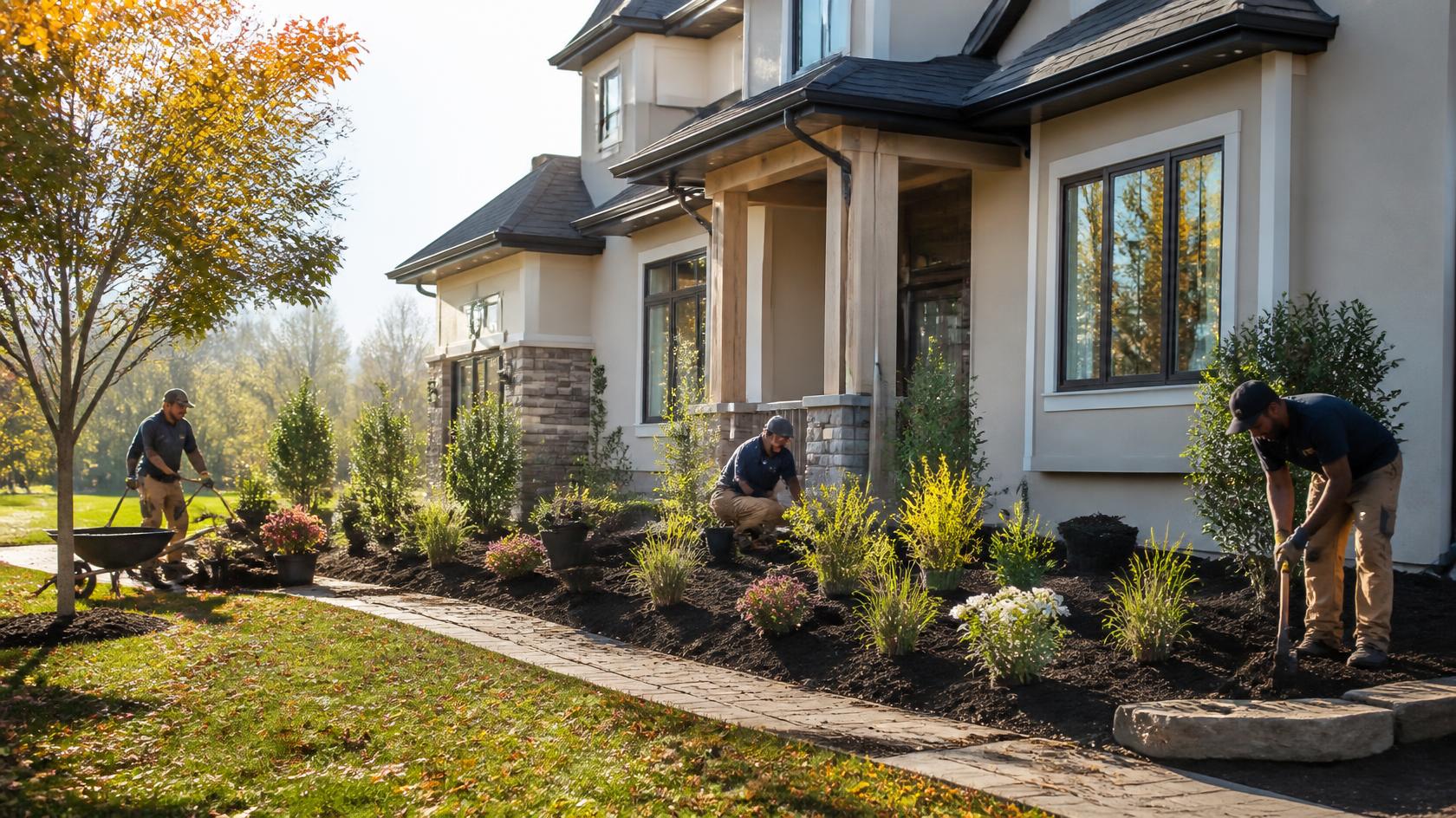
Foundation renovation involves planting, and fall is the best planting season in Kansas City. Cool air means less transplant stress on the new plants, while the still-warm soil lets them establish roots before winter so they come out of the ground strong next spring instead of struggling through their first summer. Fall-planted landscaping also needs less watering to establish. The window runs roughly late September through October, about six weeks before the ground freezes. Doing your renovation now means you head into spring with a finished, established front yard not a construction project.
Tired of the overgrown look out front? Fall is the time to fix it. Get a free landscape consultation or call (913) 829-4949.
The foundation renovation process, step by step
A proper foundation landscaping renovation follows a clear sequence:
- 1. Assess and plan. Step back and look at the whole front as one composition what to keep, what to remove, and what the beds should become. This planning step is what separates a renovation that looks intentional from one that looks patched.
- 2. Remove the overgrown plants. Pull the shrubs that have outgrown their space or no longer fit, and take out the remaining roots. This opens everything up and makes it easy to see what you’re working with.
- 3. Prep and re-level the beds. Add soil where needed to level the bed, amend the clay, and redefine the edges so you’re planting into good ground with clean lines.
- 4. Replant in scale. Install right-sized shrubs, perennials, and accents laid out to fit the home then fresh mulch to finish the beds for a clean, finished look and to protect the new roots.
- 5. Establish and maintain. Water the new plantings in well through fall, and plan for light upkeep so they stay shaped and healthy as they grow into place.
Getting the new plants right: spacing and scale
The single most common mistake in foundation planting and the reason so many need replacing is planting too big, too close. A shrub that looks tiny at the nursery has a mature size, and cramming plants against the house guarantees you’ll be back here in a few years. The rules that keep a renovation looking good long-term:
| Guideline | The rule | Why |
|---|---|---|
| Bed depth | 6–8 feet from house to outer edge | Room for layered planting and access |
| Big shrubs/trees | 5+ feet from the foundation | Roots and growth won’t reach the house |
| Buffer to siding | 1–3 feet clear at the back | Air flow; prevents mold and siding damage |
| Small plants | 2–3 feet minimum from foundation | Access for maintenance and painting |
| Under windows | Dwarf varieties that stay low | Won’t block windows as they mature |
| Near AC units | Keep 2+ feet clear | Air flow to the unit |
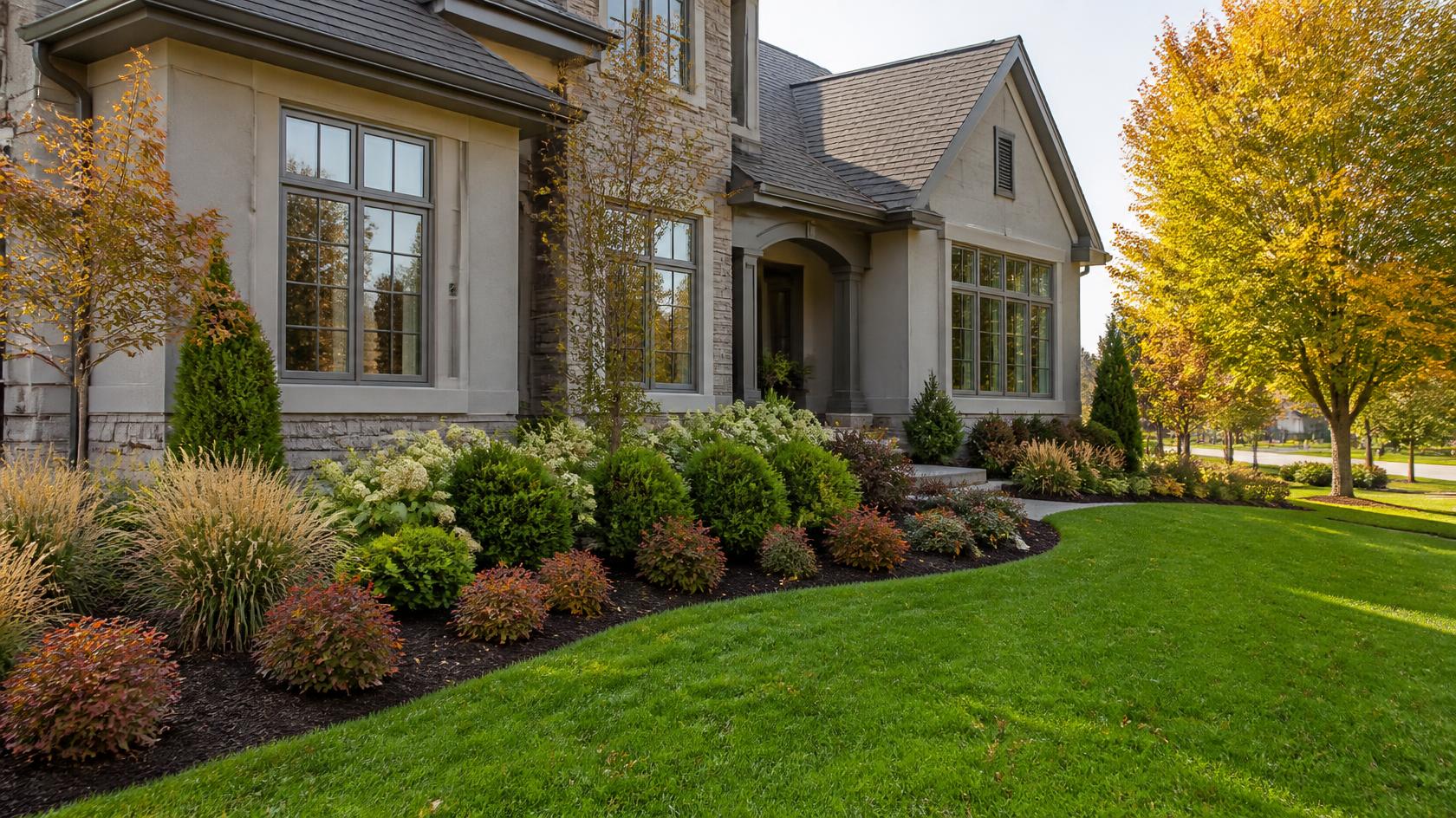
Choosing dwarf and appropriately-sized varieties and plants suited to Johnson County’s clay and Zone 6a climate is what makes the renovation last. This is exactly the part homeowners most often get wrong and where professional design earns its keep.
Do the lawn while you’re at it
If you’re renovating the front beds, fall is also the ideal time to renovate the lawn that frames them. The same cool-air, warm-soil window that’s perfect for planting is the best time to renovate the lawn with aeration and overseeding relieving compacted clay and thickening thin, worn turf so the whole front yard comes back full and green together. New beds against a thin, patchy lawn only tell half the story; doing both at once gives you a complete transformation by spring. It’s the most efficient time to knock out both, since the crew and the season are already right.
Renovate the beds and the lawn together this fall. Get a free landscape consultation or call (913) 829-4949 design, install, and a one-year warranty on new plantings.
Why Overland Park homeowners choose MW Lawn & Landscape
Replacing overgrown landscaping is equal parts removal, design, and knowing what to plant and after 25+ years in Johnson County, we handle all of it:
- We design in scale. We plan the new beds to fit your home and choose right-sized plants that stay proportionate so you’re not renovating again in five years.
- We plant what thrives here. Shrubs and perennials suited to Johnson County clay and our climate, planted at the right depth and spacing.
- Removal to finish, one team. We pull the old plants, prep the beds, install the new landscaping, and mulch it clean you deal with one crew, not three.
- One-year warranty on new plantings. We stand behind what we plant, and can shape and maintain the new plantings as they grow in.
- Family-owned, licensed, and insured, serving Overland Park and Johnson County since 2000.
Serving Overland Park, Lenexa, Olathe, and Johnson County
MW Lawn & Landscape renovates foundation plantings and full landscapes across Overland Park, Lenexa, Olathe, and the surrounding Johnson County communities. If the landscaping around your home has grown tired and overgrown, fall is the window to bring it back and give your curb appeal a real lift before winter. We’ll design it to fit your home, install it to last, and back the new plantings with a one-year warranty the way we have for local homeowners since 2000.
Frequently Asked Questions
When should you replace foundation landscaping?
Standard foundation plantings last about 10 to 15 years when well cared for, after which shrubs tend to outgrow their space and look out of scale. Signs it’s time: plants blocking windows, crowding walkways, pressing against the siding, sheared into woody balls, or simply making the home look tired and overgrown. Once plants have outgrown their space, replacing them with right-sized varieties is a better long-term fix than continued hard trimming.
Why replace overgrown shrubs instead of trimming them?
Because trimming is a short-term fix for a permanent mismatch. A shrub that has outgrown its space keeps trying to reach its mature size no matter how often you cut it, so you’re stuck with constant hard pruning that leaves plants woody and bare. Repeated shearing also kills the interior over time, leaving a green shell over dead wood. Replacing with properly-sized plants that grow into their space fixes the root problem.
Is fall a good time to replace landscaping?
Yes fall is the best time in Kansas City. Cool air reduces transplant stress while the still-warm soil lets new plants establish roots before winter, so they thrive next spring instead of struggling through summer. Fall plantings also need less watering. Aim to replant from about late September through October, at least six weeks before the ground freezes, and you’ll head into spring with a finished, established landscape.
How much does replacing foundation landscaping cost?
It varies with the size of the beds, how many plants are removed and installed, and the plant selections, but a foundation renovation is often more affordable than homeowners expect and can be phased if needed. It’s also a strong investment: foundation planting can add more than 10 percent to home value and dramatically improves curb appeal. An on-site consultation gives you an accurate number for your specific project.
How far should shrubs be planted from the house?
Plant larger shrubs and trees at least 5 feet from the foundation, keep a 1-to-3-foot buffer between plants and the siding for air flow, and keep smaller plants no closer than 2 to 3 feet. Beds should generally be 6 to 8 feet deep from the house to the outer edge, and dwarf varieties are best under windows so they don’t block them at maturity. Proper spacing is what keeps a renovation looking good for years.
What plants are best for foundation plantings in Kansas City?
A mix of evergreen and deciduous shrubs, ornamental grasses, and perennials suited to Johnson County’s clay and Zone 6a climate. Dwarf and appropriately-sized varieties are key so they don’t outgrow their space boxwood, dwarf junipers, spirea, and compact hydrangeas are common choices. Matching plants to your home’s light and the bed’s scale matters more than any single ‘best’ plant, which is where professional design helps.
Does new landscaping increase home value?
Yes. Well-designed foundation planting can add more than 10 percent to a home’s value by boosting curb appeal, framing the house, and making it feel more welcoming and cared-for. It’s one of the higher-return exterior improvements a homeowner can make, especially replacing overgrown, dated landscaping that makes a home look older than it is. The visual impact is immediate and the value benefit is lasting.
Can you replace landscaping in stages?
Yes many homeowners phase a foundation renovation to spread out the cost and labor, tackling the most overgrown or visible beds first and working around the house over time. A good plan maps the whole project up front so each phase fits the overall design, even if it’s installed over a couple of seasons. Fall and spring are the best windows for each phase of planting.