
The clearest signs your irrigation system needs repair are uneven watering, low water pressure, sprinkler heads that won’t pop up, pooling water, a zone that won’t run, strange noises, and an unexplained spike in your water bill. In Olathe’s hot summers, spotting these early is the difference between a quick fix and a browned-out lawn by August.
Most Johnson County systems take their first real beating in spring, when the freeze-and-thaw cycle cracks lines and shifts heads — and the damage doesn’t show until summer, when your lawn suddenly depends on every watering cycle. Here’s exactly what to watch for, what each sign usually means, and when it’s a quick DIY check versus a call to a pro.
1. Some areas are green, others are turning brown
Uneven watering is the sign homeowners notice first. If one strip of lawn is lush and the patch beside it is crisping, water isn’t being distributed evenly — usually a clogged nozzle, a stuck head, or a blocked line. In Johnson County’s heavy clay soil, dry patches harden fast and get harder to revive the longer they sit. Quick check: run a cycle and watch each zone. Cause: clogged or misaligned head, blocked pipe.
2. A sprinkler head won’t pop up — or won’t go back down
Heads stuck below the surface water nothing; heads stuck up get clipped by the mower and snap off. Both are common right after winter. A stuck head is often just debris or a worn seal; a sheared head needs replacing before the next cycle floods that spot. Cause: low pressure, debris, or physical damage.
3. Water pressure is noticeably weak
If your spray used to reach the bed and now barely clears the grass, you likely have a leak, a partially closed valve, or a cracked underground line. Low pressure starves the far end of a zone, so the browning (Sign #1) often shows up several feet from the actual problem. The flip side — heads misting instead of spraying a solid stream — means pressure is too high, which wears out components fast.
4. An entire zone has stopped running
When one zone goes dark while the others work, the cause is electrical or valve-related — a bad solenoid, a wiring fault, or a stuck valve — not the heads. This is the sign most worth a professional look, because guessing at valves and wiring usually turns a small repair into a bigger one.
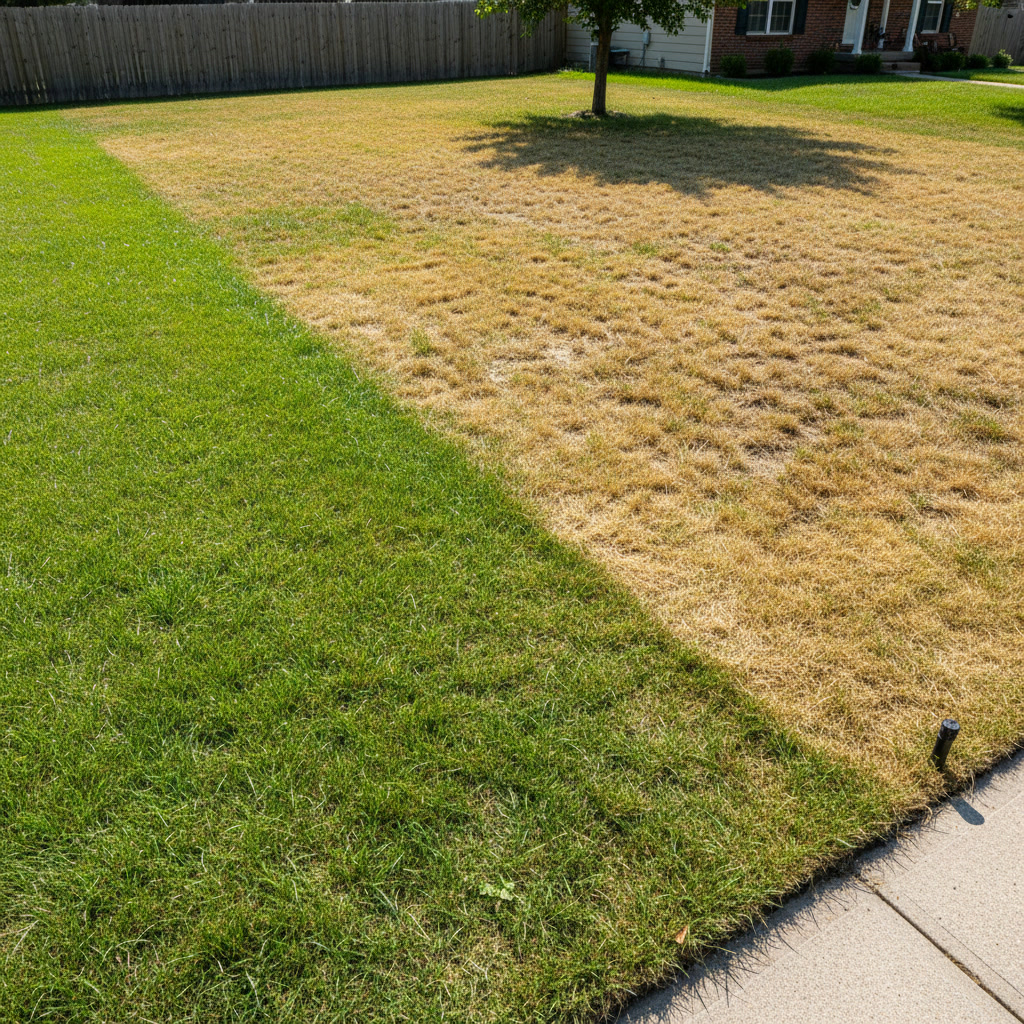
5. Pooling water or a soggy spot that never dries
A patch that stays wet — even on days the system didn’t run — points to an underground leak or a valve that won’t fully close. Beyond the wasted water, constant moisture invites fungus and root rot, which then costs you on the lawn-care side too.
6. Heads spraying the driveway, sidewalk, or fence
Misaligned heads waste water on hardscape and leave the lawn short. Foot traffic, mowers, and soil movement knock heads out of alignment over a season. Often a simple adjustment — but if a head won’t hold its position, the internal gears are worn.
7. Strange noises when the system runs
A healthy system runs quietly. Hissing, sputtering, banging, or gurgling signals trapped air, a failing seal, or a pressure problem — and noise almost always means a bigger issue is on its way. The faster you act, the fewer parts you replace.
8. The controller is skipping schedules or showing errors
Your controller is the brain of the system. If the timer is blank, flashing a fault, or running zones at random, it (or its wiring) needs attention. A misfiring controller quietly over- or under-waters for weeks — your lawn pays for it before you notice.
9. Your water bill jumped for no reason
A summer bill spike with no change in watering almost always traces to a hidden leak or a valve stuck open overnight. The EPA’s WaterSense program notes that even a small irrigation leak can waste thousands of gallons a month — often underground, where you never see a wet spot.
DIY check vs. when to call a pro
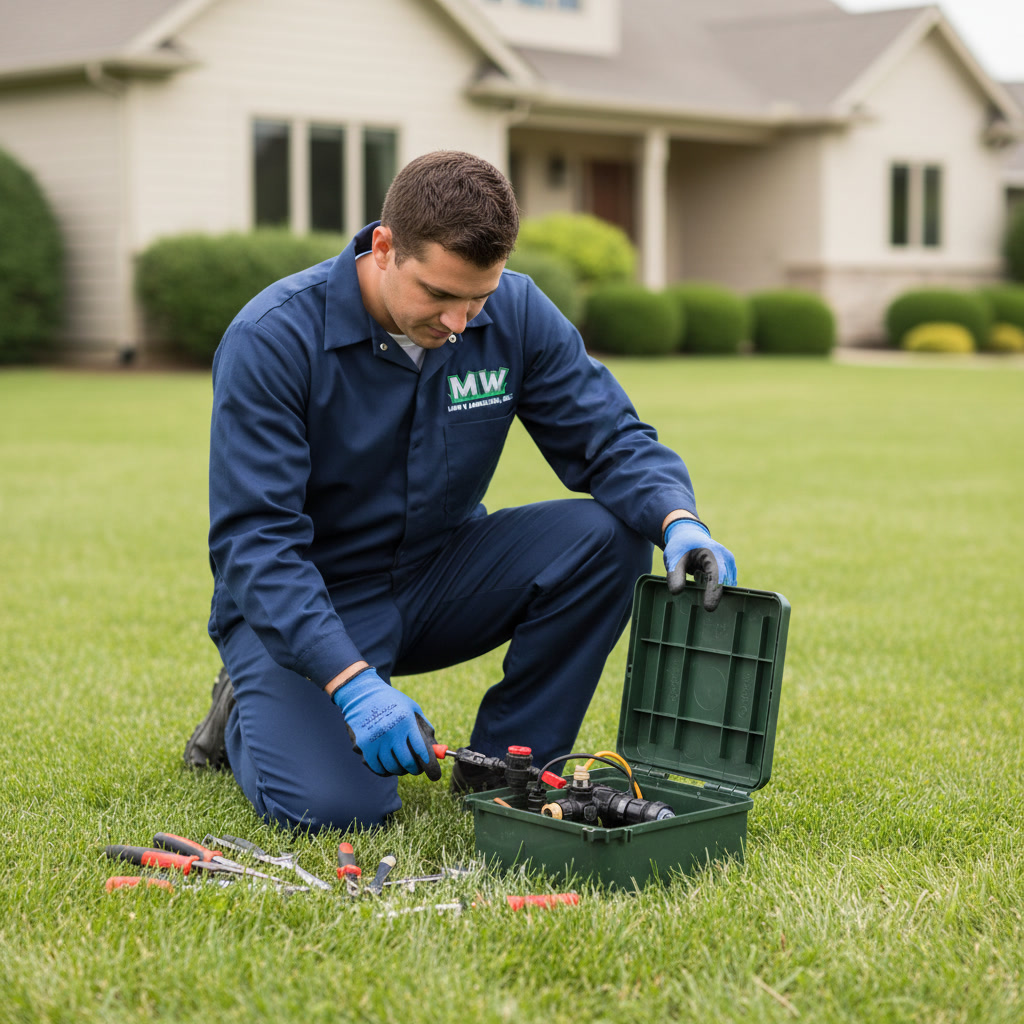
You can handle the visible stuff yourself: clean a clogged nozzle, straighten a misaligned head, clear debris, and confirm your controller’s schedule. But anything involving valves, wiring, underground leaks, or pressure loss (Signs 3, 4, 5, 9) is easy to misdiagnose — and a wrong guess usually costs more than the original fix. If you’ve ruled out the simple causes and the problem’s still there, it’s time for a diagnostic.
Why summer timing matters in Olathe
Every week a broken system runs in July, it’s either drowning one area or starving another while your bill climbs — and an unrepaired leak can rupture when temperatures drop in fall. Fixing it now protects the lawn through the hottest stretch of the year.
If you’ve spotted any of these signs on your Olathe or Johnson County property, our professional irrigation services in Olathe cover full diagnostics and repair. If your system needs a seasonal once-over, ask about spring start-up and backflow testing, and to cut water waste long-term, look at drip irrigation for Olathe lawns.
MW Lawn & Landscape has kept lawns green across Olathe and Johnson County for 25+ years. Request a free quote or call (913) 829-4949 — and before winter, don’t skip your fall sprinkler blowout.
FAQ
How do I know if my irrigation system is broken?
The most reliable signs are uneven watering (green and brown patches side by side), low water pressure, heads that won’t pop up, a zone that won’t run, pooling water, strange noises, and an unexplained jump in your water bill. Any one of these means it’s time for a diagnostic.
What are the signs of an irrigation leak?
A soggy spot that never dries, water pooling even when the system is off, a sudden water-bill spike with no change in usage, and low pressure across a zone. Hidden leaks often show up on your bill before you ever see standing water.
Why is my sprinkler not spraying water?
Usually low pressure, a clogged nozzle, or a head that won’t pop up. If a whole zone won’t spray, the cause is more likely a faulty valve, solenoid, or wiring — that one’s worth a professional check.
Why is one sprinkler zone not working when the others are fine?
A single dead zone is almost always electrical or valve-related — a faulty solenoid, a wiring break, or a stuck valve — rather than the heads. It’s the issue most worth having diagnosed professionally.
How much does irrigation repair cost in Olathe, KS?
It depends on the problem — a clogged head is minor, while a buried leak or valve replacement is more involved. We diagnose first and quote before any work, so there are no surprises. Call (913) 829-4949 for a free estimate.
Can I repair my sprinkler system myself?
You can handle clogged nozzles, misaligned heads, and controller schedules. Leave valves, wiring, underground leaks, and pressure problems to a pro — misdiagnosing those usually costs more than the original repair.