
Every spring, Kansas City homeowners walk out to find a once-lush arborvitae or boxwood browned out on one side, and assume it died of cold. It usually didn’t it dried out. Evergreens keep their foliage all winter, which means they keep losing moisture through it on every sunny, windy winter day, even as the frozen ground cuts off the water their roots would normally replace it with. That slow dehydration, not the cold itself, is what browns and kills evergreens here. The good news: most of it is preventable with a few steps taken now, in late fall, as part of a tree & shrub treatment program.
Here’s what actually threatens your evergreens in a Kansas City winter desiccation, snow and ice, salt and exactly how to protect arborvitae, yews, junipers, and boxwood through it.
THE SHORT ANSWER The main winter threat to evergreens is desiccation, or ‘winter burn’ foliage loses moisture on sunny, windy winter days while frozen soil blocks replacement, turning needles brown (worst on the south and windward sides). The single best defense is a deep watering in late fall before the ground freezes. Mulch, wind screens for exposed and young plants, and anti-desiccant sprays add protection. For snow, brush it off gently and upward never knock ice off, which snaps brittle branches. |
Why Evergreens Struggle in Winter When Other Plants Don’t
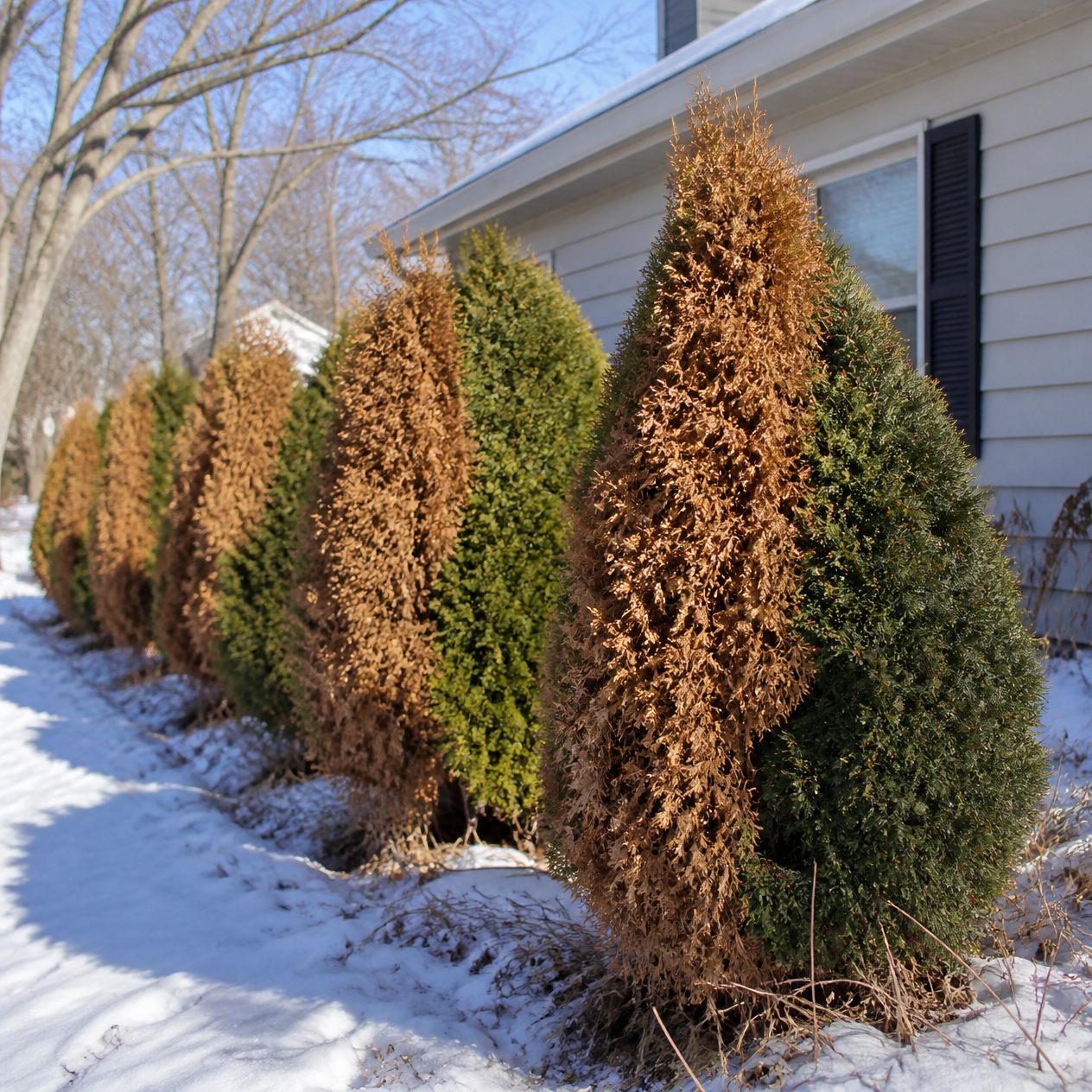
Deciduous trees drop their leaves and go fully dormant there’s nothing left to dry out. Evergreens don’t get that luxury. They hold their needles and broadleaves all winter, and those leaves keep slowly releasing moisture to the air, a process called transpiration. On a calm, cold day that’s no problem. But on the bright, windy days common in a Kansas City winter especially late winter, when the sun gets stronger the foliage loses water fast. Meanwhile the soil is frozen, so the roots can’t pull up water to resupply the leaves. The plant runs a moisture deficit, and the foliage browns and dies from the tips in. That’s winter burn, and it’s the number-one thing that damages evergreens here.
The Three Winter Threats to Your Evergreens
Desiccation is the big one, but snow, ice, and salt all take their toll too. Here’s the full picture:
| Threat | What it does | Signs | How to protect |
|---|---|---|---|
| Winter burn (desiccation) | Foliage dries out faster than frozen roots can resupply | Brown, scorched foliage worst on south/southwest and windward sides | Deep fall watering, mulch, wind screens, anti-desiccant |
| Snow & ice load | Heavy wet snow splays and snaps multi-stem evergreens | Bent-open, splayed, or broken branches | Brush snow off gently and upward; tie columnar plants |
| De-icing salt | Salt spray and runoff burn foliage and damage roots | Browning on the side facing a drive, walk, or street | Barriers; don’t pile salted snow on beds; rinse in spring |
Winter Burn: Prevention Starts in the Fall
Because winter burn is a moisture problem, the fixes are all about helping the plant hold and store water before the ground freezes. In order of importance:
- Water deeply in late fall. This is the single most effective step. Give evergreens a long, deep soak in the weeks before the ground freezes, and keep watering through any dry fall stretch. A well-hydrated plant going into winter has the reserves to survive it. Extension horticulturists across the region rank fall watering as the #1 defense against winter burn.
- Mulch the root zone. A two-to-three-inch layer of mulch (kept off the trunk) insulates the soil, holds moisture, and slows how fast the ground freezes giving roots more time to take up water.
- Screen exposed and young plants from wind. Newly planted and wind-exposed evergreens are the most vulnerable. A burlap wind screen on the windward and south-southwest sides cuts the drying wind and sun. Don’t wrap the plant tightly head to toe you want to block wind, not trap it.
- Consider an anti-desiccant spray. These coat the foliage to slow moisture loss. They can help, but they’re temporary and wear off, so they need reapplying through winter treat them as a supplement to watering, not a substitute for it.
| Get your evergreens winter-ready before the freeze. Deep watering, mulch, and protection for the exposed ones handled as part of our tree & shrub treatment program. Request a free quote or call (913) 829-4949. |
Snow and Ice: What to Do (and What Never to Do)
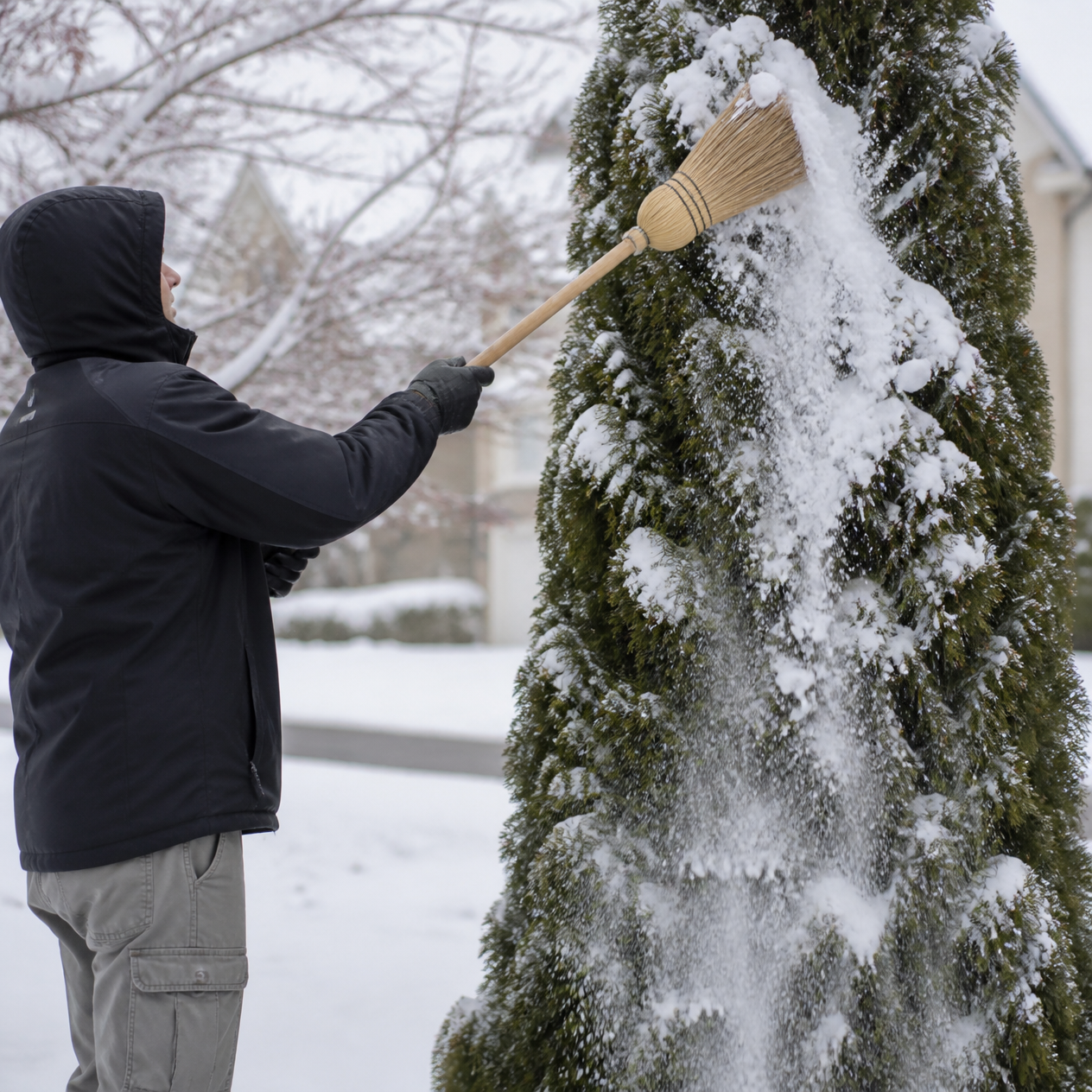
Heavy, wet Kansas City snow is hard on multi-stem evergreens like arborvitae and upright junipers. The weight pushes the stems apart, and once an arborvitae splays open it often doesn’t fully close back up. There’s a right and a wrong way to deal with it:
- Do brush snow off gently, sweeping upward. Use a broom and lift the snow off with the natural direction of the branches, before it builds up and bends them open.
- Don’t try to remove ice. Iced-over branches are brittle and snap easily. Knocking or chipping ice off does more damage than the ice would let it melt on its own.
- Tie columnar plants before winter. Loosely wrapping or tying upright arborvitae with soft twine in late fall keeps the stems together so snow can’t splay them. Remove it in spring.
Don’t Overlook De-Icing Salt
Evergreens planted near driveways, sidewalks, and streets take a beating from de-icing salt both the spray thrown up by traffic and the salty meltwater running into the bed. The result is browning on the side facing the pavement, and over time, root damage. Avoid piling salt-laden snow onto evergreen beds when you shovel, use a barrier for plants right along a walk or drive, and give those plants a good rinse of plain water in early spring to flush salt from the soil.
The Browning That Isn’t Winter Burn
Not every browning evergreen is winter burn. Needle-cast diseases common on spruce cause needles to brown and drop, and winter is often when the thinning becomes obvious. The difference matters, because disease needs a different fix: a properly timed fungicide program in the growing season, not just better watering. If an evergreen is thinning from the inside out or losing needles in a pattern that doesn’t match sun and wind exposure, it’s worth having evergreen / needle cast disease treatment assess it. Telling winter burn apart from disease is exactly the kind of call a plant-health professional makes on sight.
Which Evergreens Are Most at Risk in Kansas City
Some evergreens are far more prone to winter damage than others. The ones to watch here:
| Evergreen | Main winter risk |
|---|---|
| Arborvitae | Winter burn AND snow splaying the most vulnerable on both counts |
| Dwarf Alberta spruce | A classic winter-burn magnet, especially on the sunny side |
| Boxwood | Broadleaf evergreen prone to winter bronzing and burn |
| Yews | Burn on exposed sites; sensitive to wet, poorly drained soil |
| Junipers (upright) | Snow splaying and burn on exposed plantings |
| Holly | Broadleaf evergreen; leaf scorch on windy, sunny sites |
Newly planted evergreens of any kind are the most at risk, because they haven’t established the root system to handle the moisture stress. Those are the ones to water deeply and screen first.
What a Plant-Health Professional Adds
You can handle the watering and basic snow removal yourself, and you should. Where a professional earns their keep is judgment and timing: deep-watering evergreens correctly before the freeze, knowing which plants on your property are most exposed and need protection, telling winter burn apart from disease or pest damage, and scheduling the spring treatments that an at-risk evergreen needs. Done as part of a season-long program, winter protection is one piece of keeping your evergreens healthy year-round not a scramble every time the forecast turns.
Same Window as Your Fall Lawn Work
The late-fall timing for protecting evergreens lines up exactly with the rest of the season’s prep. The deep watering that saves your evergreens happens in the same weeks you’d be finishing fall aeration and overseeding on the lawn and winterizing the irrigation. Handling the whole property’s fall prep in one pass lawn, trees, shrubs, and system means nothing gets missed before the ground freezes and the hard weather sets in.
| Button up the whole landscape before winter. Evergreen protection, fall lawn work, and plant health in one visit. Request a free quote or call (913) 829-4949. |
Why Overland Park Homeowners Choose MW Lawn & Landscape
Winter protection is about doing the right things at the right time which is where a local team pays off:
- 25+ years in Johnson County. We know which evergreens struggle in our winters, which spots on a property are most exposed, and exactly when to get the fall watering in.
- Diagnose, don’t guess. We tell winter burn apart from disease and pest damage, so you treat the real problem not spray a plant that just needed water.
- Year-round plant health. Winter protection fits alongside dormant oil, insect and disease control, and deep-root feeding in one season-long program.
- One call for the whole yard. Evergreens, trees, lawn, and irrigation we handle the full fall button-up together.
Family-owned, licensed, and insured, serving Overland Park and Johnson County since 2000.
Serving Overland Park, Lenexa, Olathe, and Johnson County
MW Lawn & Landscape protects evergreens and provides full tree and shrub care across Overland Park, Lenexa, Olathe, and the surrounding Johnson County communities. Whether it’s winter-burned arborvitae, snow-splayed junipers, or thinning spruce, we’ll diagnose it and protect your evergreens through the season. Request a free quote or call (913) 829-4949. See our full tree & shrub care program for the complete plan.
Frequently Asked Questions
Why are my evergreens turning brown in winter?
Usually it’s winter burn the foliage loses moisture on sunny, windy winter days while the frozen ground keeps the roots from replacing it, so the leaves dry out and brown. It’s worst on the south, southwest, and windward sides. It’s a moisture problem, not simply cold damage, which is why the main defense is watering deeply before the ground freezes.
How do I protect my evergreens in winter?
Water them deeply in late fall before the ground freezes that’s the most important step. Add a two-to-three-inch layer of mulch over the root zone, screen exposed and newly planted evergreens from wind with burlap, and consider an anti-desiccant spray. For snow, brush it off gently; never knock ice off, which snaps brittle branches.
When should I water my evergreens for winter?
In late fall, in the weeks before the ground freezes, and keep watering through any dry fall spell up until then. A deep, thorough soak that reaches the whole root zone gives the plant the moisture reserves it needs to get through winter. This single step prevents most winter burn.
Should I wrap my arborvitae for winter?
For exposed or newly planted arborvitae, a burlap wind screen on the windward and sunny sides helps prevent winter burn but don’t wrap the plant tightly all over, which traps moisture and heat. Separately, loosely tying upright arborvitae with soft twine keeps heavy snow from splaying the stems open. Remove both in spring.
How do I get snow off my evergreens without damaging them?
Brush snow off gently with a broom, lifting upward in the direction the branches grow, before it builds up and bends them. Never try to remove ice iced branches are brittle and snap easily, so knocking the ice off does more harm than leaving it to melt on its own.
Will my winter-burned evergreen recover?
Often, yes if the damage is limited to the foliage. Many evergreens push new growth in spring and fill back in. Wait until spring to assess and prune, since buds that look dead may still break. However, an evergreen burned back to bare wood may not regrow from those spots, so prevention matters more than cure.
Why is my evergreen brown only on the side facing the driveway?
That’s usually de-icing salt damage. Salt spray from traffic and salty meltwater running into the bed burn the foliage and harm the roots on the pavement side. Avoid piling salted snow onto the bed, use a barrier for plants right along the drive or walk, and rinse the area with plain water in early spring.
Do you provide evergreen and winter plant care in Overland Park?
Yes. We protect evergreens and provide full tree and shrub care across Overland Park, Lenexa, Olathe, and the surrounding communities fall deep watering, winter protection for exposed plants, and diagnosis and treatment of winter burn versus disease. Call (913) 829-4949 for a free evaluation.