
The way to get rid of bagworms is to treat the caterpillars while they’re still small from late May through June and into early July in the Olathe area when sprays can actually reach and kill them. Wait until mid-to-late August and it’s too late: the caterpillars seal up their bags, stop feeding, and no insecticide can get to them. That deadline matters more than with almost any other pest, because a single female lays up to 1,000 eggs, and a heavy infestation can completely defoliate and kill an evergreen which, unlike a deciduous tree, won’t grow its needles back. Spotting them early is the whole game.
Here’s how to recognize bagworms, exactly when to treat in Kansas, what actually works, and why the window is open right now.
What bagworms are and why they’re so destructive
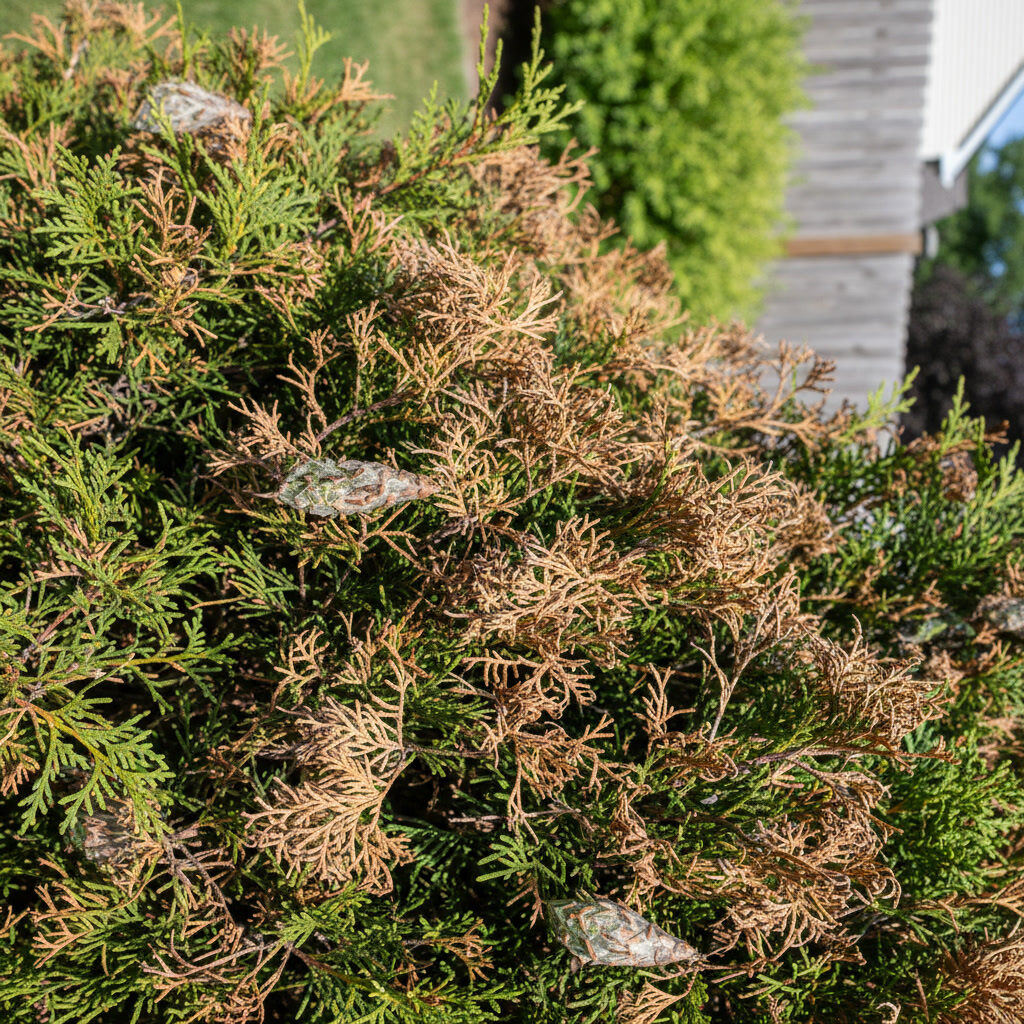
Bagworms are caterpillars that build a protective bag out of the very foliage they eat, which is what makes them so sneaky the bag is camouflaged to look like part of the plant. They overwinter as eggs inside last year’s bags, up to 1,000 per bag. The eggs hatch in late spring, and the tiny caterpillars start feeding and building their own bags immediately. They also “balloon” spinning a silk thread and catching the wind to drift in from a neighbor’s infested juniper which is why an infestation can appear seemingly out of nowhere and why a single treatment often isn’t enough.
They favor evergreens junipers, arborvitae, spruce, cedar, and pine though they’ll also feed on deciduous trees like maple and honeylocust. The danger is highest on evergreens: heavy feeding browns and defoliates them, and a defoliated evergreen usually doesn’t recover. What starts as a few overlooked bags becomes a dead shrub by the next summer.
How to spot bagworms
Early bagworms are genuinely hard to see, which is why so many homeowners miss them until the damage is done. Look closely for:
- Small spindle-shaped “bags” hanging from branches 1/8 inch at first, growing to 1½ inches that look like tiny pinecones or ornaments made of the plant’s own needles.
- Subtle browning or a scorched, thinning look on evergreen branch tips where the caterpillars have been feeding.
- Movement on close inspection if you spot one small bag, look harder, because others are almost always nearby.
Walk your junipers, arborvitae, and spruce now and inspect them closely. Dense foliage hides early infestations, so it takes a deliberate look but catching them at this stage is exactly what saves the plant.
When should you treat for bagworms in Kansas?
Scout starting in early-to-mid May, and treat once you see young caterpillars active generally mid-June through early July here, while they’re small and exposed. Because eggs hatch over a stretch of weeks and new caterpillars keep ballooning in, one spray rarely does it: plan to treat about weekly for up to four weeks, or do two applications a few weeks apart if your trees have been hit hard in the past. The hard deadline is mid-to-late August. Once the caterpillars finish feeding and seal their bags, sprays can’t penetrate, and you’ve lost the chance until next year.
How to get rid of bagworms
The right product depends on how big the caterpillars are:
While they’re small (now – early summer)
Use Bt (Bacillus thuringiensis) or spinosad both effective, lower-toxicity options. The catch: they only work on young caterpillars and have to be eaten, so thorough coverage of the whole plant and repeat applications are essential. This is the ideal, gentlest window to act.
As they grow (mid-to-late summer)
Once the caterpillars get larger, Bt loses effectiveness and you’ll need a stronger insecticide products with permethrin, cyfluthrin, or lambda-cyhalothrin applied before that late-August cutoff.
Hand removal (fall through early spring)
Outside the spray window, you can physically pick the bags off and destroy them dropping them in soapy water or sealing them in the trash anytime from fall until the eggs hatch in spring. Since each bag holds up to 1,000 eggs, removing them is removing next year’s infestation. It’s practical for small shrubs and light infestations.
Large or heavily infested trees
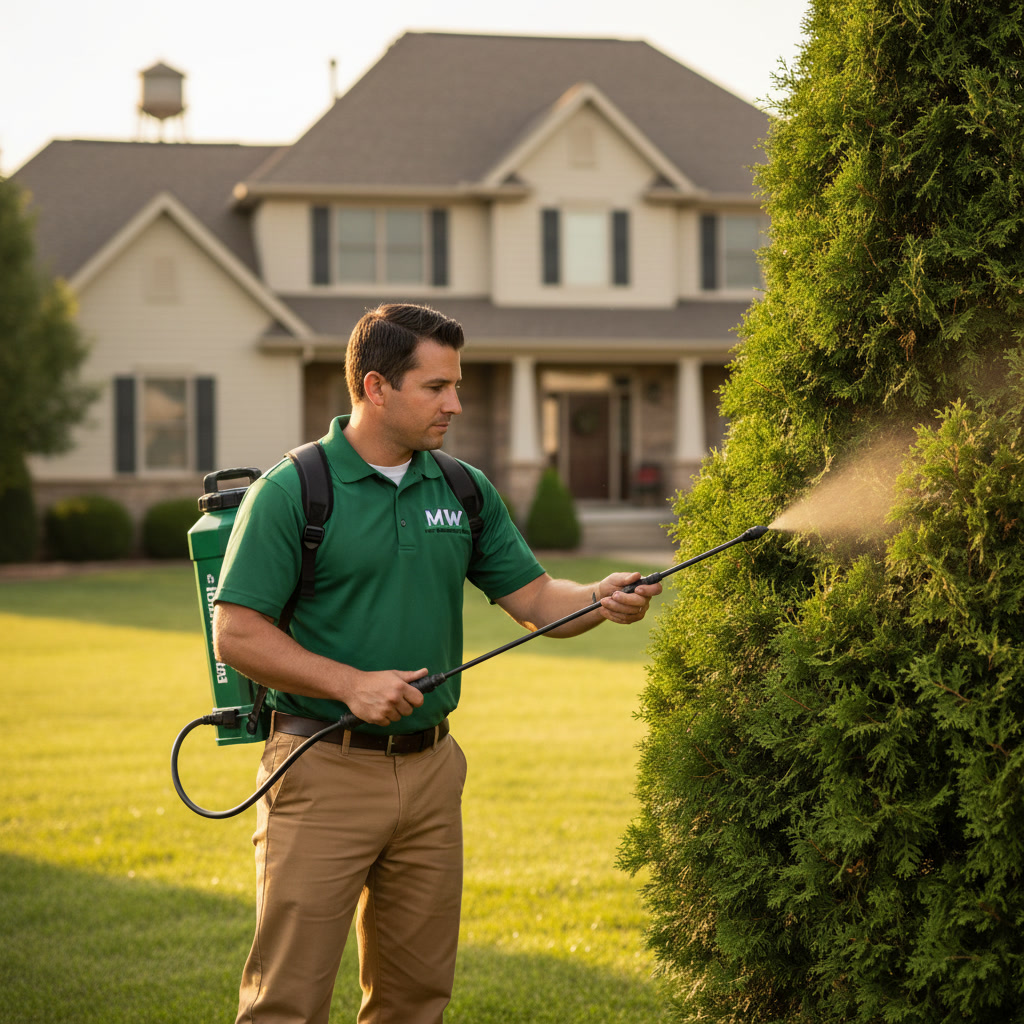
Tall evergreens and windbreaks are tough to treat thoroughly from the ground, and complete coverage is what makes the difference. That’s where professional equipment and timing pay off a missed section just reseeds the problem. Keeping plants healthy with proper professional irrigation services, expert bush and shrub trimming, and landscape maintenance also helps them withstand and recover from feeding.
Why “before it’s too late” isn’t just a slogan
Bagworm damage scales fast. A light infestation under about 20 bags means minor foliage loss you can often hand-pick away. At 20 to 50 bags you’re looking at noticeable defoliation that needs chemical treatment. Above 50, you can see 60 to 80% defoliation, and on an evergreen that often means a dead plant. Add in the up-to-1,000 eggs each surviving female leaves behind, and an ignored infestation doesn’t stay the same size it multiplies. Acting while the caterpillars are small is both easier and far cheaper than replacing mature evergreens.
Bagworm treatment across Johnson County
MW Lawn & Landscape treats bagworms for homeowners in Olathe , Overland Park, and throughout Johnson County with proper timing, repeat coverage, and the equipment to reach tall evergreens. Bagworms are just one of several pests we watch for; see our broader guide to protecting all your trees and shrubs from insects, and pair it with our lawn pest control for whole-property protection. We’ve cared for local landscapes for 25+ years.
Spotted bags on your junipers or arborvitae? Don’t wait the window closes in August. Request a free quote or call (913) 829-4949 for bagworm treatment.
FAQs
How do I get rid of bagworms on my trees?
Treat the caterpillars while they’re small late May through early July in our area with Bt or spinosad, applied thoroughly and repeated about weekly for up to four weeks since they hatch over time and blow in from nearby plants. As they grow, switch to a stronger insecticide like permethrin. Outside the spray window, hand-pick and destroy the bags in fall through early spring to remove next year’s eggs.
When should I treat for bagworms in Kansas?
Scout in early-to-mid May and treat when young caterpillars are active, generally mid-June through early July while they’re small and exposed. Plan on repeat applications. The hard deadline is mid-to-late August once the caterpillars seal their bags and stop feeding, sprays can no longer reach them.
What kills bagworms?
While they’re small, Bt (Bacillus thuringiensis) and spinosad work well and are lower in toxicity, but they must be eaten and require thorough coverage and repeat sprays. For larger caterpillars later in summer, insecticides with permethrin, cyfluthrin, or lambda-cyhalothrin are more effective. After feeding stops in August, no spray works only hand removal.
What trees do bagworms attack?
They favor evergreens junipers, arborvitae, spruce, cedar, and pine which are at the most risk because a defoliated evergreen usually won’t recover. They also feed on deciduous trees like maple and honeylocust, though those typically bounce back.
Can a tree recover from bagworm damage?
Deciduous trees usually recover, but evergreens often don’t heavy defoliation (60–80% on a serious infestation) frequently kills junipers, arborvitae, and spruce, because they can’t regrow needles the way a deciduous tree regrows leaves. That’s why early treatment is so important.
Should I hire a professional for bagworm treatment?
For small shrubs you can often handle it yourself with timely sprays or hand removal. For tall evergreens, windbreaks, or heavy infestations, a professional is worth it complete coverage and correct timing are what actually control them, and a missed section just lets the population rebuild.