
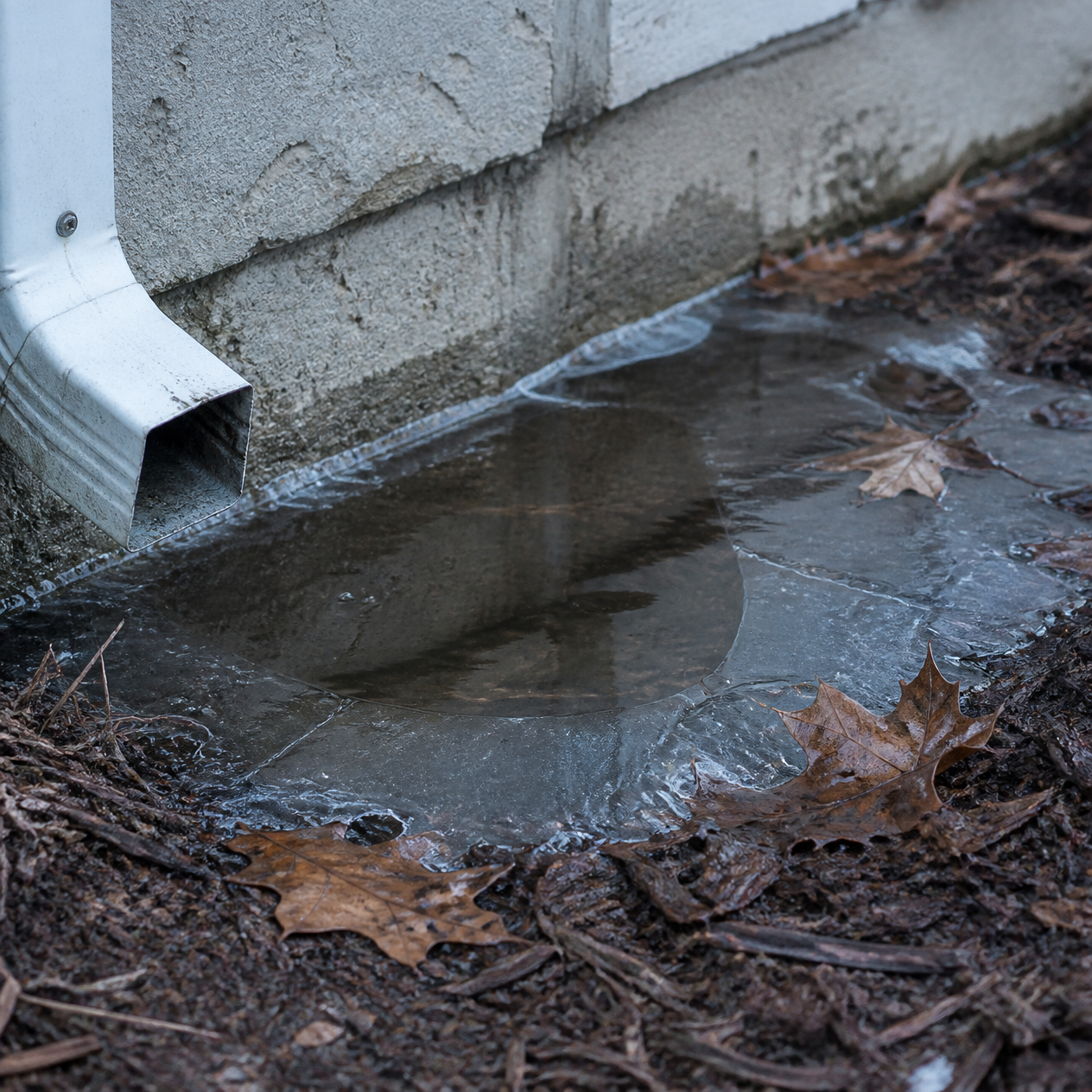
A gutter full of fall leaves looks like a cosmetic chore. It isn’t. When gutters and downspouts clog, the water they’re supposed to carry away instead spills over and pools right against your foundation and in a Kansas City winter, that trapped water freezes, expands, and goes to work on your foundation, walks, and landscape. The leaves are only half the problem, though. Even perfectly clean gutters do nothing if the water dumps out two feet from the house with nowhere to go. Clearing the clogs and making sure the water actually drains away with proper yard drainage solutions is one of the most important things you can do before the ground freezes.
Here’s why clogged gutters and poor drainage become a winter problem, what the water does when it has nowhere to go, and the checklist to get water moving away from your home before the first freeze.
THE SHORT ANSWER Clogged gutters and downspouts overflow and dump water at your foundation, where it freezes, expands, and causes cracks, basement leaks, heaving walks, and dead lawn. But clean gutters alone aren’t enough the water has to be carried away from the house by downspout extensions and working yard drainage. Before the first freeze, clear the gutters and downspouts, make sure water discharges well away from the foundation, and fix any spot where water pools. After the ground freezes, you’ve lost the window until spring. |
Why This Is a Winter Problem, Not Just an Eyesore
Standing water is bad any time of year, but freeze-thaw is what turns it into damage. Kansas City winters swing above and below freezing constantly, and every cycle the water pooled against your foundation or soaked into the soil freezes and expands by about nine percent, then thaws, then does it again. That repeated expansion is what cracks foundations, lifts and splits sidewalks and driveways, and heaves the soil in your beds. Water that would simply drain away in summer becomes a slow wrecking crew once it freezes in place.
Clogged gutters make it worse in a second way: water that can’t flow down the gutter sits in the trough, freezes into a block of ice, and the weight pulls gutters loose from the house. And where overflow runs down the siding and refreezes on walkways, you get the ice that causes winter falls.
What Happens When Water Has Nowhere to Go
Trace the path of a single clogged downspout and you can see every problem it causes:
| Where the water goes | What it causes in winter |
|---|---|
| Pools against the foundation | Freeze-thaw cracks the foundation; water seeps into the basement |
| Sits in the gutter trough | Freezes into heavy ice that pulls gutters off the house |
| Runs onto walks & driveway | Refreezes into dangerous ice; freeze-thaw heaves and cracks the concrete |
| Saturates the lawn & beds | Drowns roots, heaves plants, and leaves dead, soggy patches in spring |
| Erodes soil & mulch | Washes out beds and grading, worsening the drainage problem each year |
Gutters Are Only Half the System
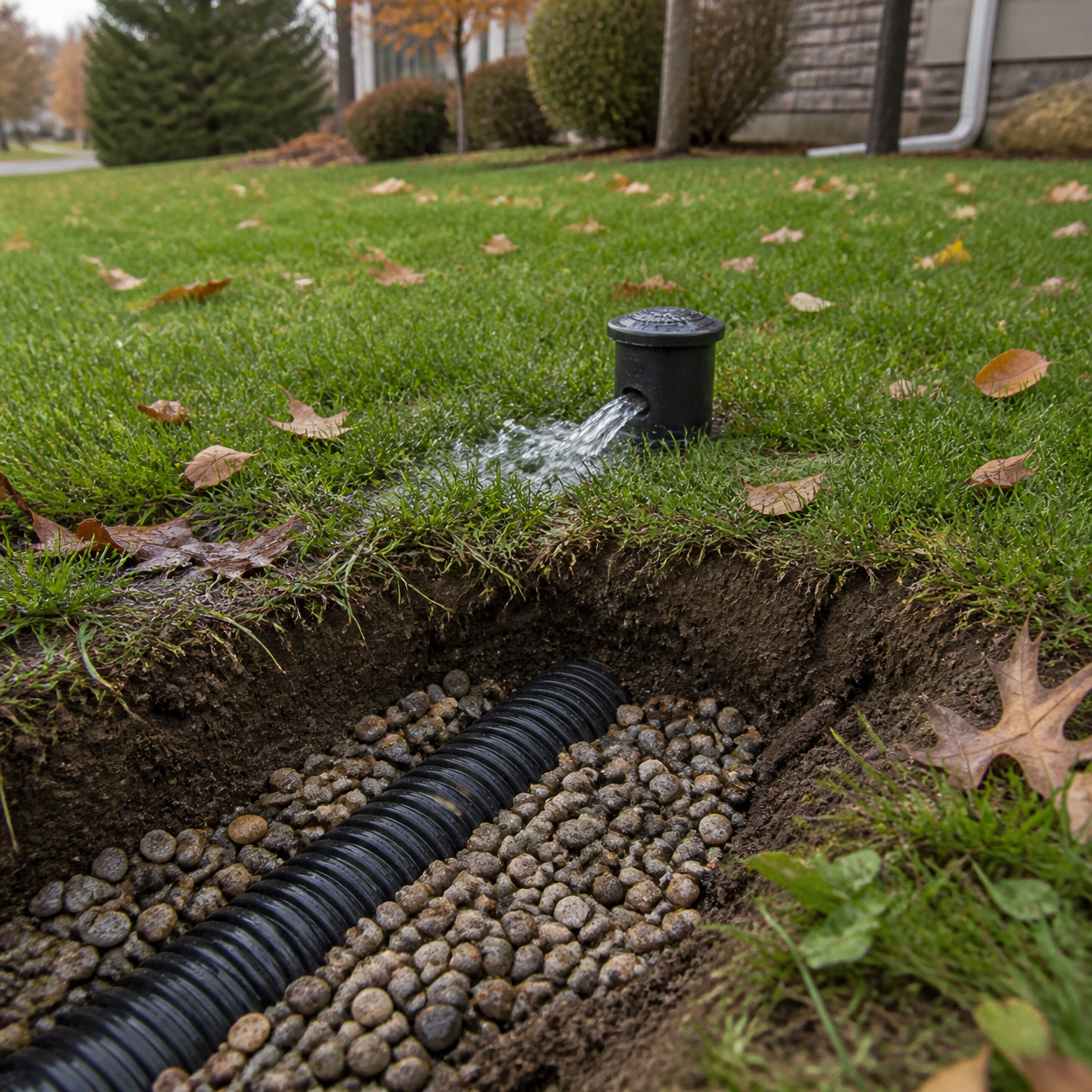
This is the part most homeowners miss. Cleaning the gutters moves the clog down to the end of the downspout but if the downspout dumps the water right at the base of the house, you’ve just concentrated the problem at your foundation. The water has to be carried away. That’s where the actual fix lives: buried downspout lines that discharge well out into the yard, a French drain to intercept water before it reaches the house, and proper grading and swales that move surface water away by design. Clearing leaves is seasonal maintenance; getting the water to drain away is a one-time fix that solves it for good.
| Water pooling where it shouldn’t? We find where it’s going wrong and route it away from your home for good. Yard drainage solutions request a free quote; call (913) 829-4949. |
It’s Part of a Full Fall Cleanup
The same fall leaf drop that clogs your gutters also clogs the drains, grates, and swales in your yard, so gutter and drainage cleanup belongs in the same pass as the rest of your fall leaf removal. A thorough cleanup clears the leaves off the lawn and out of the beds, and clears the debris out of the paths the water needs to travel. Skip the drainage side and you can do everything else right and still wake up to an ice-covered walk and a wet basement in January.
Signs Your Drainage Can’t Keep Up
If you’re seeing any of these, your property has a drainage problem that winter will make worse:
- Water pools near the foundation after rain, or the basement or crawlspace smells damp.
- Soggy spots in the lawn that stay wet for days, or ruts where water runs the same path every storm.
- Mulch and soil wash out of beds and collect on walks or the driveway.
- Ice forms in the same spots on the walk or driveway every winter, a sign water is running where it shouldn’t.
- Downspouts discharge right at the house instead of carrying water several feet out into the yard.
Your Before-the-Freeze Checklist
Get these done while the ground is still workable; once it freezes, drainage fixes wait until spring:
| Task | Why it matters |
|---|---|
| Clear gutters & downspouts of leaves | Stops overflow at the foundation and ice buildup in the trough |
| Make sure water discharges away from the house | Keeps it off the foundation; extend or bury downspouts if needed |
| Clear yard drains, grates & swales of debris | Keeps surface water moving instead of pooling and freezing |
| Fix chronic pooling before it freezes | A French drain, grading, or dry creek bed solves it for good |
| Check for erosion & regrade low spots | Stops water from collecting against the house all winter |
Standing Water Is Also Killing Your Lawn
Poor drainage doesn’t only threaten the house it drowns the lawn. Grass roots can’t survive in saturated soil, so chronically wet spots in your yard are usually where the turf thins out and dies. Part of the long-term fix is improving how water moves through the soil: fall aeration and overseeding relieve the compaction that makes water pool on the surface, helping it soak in instead of running off. Solve the drainage and improve the soil together, and the soggy dead patches stop coming back every spring.
What You Can Do, and What Needs a Pro
Clearing the gutters and raking debris off the yard drains is DIY work if you’re comfortable on a ladder and can keep up with the leaf drop. It crosses into professional territory when you need to bury downspout lines, install a French drain, regrade a low spot, or build a dry creek bed to carry water away. Those are the permanent fixes for a property that floods the same way every year, and they’re the difference between cleaning your gutters forever and actually solving where the water goes.
Why Overland Park Homeowners Choose MW Lawn & Landscape
Drainage is about reading how water moves across a property which is what a landscape company does better than a one-service crew:
- 25+ years in Johnson County. We know our clay soil and freeze-thaw winters, and where water causes trouble on properties like yours.
- We fix where the water goes. Buried downspouts, French drains, grading and swales, dry creek beds the permanent solutions, not just a seasonal cleanout.
- Cleanup and drainage together. We handle the fall cleanup and the water management in the same visit, so nothing’s left to clog and freeze.
- One call for the whole property. Drainage, lawn, beds, and cleanup the full fall button-up from one team.
Family-owned, licensed, and insured, serving Overland Park and Johnson County since 2000.
Serving Overland Park, Lenexa, Olathe, and Johnson County
MW Lawn & Landscape provides fall cleanup and yard drainage solutions across Overland Park, Lenexa, Olathe, and the surrounding Johnson County communities. Whether it’s clearing the clogs or solving where the water goes for good, we’ll get it moving away from your home before the freeze. Request a free quote or call (913) 829-4949.
Frequently Asked Questions
Why should I clean my gutters before winter?
Clogged gutters overflow and dump water at your foundation, where Kansas City’s freeze-thaw cycles turn it into cracks, basement leaks, and heaved walks. Clogged gutters also freeze into heavy blocks of ice that pull the gutters off the house, and overflow refreezes into dangerous ice on walkways. Clearing them before the first freeze prevents all of it.
Where should downspout water drain to?
Well away from the foundation ideally several feet out into the yard, not at the base of the house. Clean gutters still cause foundation problems if the downspout discharges right at the wall. The fix is extending or burying the downspout line so it releases water out in the yard, where it can drain without pooling against the house.
What happens if I don’t fix drainage before it freezes?
Water pooled against the foundation or saturating the soil freezes and expands with every freeze-thaw cycle, cracking foundations and concrete and heaving plants. And once the ground freezes, you can’t do drainage work until spring so the problem runs unchecked all winter. Getting water moving away before the freeze is the whole point.
How do I know if I have a drainage problem?
Common signs: water pools near the foundation after rain, soggy lawn spots that stay wet for days, a damp basement or crawlspace, mulch and soil washing out of beds, ice forming in the same walkway spots every winter, and downspouts that discharge right at the house. Any of these means water isn’t draining away the way it should.
Can’t I just clean the gutters and be done?
Cleaning the gutters is essential, but it only moves the clog to the end of the downspout. If the water then dumps at the foundation, you’ve concentrated the problem there. The complete fix is making sure the water is carried away with downspout extensions, a French drain, or proper grading so it drains instead of pooling and freezing.
What’s the permanent fix for water pooling in my yard?
It depends on the property, but the usual solutions are a French drain to intercept and carry water away, buried downspout lines with pop-up emitters, regrading and swales to move surface water by design, or a dry creek bed. We assess how water moves across your yard and recommend the fix that solves it for good, rather than a seasonal patch.