
A lush lawn isn’t luck it’s the result of feeding the grass the right nutrients at the right times all year, and nowhere is the timing more important than fall. If you’ve ever wondered what you’re actually paying for with a lawn fertilization program, or why professionals make such a big deal about the fall feeding specifically, this guide breaks it down. We’ll walk through what a season-long program includes, what each feeding does, and most importantly for Johnson County’s cool-season lawns why fall is the single most important time to fertilize, and why heavy summer feeding is a mistake. When you’re ready to hand it off, a professional lawn fertilization program times all of this for you, so your lawn gets exactly what it needs, exactly when it needs it.
THE SHORT ANSWER
What’s in a program: a round-based plan of 6–7 timed feedings plus weed control spring pre-emergent and feeding, summer weed control with eased-off nitrogen, and the key feedings loaded into fall. Why fall matters most: cool-season grass does most of its root growth in fall, so fall feeding builds strong roots and stores energy for winter survival and a fast spring green-up. The rule: no heavy nitrogen in summer heat it stresses the grass and feeds weeds instead (K-State guidance).
What is a lawn fertilization program?
A fertilization program is a round-based plan that feeds your lawn the right nutrients and controls weeds at the right times across the whole growing season not a single bag of fertilizer once a year. For the cool-season fescue and bluegrass lawns common in Johnson County, most lawns do best on a program of about six to seven rounds spread across the year, each timed to what the lawn actually needs that month rather than a generic calendar. The reason it’s structured as multiple rounds is simple: grass needs different things at different times. What helps it in spring would hurt it in summer, and the most valuable feeding of all comes in fall. A good program also pairs feeding with weed control, because a thick, well-fed lawn is itself the best long-term defense against weeds.
What a full-season program includes
Here’s how a typical 6–7 round cool-season program is structured across the year, and what each phase does:
|
Season |
What’s applied |
What it does |
|---|---|---|
|
Early spring |
Pre-emergent + light feeding |
Stops crabgrass before it germinates; gentle green-up. |
|
Late spring |
Feeding + broadleaf weed control |
Supports growth; knocks out dandelions and broadleaf weeds. |
|
Summer |
Eased-off nitrogen + weed/insect protection |
Protects the lawn through heat WITHOUT forcing stressful growth. |
|
Early fall |
Key feeding (the big one) |
Drives root growth and recovery as grass re-awakens. |
|
Mid/late fall |
Root-building feeding |
Builds energy reserves for winter and spring green-up. |
|
Late fall |
Winterizer |
Final nutrients to survive winter and green up early in spring. |
Notice the shape of it: the program eases off in summer and concentrates its firepower in fall. That’s not arbitrary it’s built around how cool-season grass actually grows, which is the key to the whole thing.
Why fall is the most important time to fertilize
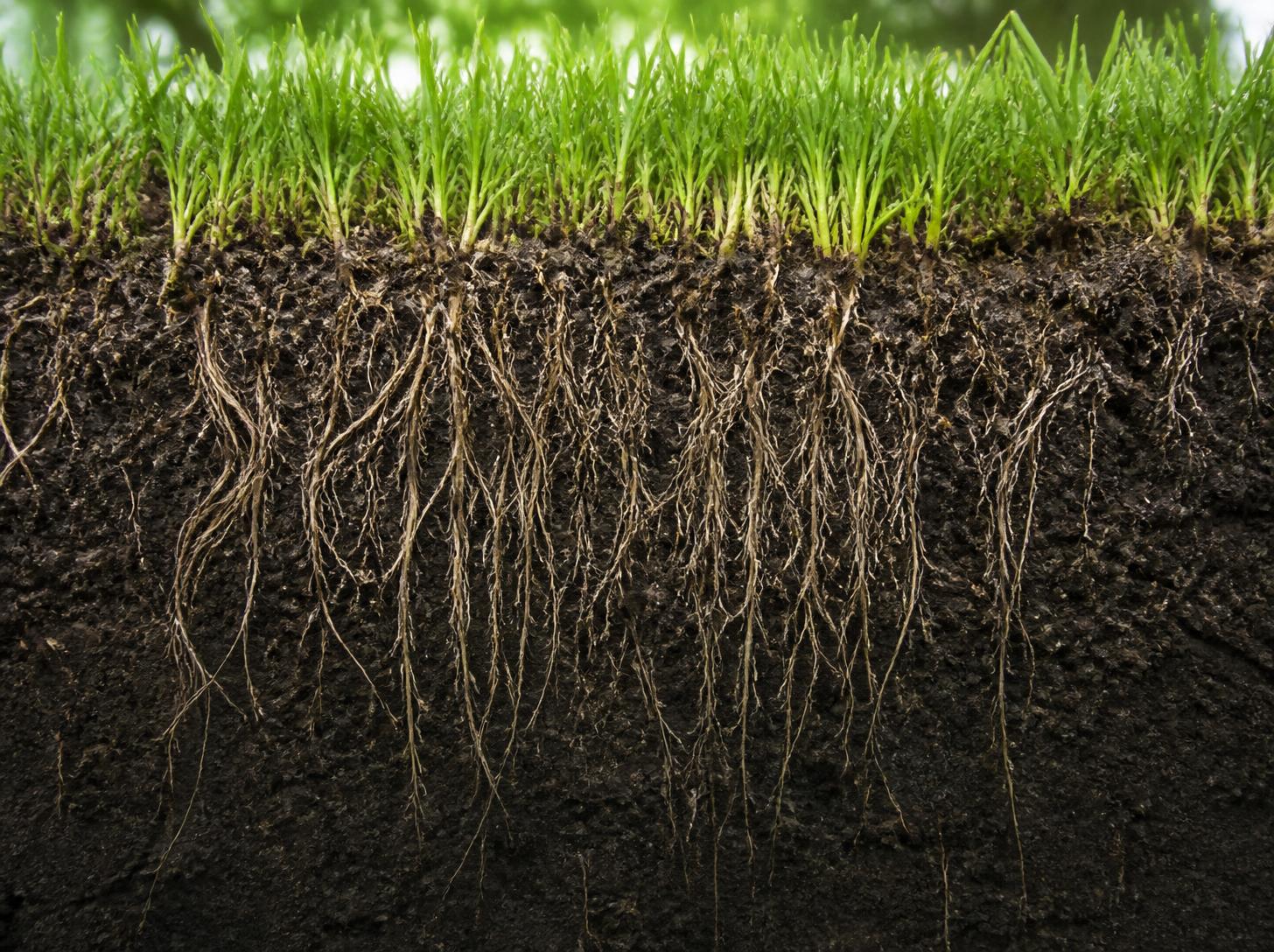
If you fertilize your lawn only once a year, fall is the time and here’s why. Cool-season grasses like fescue and bluegrass do most of their root growth in the fall, not the summer. As the air cools but the soil stays warm, the grass shifts its energy below ground, growing roots and storing carbohydrates. Feeding the lawn during this window does two powerful things: it fuels that root growth, giving you a deeper, more resilient root system, and it helps the plant store energy reserves that carry it through winter and power an early, vigorous green-up the following spring.
This is why a lawn that’s fed well in fall comes back thicker and greener in spring than one that isn’t the work that shows in April was actually done in October. It’s also why fall is the ideal time to combine feeding with pairs with aeration and overseeding: aeration relieves compaction, overseeding thickens the turf, and the fall feeding drives root establishment for all of it. Those three together are the core of a full fall lawn renovation.
Want the fall feeding timed right the round that matters most? Get a free fertilization quote or call (913) 829-4949.
The summer nitrogen rule (why less is more)
Here’s the counterintuitive part that separates a program built on agronomy from one that just dumps fertilizer on a schedule: you should NOT apply heavy nitrogen to a cool-season lawn in the heat of summer. It seems like feeding a struggling summer lawn would help but it does the opposite. According to K-State Research and Extension guidance, heavy summer nitrogen stresses cool-season grass, pushing tender top growth when the plant is already fighting heat and drought, and it tends to feed summer weeds and disease rather than the lawn.
A proper program eases off nitrogen in midsummer and shifts to protecting the lawn then loads the key feedings into fall, when the grass can actually use them. This is exactly the approach a good local program follows, and it’s a real marker of whether your lawn care is built around your grass or around a generic national calendar. If your current program is hitting your lawn with heavy nitrogen in July, it’s working against you.
The nutrients that matter in fall
Fertilizer isn’t one thing the three numbers on the bag (N-P-K) are nitrogen, phosphorus, and potassium, and the balance shifts through the season:
- Nitrogen (N) drives green growth. Valuable in spring and especially fall (for root growth), but eased off in summer heat for cool-season lawns.
- Phosphorus (P) supports root development particularly useful for new seed and establishment, which is why starter fertilizers are higher in it.
- Potassium (K) builds overall hardiness and stress tolerance important in fall to prepare the lawn for winter.
A late-fall winterizer feeding is formulated to fortify the lawn with the nutrients it needs to survive a harsh Kansas City winter and green up early the following spring. The point isn’t more fertilizer it’s the right blend at the right moment, which is the whole logic behind a timed, round-based program rather than a one-and-done bag.
Program vs. DIY: what you’re really paying for
You can buy fertilizer and spread it yourself so what does a program actually give you? Three things that are hard to replicate from a garage shelf. First, timing: the value is in applying the right product in the right window (especially that critical fall feeding and the no-heavy-summer-nitrogen discipline), which takes knowing your grass and your local season. Second, the right products at the right rates: professional-grade fertilizer and weed control, applied by a licensed applicator at calibrated rates, so you don’t burn the lawn or waste product. Third, weed control woven in: a program pairs feeding with targeted weed control timed to each weed’s life cycle pre-emergent in spring, broadleaf control through the season so the lawn gets denser and the weeds get squeezed out over time. DIY can work if you’re diligent and know the timing; a program exists so you don’t have to be your own agronomist.
Let us handle the timing, the products, and the weeds. Get a free fertilization quote or call (913) 829-4949 for a program built for Johnson County lawns.
Why Olathe homeowners choose MW Lawn & Landscape
Feeding a lawn well is about knowing your grass and your season after 25+ years in Johnson County, that’s exactly what our program is built on:
- A program built for our lawns. Our a professional lawn fertilization program [/lawn-fertilization-program-olathe-ks/] is a round-based plan for Johnson County’s cool-season fescue and bluegrass 6 to 7 rounds timed to what your lawn needs each month.
- Fall done right. We load the key feedings into fall, when your grass does its root growth the round that decides how your lawn looks next spring.
- No heavy summer nitrogen. Following K-State guidance, we ease off nitrogen in midsummer and protect the lawn instead of stressing it the agronomically correct call.
- Feeding + weed control in one. Licensed applicators, professional-grade products, and targeted weed control timed to each weed’s life cycle a denser lawn that crowds weeds out.
- Family-owned, licensed, and insured, serving Olathe since 2000.
Serving Olathe, Overland Park, and Johnson County
MW Lawn & Landscape’s fertilization program keeps lawns green and healthy across Olathe, Overland Park, and the surrounding Johnson County communities fed the right way, at the right time, all season long, with the crucial fall feedings timed to when your grass can truly use them. If you want a thicker, greener lawn next spring, it starts with feeding it right this fall. We’ll build a program for your lawn the way we have for local homeowners since 2000.
Frequently Asked Questions
Why is fall the most important time to fertilize a lawn?
Because cool-season grasses like fescue and bluegrass do most of their root growth in the fall. As air cools but soil stays warm, the grass shifts energy below ground, growing roots and storing carbohydrates. Feeding during this window fuels that root growth and builds the energy reserves that carry the lawn through winter and power a fast, vigorous green-up in spring. A lawn fed well in fall comes back noticeably thicker and greener the next year.
What’s included in a lawn fertilization program?
A round-based plan of about 6 to 7 timed feedings across the season, paired with weed control. It typically includes spring pre-emergent and feeding to stop crabgrass and green up the lawn, broadleaf weed control through the growing season, eased-off nitrogen in summer to protect the lawn from heat stress, and the key feedings loaded into fall for root growth, finishing with a late-fall winterizer. Each round is timed to what the lawn needs that month.
Should you fertilize a cool-season lawn in summer?
Not with heavy nitrogen. K-State Extension guidance is that heavy summer nitrogen stresses cool-season grasses, forcing tender growth while the plant is already battling heat and drought, and it tends to feed summer weeds and disease rather than the lawn. A proper program eases off nitrogen in midsummer and focuses on protecting the lawn, then concentrates the important feedings in fall when the grass can actually use them.
How many times a year should a lawn be fertilized?
For cool-season fescue and bluegrass lawns in Johnson County, most do best on about 6 to 7 rounds across the season, timed to the lawn’s needs rather than a fixed calendar. The exact number depends on the lawn, but the key is spreading feedings across spring and fall with the heaviest emphasis in fall, while easing off in summer heat. A single annual application leaves a lawn under-fed for most of the year.
What is winterizer fertilizer?
A winterizer is the final, late-fall feeding of the season, formulated to fortify the lawn with the nutrients it needs to survive winter and green up early the following spring. It supports the root system and energy stores heading into dormancy. Applied at the end of a fall fertilization program, it’s part of why a well-fed lawn greens up faster and stronger in spring than one that wasn’t fed in fall.
What do the numbers on fertilizer (N-P-K) mean?
They’re the percentages of nitrogen (N), phosphorus (P), and potassium (K). Nitrogen drives green top growth and is valuable in spring and fall but eased off in summer for cool-season lawns; phosphorus supports root development and is higher in starter fertilizers for new seed; potassium builds stress tolerance and winter hardiness, making it important in fall. A good program shifts the balance through the season to match what the lawn needs.
Is a fertilization program worth it versus doing it myself?
A program’s value is in timing, products, and weed control. Applying the right product in the right window especially the critical fall feeding and avoiding heavy summer nitrogen takes knowing your grass and season. Professional-grade products applied at calibrated rates by a licensed applicator avoid burning or wasting product, and weed control is woven in and timed to each weed’s life cycle. DIY can work if you’re diligent, but a program means you don’t have to be your own agronomist.
Does fertilization help with weeds?
Yes, indirectly and powerfully. A well-fed, dense lawn is the best long-term defense against weeds because it crowds them out and denies them space to establish. A good program pairs feeding with targeted weed control timed to each weed’s life cycle pre-emergent in spring to stop crabgrass and broadleaf control through the season so the lawn gets thicker and the weeds get squeezed out over time. Feeding and weed control work together.
Can I fertilize and overseed at the same time in fall?
Yes fall is the ideal time to do both, and they complement each other. A starter-type fertilizer feeds new seed and speeds establishment, while the fall feeding drives root growth across the whole lawn. Combined with aeration, feeding and overseeding form the core of a fall lawn renovation. This is exactly why professionals concentrate aeration, overseeding, and the key fertilizer feedings into the same fall window.