
Most people think of mulch as a spring job the fresh dark layer that makes the beds look sharp for the season. But a mulch refresh in fall does something spring mulch can’t: it insulates your plants’ roots against the freeze-thaw swings of a Kansas City winter. As the soil temperature yo-yos above and below freezing all season, bare or thin beds let the ground heave, which lifts and damages roots and can push shallow-rooted plants right out of the soil. A proper layer of mulch buffers that swing and holds everything stable. Getting a professional mulch installation refresh on before the ground freezes is one of the most underrated things you can do for your landscape.
Here’s what fall mulch actually does, how much you need and where, the mulch-volcano mistake that does more harm than good, and when to apply it in Kansas City.
THE SHORT ANSWER A fall mulch refresh insulates roots against freeze-thaw heaving, holds soil moisture, and suppresses weeds protecting beds through winter. Keep the total layer at 2 to 3 inches (top up thin spots, don’t bury beds deeper each year), and keep mulch off plant stems and tree trunks. Never pile it into a ‘mulch volcano’ against a trunk that causes rot, pests, and girdling roots. Apply after the soil cools but before the ground freezes. |
Why Mulch in Fall, Not Just Spring
Spring mulch is mostly about looks and early-season weed control. Fall mulch is about protection. Once the cold sets in, Kansas City doesn’t just freeze and stay frozen it cycles, warming during the day and refreezing at night, over and over. Each cycle expands and contracts the soil, and that movement heaves the ground, breaking roots and lifting shallow-rooted and newly planted perennials out of the soil where they dry out and die. A layer of mulch acts like a blanket, slowing how fast the soil temperature changes so the freeze-thaw swing is gentler and the ground stays stable. That protection is the whole reason fall mulching matters.
What Fall Mulch Does for Your Beds
Insulation is the headline, but a fall mulch layer earns its keep in several ways through winter and into spring:
| What it does | How it helps |
|---|---|
| Insulates against freeze-thaw | Buffers soil-temperature swings so the ground doesn’t heave and break roots |
| Protects roots & crowns | Keeps shallow-rooted and newly planted perennials from being pushed out of the soil |
| Retains moisture | Holds moisture in the soil so roots (which keep growing in fall) don’t dry out |
| Suppresses weeds | Blocks light to weed seeds, so you start spring with cleaner beds |
| Reduces erosion | Keeps winter rain and snowmelt from washing out soil and mulch |
| Builds the soil | Organic mulch breaks down over winter, feeding the soil for spring |
How Much, and Where It Goes
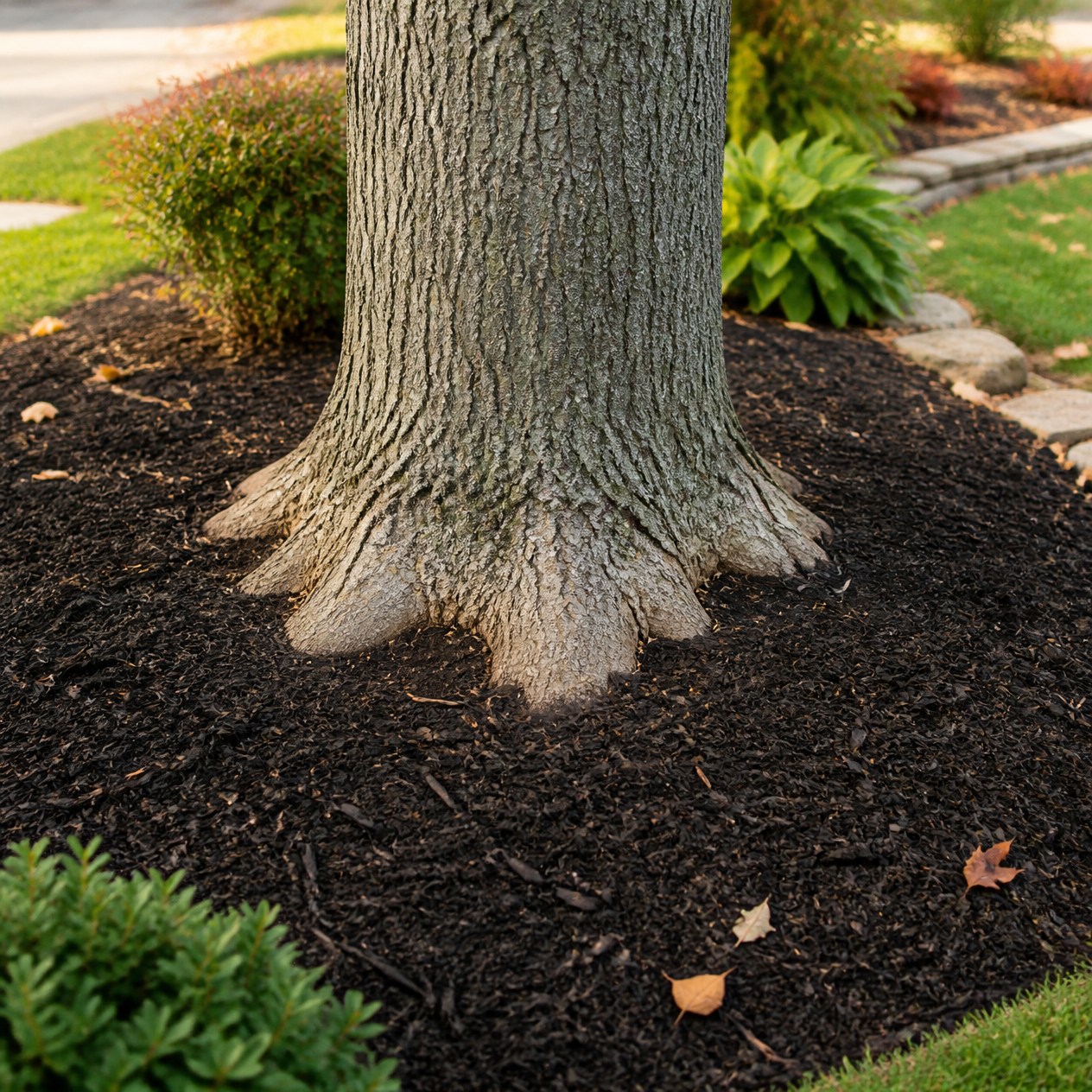
More mulch is not better this is where most fall mulching goes wrong. The target is a total depth of about 2 to 3 inches across the bed. If you already have mulch down and it’s just thinned out, you’re topping up the bare spots to reach that depth, not dumping a fresh 3 inches on top of last year’s layer. Piling new mulch on old year after year builds up a thick, matted layer that sheds water and suffocates roots.
Where the mulch goes matters as much as how much. Keep it pulled back a few inches from plant stems and tree trunks mulch held against living bark traps moisture and invites rot, insects, and disease. Around trees, that means a wide, flat ring, not a cone piled up the trunk.
The Mulch-Volcano Mistake
You’ve seen it on every other property: mulch piled up in a tall cone against the trunk of a tree, like a little volcano. It looks tidy, and it’s one of the most damaging things you can do to a tree. Bark isn’t meant to sit buried under wet mulch it stays damp, rots, and gives insects and disease a way in. The constant moisture also encourages the tree to send out roots up into the mulch, where they circle the trunk and eventually girdle it, slowly strangling the tree over years.
The fix is simple: spread mulch in a flat, even layer and keep it off the trunk entirely, leaving the root flare where the trunk widens at the base visible. A proper mulch ring is wide and shallow, not tall and piled. Done right, it protects the tree; done as a volcano, it slowly kills it.
THE RULE Mulch should look like a doughnut, never a volcano 2 to 3 inches deep, flat and wide, pulled back from every trunk and stem. |
| Want it done right the right depth, off the trunks? We prep, edge, and hand-spread a clean 2–3 inch layer. Professional mulch installation request a free quote or call (913) 829-4949. |
When to Mulch in the Fall in Kansas City
Timing matters. Apply fall mulch after the soil has cooled down but before the ground freezes in Johnson County that’s generally mid-to-late fall, into November. Mulching too early, while the soil is still warm, can hold that warmth and keep plants growing when they should be hardening off for winter. The sweet spot is after the plants have gone dormant but while you can still work the beds. One nuance for tender or newly planted perennials: a protective winter mulch to prevent heaving is best applied right after the ground first freezes, so it keeps the soil frozen and stable rather than insulating warmth in.
Type and Refresh: Keeping It Simple
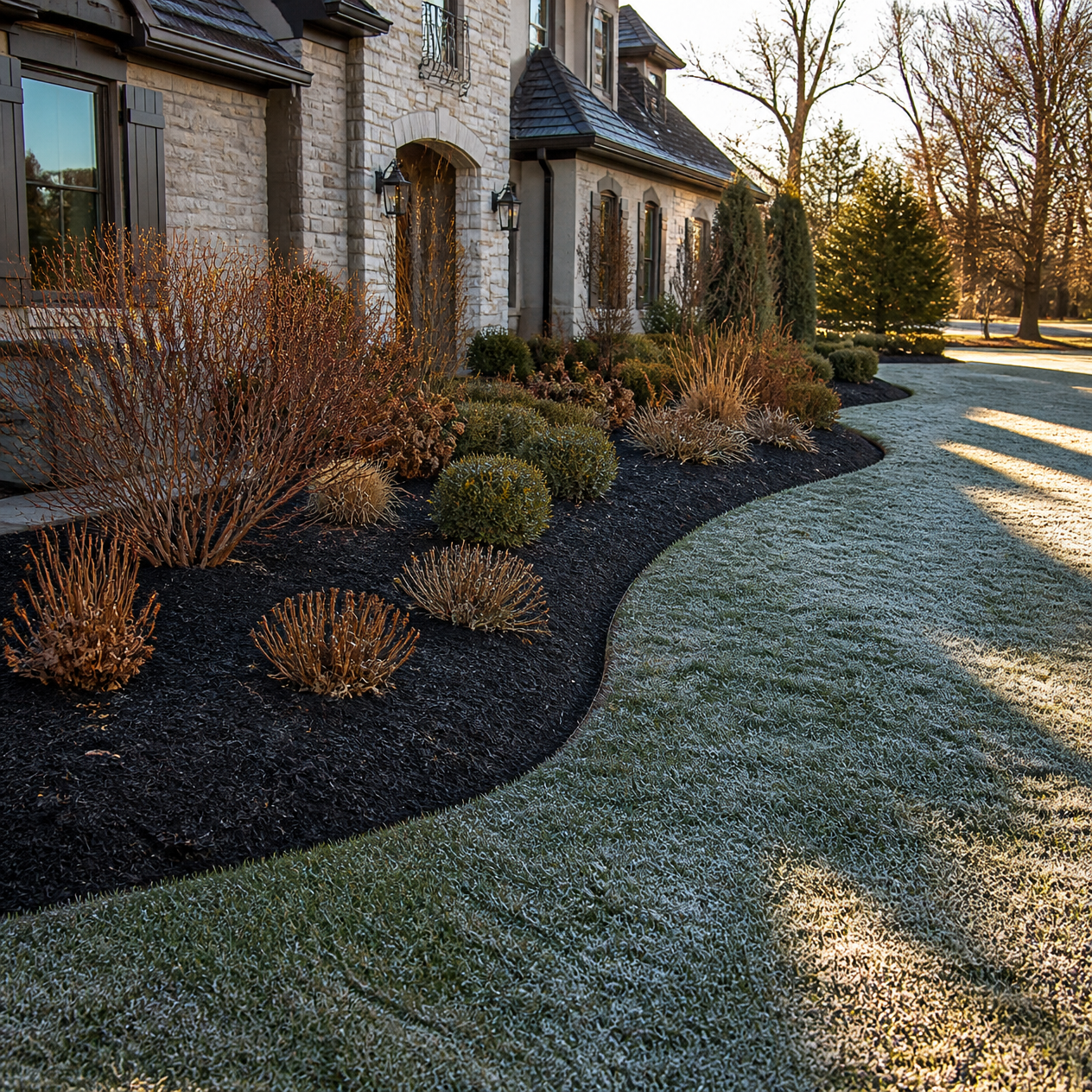
For most Kansas City beds, a shredded hardwood mulch is the workhorse it knits together so it doesn’t wash away, breaks down to feed the soil, and looks clean. The job in fall is usually a refresh, not a full re-mulch: freshen the thin and faded areas back up to that 2-to-3-inch depth, pull back anything that crept against stems, and re-cut the bed edges so everything looks sharp heading into winter. If the existing layer has matted down into a hard crust, it’s worth breaking it up or removing some before adding new, so water and air can still reach the soil.
It’s the Last Step of the Fall Button-Up
Fall mulching is the finishing move of a complete fall cleanup, and it’s most efficient done in sequence. After the fall bed cleanup and cutback and the fall leaf removal are done, the beds are clean and ready for a fresh protective layer. And since fall is root season for the whole property the same reason fall aeration and overseeding works so well now mulching the beds at the same time means the entire landscape goes into winter protected, top to bottom, in one pass.
DIY vs. Having It Installed
Mulch is doable yourself if you don’t mind the hauling it’s heavy, dusty work, and a surprising number of bags or cubic yards to cover a property. Where it’s worth hiring out is the volume and the finish: getting the right amount delivered, prepping and edging the beds, and hand-spreading an even 2-to-3-inch layer that’s pulled back from every trunk without the volcanoes. A professional install also means it’s measured and done right, so you’re not guessing at depth or piling it against your plants. For a large property, it’s the difference between a weekend of wheelbarrow runs and a finished landscape.
Why Overland Park Homeowners Choose MW Lawn & Landscape
Mulch is simple to get wrong and easy to get right with the correct approach:
- 25+ years in Johnson County. We know our freeze-thaw winters and how to mulch beds so they’re protected, not buried.
- The right depth, off the trunks. Hand-spread at 2 to 3 inches, pulled back from stems and trunks no mulch volcanoes.
- Prep, edge, and install. We clean and edge the beds first, then spread, so the finish looks sharp into winter and spring.
- One call for the whole property. Mulch, beds, cleanup, and lawn the full fall button-up from one team.
Family-owned, licensed, and insured, serving Overland Park and Johnson County since 2000.
Serving Overland Park, Lenexa, Olathe, and Johnson County
MW Lawn & Landscape delivers and installs mulch across Overland Park, Lenexa, Olathe, and the surrounding Johnson County communities. We’ll refresh your beds to the right depth before the ground freezes and set your landscape up for spring. Request a free quote or call (913) 829-4949.
Frequently Asked Questions
Should you mulch in the fall?
Yes a fall mulch refresh insulates roots against freeze-thaw heaving, holds soil moisture, and suppresses weeds through winter. It protects plants in a way spring mulch doesn’t, especially shallow-rooted and newly planted perennials that can be heaved out of the ground by repeated freezing and thawing. Keep the layer at 2 to 3 inches and off plant stems.
How deep should mulch be?
About 2 to 3 inches total. More than that sheds water and can suffocate roots, and piling new mulch on old year after year builds up a matted layer that does more harm than good. If you already have mulch down, top up only the thin and bare spots to reach that depth rather than adding a full fresh layer on top.
What is a mulch volcano and why is it bad?
A mulch volcano is mulch piled up in a tall cone against a tree trunk. It’s one of the most damaging things you can do to a tree: the buried bark stays wet and rots, it invites insects and disease, and it encourages roots to grow up into the mulch and circle the trunk, eventually girdling it. Mulch should be flat and wide, pulled back from the trunk a doughnut, not a volcano.
When should I mulch in the fall in Kansas City?
Apply fall mulch after the soil has cooled but before the ground freezes generally mid-to-late fall into November in Johnson County. Mulching too early, while the soil is still warm, can keep plants growing when they should be hardening off. For tender or newly planted perennials, a protective winter mulch to prevent heaving is best applied right after the ground first freezes.
Do I need to remove old mulch before adding new?
Usually not most years you just refresh the thin spots. But if the existing layer has matted down into a hard crust that sheds water, break it up or remove some before adding new, so water and air can reach the soil. The goal is a total depth of 2 to 3 inches, not an ever-thicker pile, so account for what’s already there.
What kind of mulch is best for fall?
For most Kansas City beds, shredded hardwood mulch is the workhorse it knits together so it resists washing away, breaks down to feed the soil, and looks clean. The type matters less than the depth and placement: 2 to 3 inches, spread evenly, and kept back from stems and trunks.
Does fall mulch really protect plants over winter?
Yes. The main threat to roots in a Kansas City winter isn’t the cold itself but freeze-thaw cycling, which heaves the soil and can break roots or push plants out of the ground. A 2-to-3-inch mulch layer buffers the soil-temperature swings so the ground stays more stable, protecting roots and crowns through the winter.
Do you install fall mulch in Overland Park and Johnson County?
Yes. We deliver and install mulch across Overland Park, Lenexa, Olathe, and the surrounding communities prepping and edging the beds, then hand-spreading an even 2-to-3-inch layer kept off the trunks. We’ll refresh your beds before the ground freezes. Call (913) 829-4949 for a free quote