
River rock is one of the few landscape materials you install once and don’t have to replace every spring. It handles Kansas downpours without washing away, it never needs a seasonal refresh, and it looks sharp for decades. But a river rock bed done wrong rock sinking into the clay, stone migrating into the lawn, weeds sprouting through within two seasons is a genuinely miserable thing to fix, because unlike mulch, you can’t just add a fresh layer and start over. This guide walks the whole job: choosing the right depth, calculating exactly how much you need, the truth about landscape fabric, the step-by-step install, and the mistakes that cause 90% of the failures. It’s an honest guide including an honest look at how much this stone actually weighs before you commit your weekend to it.
THE SHORT ANSWER
The steps: measure and calculate → kill and remove vegetation → excavate 3–4 inches → grade and compact → install edging → lay woven geotextile fabric → spread rock 2–4 inches deep → rinse and level. Fabric? Yes under rock, fabric belongs (it stops stone sinking into clay), but it is not permanent weed control. Cost: about $2.00–$4.25 per square foot installed, or $45–$130 per ton for material. The catch: one cubic yard weighs roughly 1.3 tons about 25–30 wheelbarrow loads.
Why river rock works well in Kansas yards
Rock earns its place here for reasons that go beyond looks. Our summer storms are hard on landscape beds heavy rain floats mulch out of beds and down the driveway, and Johnson County’s clay soil sheds water rather than absorbing it, so runoff moves fast. River rock doesn’t wash away, doesn’t blow around, and doesn’t break down. Install it once and it’s still there in fifteen years.
It’s especially well suited to a few specific jobs:
- Drainage paths and dry creek beds where water naturally runs, rock channels it without eroding.
- Downspout splash zones the area that mulch always washes out of.
- Slopes and erosion-prone areas rock holds where mulch slides.
- Tight side yards, utility areas, and around AC units low-maintenance zones you don’t want to fuss over.
- Fire pits, borders, and modern architectural beds where the clean, permanent look is the point.
Where river rock is the wrong choice
Honest counterpoint, because this matters more in Kansas than most places: rock absorbs and radiates heat. A rock bed against a south- or west-facing wall in a Kansas July becomes a genuine oven it will bake heat-sensitive plants and push warmth back at your house. Rock also does nothing for your soil, where mulch does the oppositeby breaking down and enriching it while keeping roots cool. For planting beds full of perennials, shrubs, or anything you want to thrive, mulch is usually the better material. Rock is for permanence, drainage, and low-maintenance zones not for pampering plants.
River rock vs. mulch: which should you use?
This is the real decision most homeowners are making, so here’s the straight comparison:
Factor | River rock | Mulch |
|---|---|---|
Upfront cost | Higher | Lower |
Ongoing cost | None install once | Annual refresh, every year, forever |
Lifespan | Decades | 1–2 years before it fades and breaks down |
Soil health | No benefit doesn’t decompose | Enriches soil as it breaks down |
Temperature | Absorbs and radiates heat tough on plants | Insulates and cools roots (8–13°F cooler) |
Storm resistance | Stays put | Can float and wash out in heavy rain |
Weeds | Fewer at first; debris builds up over years | Suppresses well when refreshed |
Best for | Drainage, slopes, splash zones, low-maintenance areas | Planting beds, trees, anywhere plants matter most |
Removal | Difficult and expensive it’s permanent | Easy it disappears on its own |
The honest summary: rock costs more today and saves money over a decade, but it’s a commitment. Mulch costs less and keeps your plants happier, but you’ll pay for it again every year. Many of the best yards use both rock where water runs and maintenance should be zero, mulch where plants live. That’s usually the answer a proper landscape design arrives at.
Not sure whether your beds want rock or mulch? We’ll walk the property and tell you honestly. Get a free quote on rock installation or call (913) 829-4949.
How much river rock do you need?
Get this right before you order running short mid-project means a second delivery fee, and over-ordering means a pile of stone you’ll be looking at all summer.
Step 1: Pick your depth
Application | Recommended depth |
|---|---|
Pathways and borders | 2–3 inches |
Decorative beds | 3–4 inches |
Drainage and erosion control | 4–6 inches |
Dry creek beds and water features | 6–12 inches |
Going too shallow is the most common mistake at less than about two inches, soil shows through and weeds come up easily. Note that larger stones (3–5 inch) leave more air gaps and need a bit more material than small stone for the same coverage.
Step 2: Do the math
Measure your bed’s square footage (length × width), then use these coverage figures:
Depth | Coverage per ton | Coverage per cubic yard |
|---|---|---|
2 inches | ~100 sq ft | ~160 sq ft |
3 inches | ~70 sq ft | ~110 sq ft |
4 inches | ~50 sq ft | ~80 sq ft |
One cubic yard weighs roughly 1.2 to 1.4 tons (2,400–2,800 lbs). Add 10 to 15 percent for waste and settling. So a 300-square-foot bed at 3 inches needs roughly 4 to 4.5 tons which is about 3.5 cubic yards, or well over 8,000 pounds of stone. Hold onto that number; it becomes important later.
What does river rock cost?
Item | 2026 range | Notes |
|---|---|---|
River rock material (per ton) | $45 – $130 | Common colors at the low end; specialty/polished 20–40% more. |
River rock material (per cubic yard) | $50 – $160 | Averages around $85/yard. |
Delivery | $50 – $200 | Per load; distance-dependent. |
Labor to install | $25 – $100 per ton | Access and distance from the drop pile matter a lot. |
Installed, all-in | ~$2.00 – $4.25 per sq ft | Higher at greater depth. |
Typical project (250–800 sq ft) | $365 – $1,500+ | Materials + delivery + installation. |
Two money tips worth more than the rest of this section. First: never buy bagged rock for a real project bagged stone from a home improvement store costs roughly three to eight times more per cubic yard than bulk delivery. For anything bigger than a tiny patch, bulk wins by a mile. Second: bulk orders of 10+ yards typically earn a 10–20% discount, and ordering in the off-season (late fall or winter) avoids peak-demand pricing.
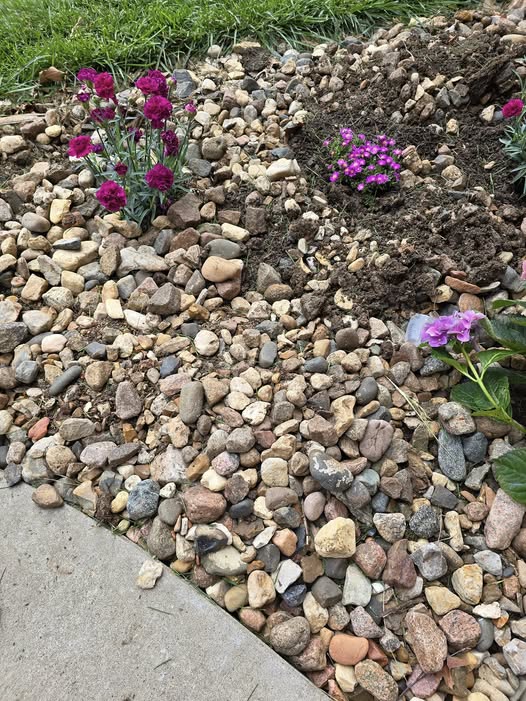
Do you need fabric under river rock?
Short answer: yes but not for the reason most people think, and it won’t do what most people expect.
Here’s the nuance that separates a good install from a disappointing one. Landscape fabric is genuinely a bad idea under mulch, because mulch breaks down into soil that sits on top of the fabric, and weeds simply root in that new layer the fabric accomplishes nothing except making them harder to pull. Rock is the exception, and it’s really the only application where fabric belongs. But its main job under rock isn’t weed control it’s separation. Without fabric, your stone slowly sinks into Johnson County’s soft clay and disappears, and you’re left with a muddy, rocky mess instead of a clean bed. The fabric keeps rock and soil apart, permanently.
On weeds, be realistic: fabric helps at first, but over the years, organic debris leaves, dust, seeds, bits of stone breaking down collects between the rocks and forms a thin layer of soil on top of the fabric. Weeds germinate happily in that layer, above the barrier. So fabric buys you several good years, not permanent freedom. Anyone promising a weed-free-forever rock bed is overselling.
Choosing and using the fabric
- Use a woven geotextile landscape fabric that allows water to pass through. This matters enormously in clay water needs somewhere to go.
- Never use black plastic sheeting. It traps water, kills soil, breaks apart into a permanent buried mess, and in clay soil it will create drainage problems worse than what you started with.
- Overlap seams by 6 to 12 inches and stake it down with landscape pins every few feet.
- Cut X-shaped openings for plants, and fold the flaps back don’t wrap the stems.
- Don’t use fabric in an active drainage channel. Silt collects on it, weeds root in the silt, and it becomes a maintenance headache. Rock in a true drainage path is usually better set on a properly prepared base.
How to install river rock landscaping: step by step
1. Plan and mark the area
Lay out the shape with a garden hose or spray paint and live with it for a day curves that look right on paper often don’t on the ground. Confirm the bed drains away from the house, and call 811 to have utilities located before any digging. If the rock is going where water actually runs, plan the whole path now, not halfway through.
2. Kill and remove existing vegetation
Remove grass and weeds completely roots included. Skim off the sod with a flat shovel or sod cutter. Whatever you leave behind will find its way up through the rock, and pulling weeds out of stone is far worse than pulling them out of soil. This step is tedious and it’s the one most people rush. Don’t.
3. Excavate 3 to 4 inches
This is the step DIYers skip most often, and it’s why so many rock beds look wrong. You need to dig the bed down so the finished rock surface sits flush with (or slightly below) the surrounding lawn. If you just dump rock on top of existing grade, the bed mounds up, stone spills into the lawn every time it rains, and your mower flings it. Excavate to roughly the depth of your rock layer.
4. Grade and compact the base
Rake the soil smooth and make sure it slopes gently away from structures. Compact it with a hand tamper. In clay, a firm, even base is what keeps the finished surface from developing dips and puddles later.
5. Install edging
Do not skip this. Edging is what keeps rock in the bed and out of your lawn and rock in a lawn isn’t just untidy, it’s a projectile waiting for a mower blade. Steel edging is the best long-term choice for rock (it’s rigid, it disappears visually, and it lasts 15–25 years); plastic edging is cheaper but heaves and lifts over Kansas freeze-thaw cycles. Set the edging so its top sits at or just above the finished rock height, and pin it well.
6. Lay the geotextile fabric
Roll out woven geotextile across the whole bed, overlapping seams 6–12 inches, and pin it every few feet so it can’t shift while you’re spreading stone. Cut X openings for any plants and fold the flaps back around never snug against the stem. Trim the fabric neatly at the edging.
7. Spread the rock
Have the bulk load dropped as close to the bed as your driveway allows every extra foot is a foot you’ll push a wheelbarrow, hundreds of times. Work from the far end back toward the pile so you’re never wheeling across finished rock. Spread to your planned depth and rake it level, keeping stone slightly below the edging so it stays put.
8. Rinse and finish
Bulk rock arrives dusty. A good hose-down rinses off the quarry film and brings out the color this is what makes the difference between “new rock bed” and “pile of gray stone.” Then check your levels one more time and top off any thin spots.
The five mistakes that ruin rock beds
- No edging. Rock migrates into the lawn within a season. It’s the single most common failure, and the most annoying to fix.
- Not excavating. The bed mounds above grade, rock spills constantly, and it never looks intentional.
- Black plastic instead of geotextile. Traps water against clay, kills soil, and shreds into a permanent mess.
- Too shallow. Under two inches, soil shows and weeds walk right through.
- Rock in the wrong place. Against a hot south wall, around heat-sensitive plants, or dumped over a drainage problem instead of fixing it.
Rock for drainage: dry creek beds
One of the best uses of river rock in Johnson County is the dry creek bed a rock-lined channel that carries storm runoff along a deliberate path instead of across your lawn. Done well, it looks like a design feature and works like infrastructure, which is a rare combination. Dry creek beds run deep on rock, typically 6 to 12 inches, and they need a genuine plan: where the water enters, where it exits, and what happens in a hard storm.
Important honesty here: rock alone is not a drainage system. If you have real water problems standing water that lingers for days, water against the foundation, a wet basement decorative rock over the wet spot hides the symptom and fixes nothing. That’s a job for actual subsurface drainage, and it’s worth understanding what a French drain costs before you spend money on stone that won’t solve it. Often the right answer is both: a French drain doing the work underground, with river rock above making it look like it was always meant to be there. Our guide to drainage solutions after heavy rain covers how to tell which you’re dealing with.
The honest reality check before you DIY
Everything above is genuinely doable by a capable homeowner, and if you’ve got a small bed and a free Saturday, go for it. But here’s the number nobody puts in the how-to articles: one cubic yard of river rock weighs about 1.3 tons roughly 2,600 pounds. That’s about 25 to 30 wheelbarrow loads, each one loaded by hand with a shovel, pushed across your yard, and dumped.
A modest 300-square-foot bed at 3 inches deep is around 4 tons. That’s eight thousand pounds of stone shoveled once into the barrow, wheeled, dumped, and raked typically in Kansas heat, because that’s when people do landscape projects. It’s not technically difficult work. It’s just genuinely hard, and it’s the reason a lot of rock projects end with half the pile still sitting in the driveway in September.
So the real question isn’t “can I do this?” It’s “do I want to spend two weekends and my back on it, or pay someone with a skid steer who’ll be done before lunch?” Both are legitimate answers. Just make the decision with the actual weight in mind.
DIY vs. professional installation
Factor | DIY | Professional |
|---|---|---|
Material cost | Same bulk price or worse if you buy bagged | Bulk pricing, often with contractor rates |
The labor | 25–30 wheelbarrow loads per cubic yard, by hand | Machine-moved and spread; done in hours |
Excavation & grading | Hand-dug; easy to misjudge depth and slope | Proper depth, compaction, and fall away from the house |
Edging | Frequently skipped the #1 failure | Steel edging set and pinned correctly |
Fabric | Easy to buy the wrong type (or plastic) | Woven geotextile spec’d for clay, properly lapped |
Timeline | A weekend or three, weather permitting | Typically one day for a standard bed |
If it’s wrong | Rock is permanent fixing it means moving it all again | Done right the first time |
The honest bottom line: rock is unforgiving because it’s permanent. Mulch mistakes disappear in a year; rock mistakes you live with, or pay to undo. If you’re confident on depth, edging, and drainage, DIY away. If any of that is a guess, this is a job where getting it right the first time is genuinely cheaper.
Skip the wheelbarrows. Get a free quote on rock installation or call (913) 829-4949 we’ll handle the excavation, edging, fabric, and rock in a day.
Why Kansas homeowners choose MW Lawn & Landscape
River rock is one of those projects where the parts you can’t see decide whether you love it in ten years:
- We prep it properly. Excavation to the right depth, compacted base, correct grade away from the house the invisible work that keeps the bed level and dry.
- We build for clay. Woven geotextile that passes water (never plastic), proper laps and pinning, and a drainage plan that accounts for how Johnson County soil actually behaves.
- Steel edging, set right. The thing that keeps your rock in the bed and out of your mower for the next two decades.
- We’ll tell you if rock is the wrong call. Sometimes the honest answer is mulch, or a drain, or both. We’d rather get it right than sell you stone you’ll regret.
- One team for the whole yard. Rock ties into grading, drainage, planting, and ongoing landscape maintenance or a full landscape enhancements and installation project if you’re rethinking the whole space.
- Family-owned, licensed, and insured and here for 25+ years, which is roughly how long your rock will be.
Serving Olathe, Overland Park, and Johnson County
MW Lawn & Landscape installs river rock beds, borders, splash zones, and dry creek beds across Olathe, Overland Park, and the surrounding Johnson County communities with the excavation, edging, fabric, and grading done the way our clay soil demands. Whether you want a single clean bed or a drainage feature that looks like it belongs, we’ll walk the property and give you a straight recommendation.
Frequently Asked Questions
How do you install river rock landscaping?
Mark out the bed and call 811 for utility locates, remove all grass and weeds including roots, excavate 3 to 4 inches so the finished rock sits flush with the surrounding grade, rake and compact the base with a slope away from the house, install edging, lay woven geotextile fabric with 6 to 12 inch overlaps and pin it down, spread rock to your planned depth (2 to 4 inches for most beds), then rake level and rinse off the quarry dust.
Do you need fabric under river rock?
Yes but mainly for separation, not weed control. Fabric keeps the rock from sinking into soft clay soil, which is its most important job. It does suppress weeds initially, but over the years debris collects between the stones and forms a thin soil layer on top of the fabric where weeds germinate anyway. Use a woven geotextile that lets water through, and never use black plastic sheeting.
How deep should river rock be?
2 to 3 inches for pathways and borders, 3 to 4 inches for decorative beds, 4 to 6 inches for drainage and erosion control, and 6 to 12 inches for dry creek beds. Shallower than about 2 inches and the soil shows through and weeds come up easily. Larger stones need slightly more material because they leave more air gaps.
How much river rock do I need?
One ton covers roughly 100 square feet at 2 inches, 70 square feet at 3 inches, or 50 square feet at 4 inches. One cubic yard covers about 160, 110, or 80 square feet at those same depths. Multiply your bed’s length by width for square footage, pick your depth, and add 10 to 15 percent for waste and settling.
How much does river rock cost?
Material runs about $45 to $130 per ton, or $50 to $160 per cubic yard, with specialty colors costing 20 to 40 percent more. Delivery adds $50 to $200 and professional labor adds $25 to $100 per ton. Installed, expect roughly $2.00 to $4.25 per square foot, or $365 to $1,500+ for a typical 250 to 800 square foot project. Avoid bagged rock it costs three to eight times more than bulk.
Is river rock better than mulch?
They’re for different jobs. Rock is permanent, storm-proof, and needs no annual refresh ideal for drainage areas, slopes, splash zones, and low-maintenance spaces. Mulch is cheaper upfront, enriches the soil, and keeps roots cooler better for planting beds. Rock also absorbs and radiates heat, which is hard on plants in a Kansas summer. Many yards use both, in the right places.
How do I install river rock edging?
Set edging after grading and before laying fabric. Steel edging is the best choice for rock it’s rigid, low-profile, and lasts 15 to 25 years, while plastic tends to heave with our freeze-thaw cycles. Position the top of the edging at or slightly above your finished rock height and pin it securely, so stone stays in the bed and out of your lawn and mower.
Will weeds grow through river rock?
Eventually, yes though far more slowly than in mulch. Fabric and adequate depth prevent weeds for the first several years, but over time leaves, dust, and debris break down into a thin soil layer on top of the fabric, and weeds root in that. Blowing debris out of the rock each season and spot-treating as needed keeps it manageable.
Can I put river rock over a drainage problem?
No rock hides symptoms, it doesn’t move water. If you have standing water, a soggy yard, or water against the foundation, you need actual subsurface drainage such as a French drain. Rock is excellent as the visible surface of a dry creek bed or over a properly installed drain, but on its own it just becomes a decorative puddle.
How long does river rock last?
Decades it doesn’t decompose. That permanence is the main advantage over mulch and also the main risk: mistakes in depth, edging, or placement don’t fade away, and correcting them means moving every stone. It’s worth getting the base, edging, and drainage right the first time.