
If you’re seeing shiny, metallic-green beetles chewing your roses, lindens, or birches into lace, Johnson County’s Japanese beetles have arrived for the season. Adults emerge in late June and early July and feed heavily through August, and here’s the part most homeowners miss: the same insect attacks your property twice. The adults skeletonize leaves above ground, while their larvae are the white grubs that chew grass roots below it. Protecting your yard in July means dealing with both ends of that life cycle at once the beetles on your trees now, and the grubs already in your lawn that become next year’s beetles.
Why Japanese beetles are a double threat
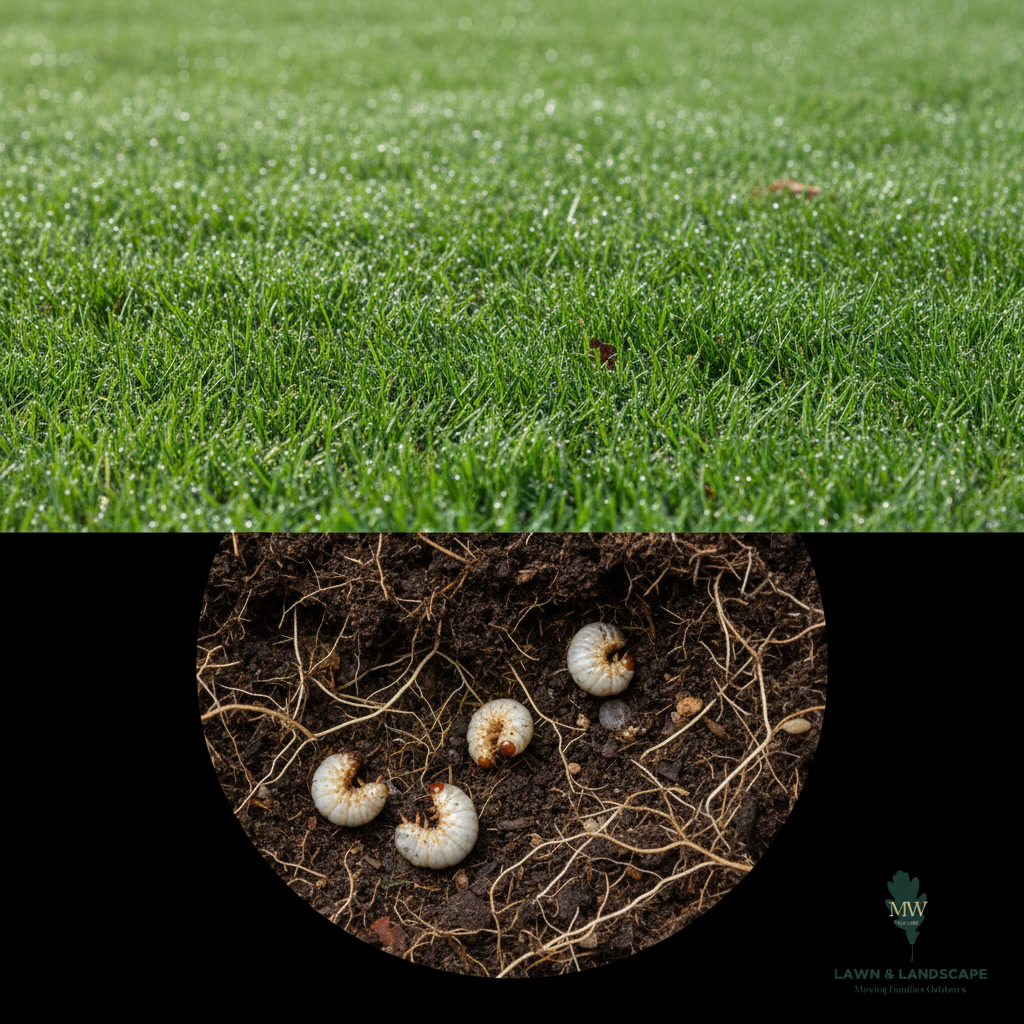
Most yard pests do one kind of damage. Japanese beetles do two, in two different places, which is exactly why a single spray rarely solves the problem. Above ground, the adults feed in groups and skeletonize leaves eating the green tissue and leaving a lacy skeleton of veins behind on roses, lindens, birches, fruit trees, grapes, and dozens of other plants. Below ground, the females lay eggs in the lawn, and those eggs hatch into the same white grubs that thin and brown your turf by feeding on the roots. So the beetles you swat off your rosebush in July are laying the foundation of next summer’s infestation in the grass a few feet away. Treat only the leaves and you leave the other half of the cycle untouched.
How do I get rid of Japanese beetles in Kansas?
Because it’s a two-stage pest, control works best as a two-front plan:
On the trees and shrubs (now)
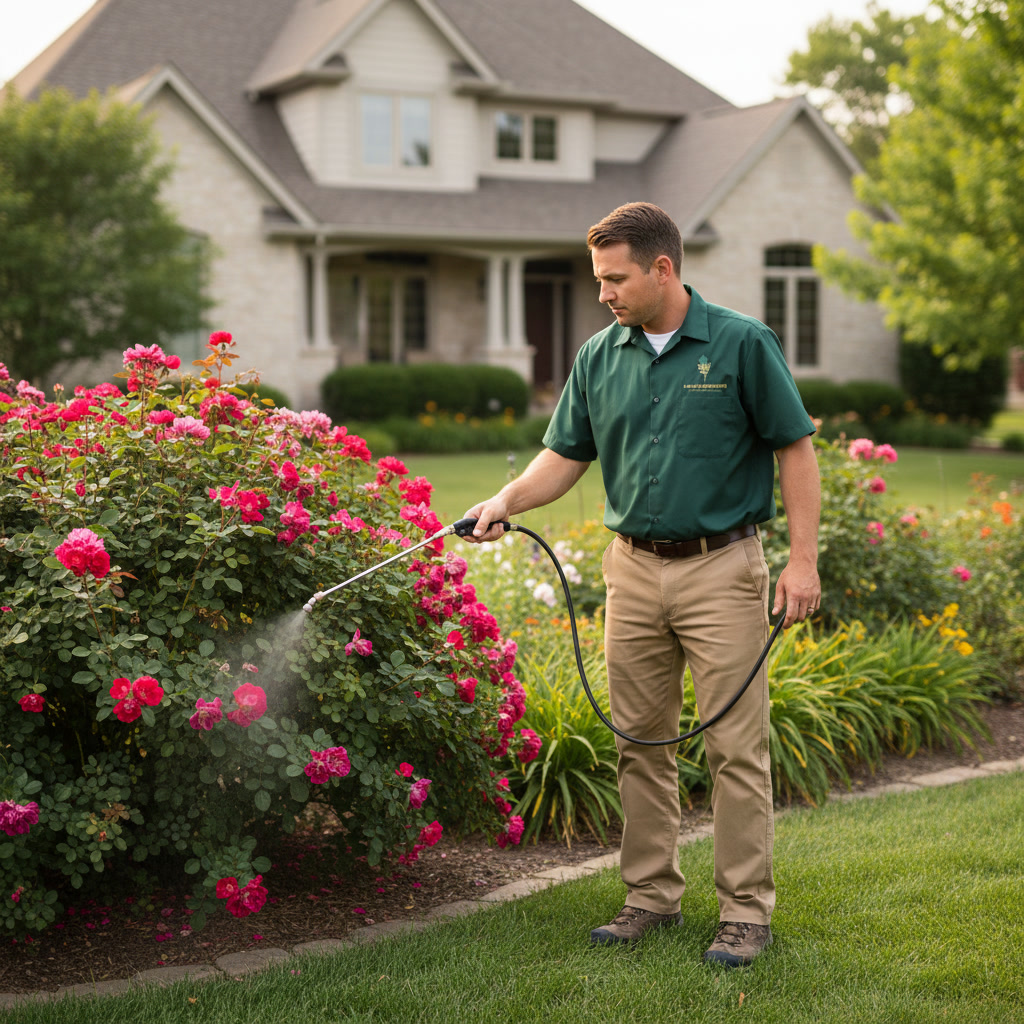
During peak feeding in July, the adults are controlled with targeted insecticide applied to the plants they’re attacking timing it to the active feeding window is what makes it effective. Hand-picking beetles into soapy water works for a few small plants and is genuinely useful early, before they call in reinforcements (feeding beetles release a scent that attracts more). For larger trees and heavy pressure, professional treatment gives the coverage and timing that actually keeps up. This fits alongside the other other summer tree and shrub insects worth watching this time of year including bagworms on your evergreens, whose window overlaps.
In the lawn (the long game)
The grub side is where you break the cycle. A preventive grub application in June through mid-July targets the next generation while it’s young and near the surface, reducing both the root damage to your lawn and the number of beetles that emerge next summer. That’s the part homeowners skip and why beetle problems repeat year after year. Our lawn pest control handles grubs as part of overall turf protection, so the lawn and tree treatments work together instead of in isolation.
The trap mistake that makes it worse
This one’s important because it’s so common: Japanese beetle pheromone traps attract far more beetles to your yard than they ever catch. Hanging a trap near the plants you’re trying to protect is like ringing a dinner bell you draw beetles from all over the neighborhood, and plenty of them stop to feed on your roses on the way to the trap. If you use traps at all, place them at the far edge of the property, away from anything valuable. For most yards, skipping them entirely and treating the plants directly is the better call.
What kills Japanese beetles on trees?
During the July feeding peak, the most effective approach is a properly timed insecticide applied to the foliage the beetles are eating, which knocks down the active adults and protects the leaves from further damage. The keys are timing it to peak feeding and getting thorough coverage a missed canopy keeps feeding. For prized or larger trees, this is worth handing to a professional, both for reach and to avoid harming pollinators by treating blooming plants carelessly. Pairing treatment with keeping trees and shrubs healthy proper watering and pruning helps plants shrug off and recover from feeding damage faster.
Will my plants recover?
Usually, yes healthy, established trees and shrubs tolerate a season of beetle feeding and leaf out normally the next year, even if they look rough in August. The bigger long-term risk is the grubs: left unchecked, a heavy grub population can do lasting damage to a lawn and guarantees another wave of beetles. That’s the case for treating both ends now rather than just rescuing the leaves you can see. A little damage on a mature tree is cosmetic; an untreated grub population is a compounding problem.
Act while the beetles are active
Japanese beetle season is short and intense the July feeding window is when treatment on the trees does the most good, and the June-to-mid-July stretch is the right time to get grub control down. Miss both and you’re cleaning up damage instead of preventing it. If you’re spotting beetles or skeletonized leaves now, it’s time to move. Book a treatment or call (913) 829-4949, and we’ll put together a lawn-and-tree plan that protects your Johnson County property on both fronts something we’ve done for local homeowners for 25+ years.
FAQs
How do I get rid of Japanese beetles in Kansas?
Treat both stages of the pest. On trees and shrubs, apply a targeted insecticide during the July feeding peak (and hand-pick beetles into soapy water on small plants). In the lawn, apply preventive grub control in June through mid-July to kill the larvae and reduce next year’s beetle population. Avoid pheromone traps near valuable plants they attract more beetles than they catch.
What kills Japanese beetles on trees?
A properly timed insecticide applied to the foliage the beetles are feeding on during the July peak, with thorough coverage so no part of the canopy keeps feeding. For larger or prized trees, professional application gives better reach and avoids harming pollinators. Hand-picking works for a few small plants if done early.
Why are Japanese beetles a problem for both my lawn and my trees?
They damage your property in two stages. The adults skeletonize leaves on trees and shrubs above ground in summer, while their larvae the white grubs feed on grass roots below ground. The beetles feeding on your trees lay the eggs that become next year’s lawn grubs, so the two problems are directly connected.
Do Japanese beetle traps work?
Not the way most people expect. Pheromone traps attract more beetles to your yard than they capture, so placing one near plants you want to protect usually increases the damage. If you use traps, put them at the far edge of your property away from valuable plants or skip them and treat the plants directly.
Should I treat my lawn for grubs if I see Japanese beetles?
Yes it’s the most effective way to break the cycle. Seeing adult beetles means females are laying eggs in your lawn that will hatch into root-feeding grubs. A preventive grub treatment in June through mid-July reduces both the lawn damage and the number of beetles that emerge next summer.
Will my trees and shrubs recover from Japanese beetle damage?
Usually. Healthy, established plants tolerate a season of feeding and leaf out normally the following year, even if they look skeletonized in late summer. Keeping plants well-watered and properly pruned helps them recover. The bigger long-term concern is the grubs in the lawn, which cause compounding damage if left untreated.