
Overseeding is the single most effective thing you can do to turn a thin, tired lawn into a thick, healthy one but only if you do it at the right time and the right way. Get the timing wrong, or skip the steps that create good seed-to-soil contact, and you’re just feeding the birds. In Kansas, the window and the method both matter, because our cool-season lawns have a specific season when new grass establishes best. This guide covers exactly when to overseed in Johnson County, what seed to use, and how to do it so the seed actually takes including the seedbed detail most homeowners miss. Overseeding is also the heart of professional aeration and overseeding, so whether you DIY or hire it out, here’s how to get a thicker lawn.
THE SHORT ANSWER
When: early fall (late August to mid-September) in Johnson County the best window of the year. Seed: cool-season grass turf-type tall fescue and/or Kentucky bluegrass; fescue at about 4–6 lb per 1,000 sq ft for overseeding. The key to success: seed-to-soil contact aerate or verticut first, then seed. Then: keep the seed consistently moist with light, frequent watering until it establishes.
What is overseeding (and why it works)
Overseeding simply means spreading new grass seed over your existing lawn, without tearing anything out. It fills in thin and bare spots, increases the overall density of the turf, and introduces newer grass varieties that are often more resistant to disease, drought, and heat than what’s already there. Over time, a lawn naturally thins from foot traffic, heat, pets, and age overseeding is how you reverse that and keep the lawn thick. A dense lawn doesn’t just look better; it crowds out weeds and stands up to stress far better than a thin one, which is why overseeding is one of the highest-value things you can do for your yard.
When should you overseed a lawn in Kansas?
Timing is the most important decision, and for our region it’s clear: early fall is the best time to overseed. Kansas State Research and Extension points to fall seeding for cool-season lawns in Johnson County, and locally that means roughly late August through mid-September. Here’s why that window wins:
- Warm soil, cool air. The soil is still warm from summer, which drives fast germination, while the cooling air is gentle on tender new seedlings the ideal combination.
- Less weed competition. Summer weeds like crabgrass are fading, so your new grass isn’t fighting them for space and light.
- Two seasons to establish. Fall-seeded grass gets both fall and the following spring to build deep roots before it has to survive a Kansas summer.
Spring is a workable second choice if you miss fall here’s how spring overseeding compares but spring-seeded grass faces summer heat before it’s fully established, and you can’t use crabgrass pre-emergent that spring (it stops your grass seed from germinating too). For the strongest results in Johnson County, fall is the window to aim for.
What seed should you use?
Kansas lawns are cool-season lawns, so you want cool-season grass seed matched to what you already have:
| Grass type | Best for | Overseed rate (per 1,000 sq ft) |
|---|---|---|
| Turf-type tall fescue | The KC-area default heat & drought tolerant | ~4–6 lb |
| Kentucky bluegrass | Fine texture; spreads to self-repair; slower to establish | ~1–2 lb (much smaller seed) |
| Fescue / bluegrass blend | Best of both common in local lawns | Per blend label |
Two rules on seed. First, match the seed to your existing lawn so the new grass blends in. Second and this matters more than people think buy quality seed. Cheap discount-store seed mixes often contain weed seed and filler, and there’s no way to remove those weeds later without damaging your new grass. Good seed costs a little more per bag and saves you a weed problem you’d fight for years.
The step most people miss: seed-to-soil contact
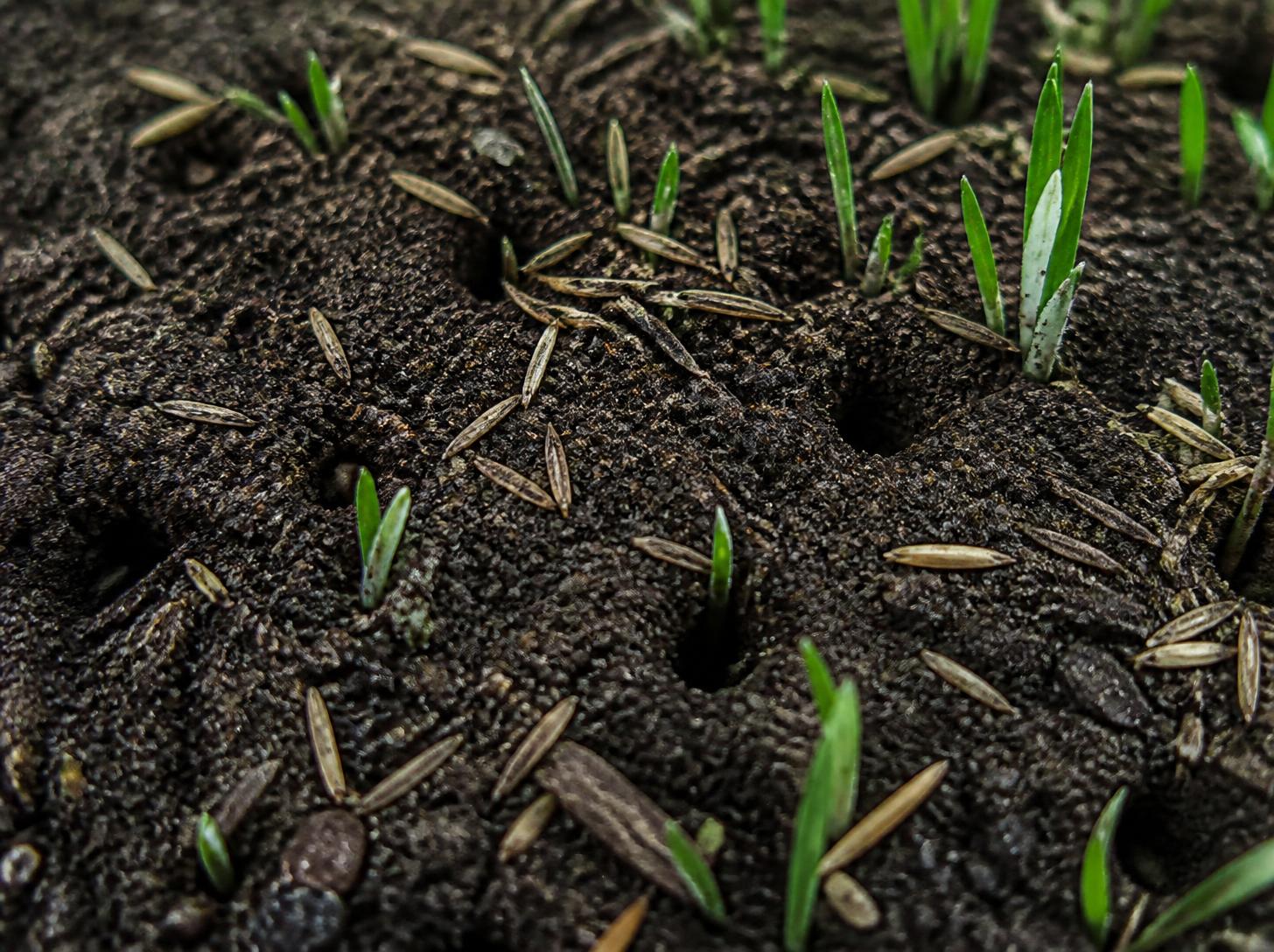
Here’s the make-or-break detail. Grass seed only germinates well when it’s in direct contact with soil seed that lands on top of thatch or hard, compacted ground mostly fails. So the real work of overseeding isn’t spreading the seed; it’s preparing the seedbed so the seed reaches soil. There are two main ways to do that, and which one is better depends on your lawn:
Core aeration + overseed (for established lawns)
Core aeration pulls small plugs from the lawn, and the seed settles into those holes where it makes soil contact. This is ideal for established lawns that are thinning and need compaction relief you fix two problems at once, which is exactly why it’s the classic renovation pairing. In Johnson County’s clay, the compaction relief alone is worth it. This is the method behind fall core aeration as part of a renovation.
Verticut + overseed (for thin or bare lawns)
A verticutter cuts shallow slits (about a quarter to half an inch deep) into the soil, creating an ideal seedbed and working the seed lightly into the ground. Kansas turf guidance notes this gives excellent seed-to-soil contact so for very thin or bare lawns where germination rate is everything, verticut-and-overseed often produces a better seedbed than aeration alone. The honest takeaway: aeration+overseed is great for established lawns needing compaction relief; verticut+overseed shines on thin, bare lawns where you want maximum germination. A good lawn pro picks the method to match your lawn’s condition.
Not sure whether your lawn needs aeration or verticutting? We’ll assess it and use the right method. Get a free overseeding quote or call (913) 829-4949.
How to overseed a lawn, step by step
Here’s the full process for doing it right:
- 1. Mow low. Cut the existing lawn a notch or two shorter than normal (about 2 to 2.5 inches for fescue/bluegrass), so seed can reach the soil but don’t scalp it.
- 2. Prepare the seedbed. Core aerate (established lawns) or verticut (thin/bare lawns) to open the soil and create seed-to-soil contact.
- 3. Spread the seed. Use a spreader calibrated to the right rate. Spread half the seed walking north-south and half east-west in a grid pattern for even, gap-free coverage.
- 4. Apply a starter fertilizer. A starter-type feeding at seeding gives new seedlings the nutrients they need to establish quickly.
- 5. Water lightly and often. Keep the seedbed consistently moist short, light waterings once or twice a day. If the seed dries out at any point, it dies.
- 6. Hold off on mowing and pre-emergent. Let new grass reach about 3 inches before the first mow, and don’t apply crabgrass pre-emergent, which also blocks grass seed.
The watering step in particular is where DIY overseeding most often fails people water heavily every few days instead of lightly every day, the seedbed dries out, and germination collapses. Consistent moisture is everything for the first two to three weeks.
How overseeding fits into a full renovation
Overseeding on its own is powerful, but it’s at its best as part of a complete renovation. When a lawn is thin, compacted, and tired all at once, overseeding is one piece of the fix paired with aeration, fall feeding, and consistent watering, it’s what actually rebuilds the lawn. If your yard needs more than just thickening up, it’s worth understanding a full fall lawn renovation, which puts overseeding in sequence with the other steps that make it take. Overseeding fills the lawn; the renovation around it makes sure the fill lasts.
DIY vs. professional overseeding
Overseeding a small, flat lawn is a legitimate DIY project if you’re diligent the catch is that the details that decide success (seedbed prep, even coverage, and especially watering) are easy to get wrong. Renting a verticutter or aerator, calibrating a spreader, and committing to twice-daily watering for weeks is real work. For a larger lawn, a badly thinned one, or if you’d rather not gamble a whole season on the watering, professional overseeding gets you the right seed, the right seedbed method, even coverage, and a clear establishment plan the difference between a lawn that fills in and a bag of seed that mostly didn’t take.
Want a thicker lawn without the guesswork? Get a free overseeding quote or call (913) 829-4949 aeration or verticut, quality seed, done right.
Why Olathe homeowners choose MW Lawn & Landscape
Overseeding is simple in theory and easy to get wrong in practice after 25+ years in Johnson County, we get the details right:
- Right timing. We overseed in the fall window when Kansas grass establishes best not whenever’s convenient.
- Right seedbed method. Aeration or verticutting matched to your lawn’s condition, for the seed-to-soil contact that decides germination the core of our professional aeration and overseeding.
- Quality seed, even coverage. Good cool-season seed matched to your lawn, spread with calibrated equipment no weed-seed surprises, no bare gaps.
- Real guidance. We tell you exactly how to water for establishment the step that makes or breaks the result.
- Family-owned, licensed, and insured, serving Olathe since 2000.
Serving Olathe, Overland Park, and Johnson County
MW Lawn & Landscape overseeds and renovates lawns across Olathe, Overland Park [/overland-park/], and the surrounding Johnson County communities timed to the fall window, with the right seed and the right seedbed method for your lawn. If your grass came out of summer thin and patchy, overseeding this fall is how you get it thick again. We’ll assess your lawn and handle it start to finish the way we have for local homeowners since 2000.
Frequently Asked Questions
When should you overseed a lawn in Kansas?
Early fall roughly late August through mid-September in Johnson County is the best time to overseed cool-season lawns. Kansas State Extension recommends fall seeding because the soil is still warm for fast germination while cooler air protects new seedlings, and weed competition is fading. Fall-seeded grass also gets two cool seasons to establish deep roots before the next summer. Spring is a workable second choice but produces weaker results here.
How do you overseed a lawn?
Mow the existing lawn low (about 2 to 2.5 inches), prepare the seedbed by core aerating or verticutting for seed-to-soil contact, spread quality cool-season seed with a calibrated spreader (half north-south and half east-west for even coverage), apply a starter fertilizer, and then water lightly and frequently to keep the seed consistently moist. Hold off on mowing until the new grass reaches about 3 inches, and don’t apply crabgrass pre-emergent, which blocks grass seed.
What is the best grass seed for overseeding in Kansas?
Cool-season grasses turf-type tall fescue is the go-to for the Kansas City area because it tolerates heat and drought well, and Kentucky bluegrass or a fescue-bluegrass blend also work. Match the seed to your existing lawn so the new grass blends in, and always buy quality seed; cheap mixes often contain weed seed you can’t remove later without harming the new grass.
Do you need to aerate before overseeding?
You need good seed-to-soil contact, and aerating is one of the best ways to get it the seed settles into the aeration holes where it germinates. Core aeration is ideal for established lawns that also need compaction relief. For very thin or bare lawns, verticutting (cutting shallow slits) can create an even better seedbed. Overseeding without preparing the seedbed, especially on Johnson County clay, leaves much of the seed sitting on hard soil where it fails.
What’s the difference between aeration and verticutting for overseeding?
Core aeration pulls soil plugs and relieves compaction, making it ideal for established lawns that need both a seedbed and compaction relief. Verticutting cuts shallow slits (about a quarter to half inch deep) into the soil, creating an excellent seedbed and lightly working seed in which Kansas turf guidance notes is especially good for very thin or bare lawns where germination rate is the priority. The right choice depends on your lawn’s condition.
How much seed do I need to overseed?
For overseeding, turf-type tall fescue is typically applied at about 4 to 6 pounds per 1,000 square feet, while Kentucky bluegrass a much smaller seed needs only about 1 to 2 pounds per 1,000 square feet. Use a lighter rate if your lawn is mostly healthy with a few thin spots, and a heavier rate if large areas are bare. Measure your lawn first so you buy the right amount.
How often should I water after overseeding?
Water lightly and frequently usually once or twice a day to keep the seedbed consistently moist for the first two to three weeks. Short, light waterings are the goal, not heavy soaks every few days. If the seed dries out at any point during germination, it dies, so consistent moisture is the single most important factor in overseeding success. Once the grass is established, you can taper back to normal watering.
How long does overseeded grass take to grow?
Overseeded cool-season grass typically begins germinating within one to three weeks in fall conditions, depending on the seed type and how consistently it’s watered. The lawn fills in noticeably over the following few weeks, and the biggest improvement shows the next spring once the new grass has established through fall. Fescue germinates faster than bluegrass, which is slower to establish.
Can I overseed without aerating?
You can, but results are usually poor unless you create seed-to-soil contact some other way. Simply broadcasting seed over an unprepared lawn especially over thatch or compacted clay leaves most of it sitting where it can’t reach soil to germinate. At minimum, mowing low and raking helps; aerating or verticutting is much better. The seedbed preparation is what makes overseeding actually work.