
Fresh mulch is one of the fastest ways to make a whole property look cared-for but timing it right is what makes it actually work, not just look good for a few weeks. Mulch too early and you can trap cold and slow your soil from warming; refresh too often and you can smother the very plants you’re trying to protect. So when should you mulch in Kansas City, and how often? The short version: once a year, in spring, is the standard but there’s useful nuance around fall mulching, how to tell when it’s genuinely time, and the over-mulching mistake that quietly harms plants. This guide covers all of it for our local climate. And when you’d rather have it delivered and installed at the right time and the right depth, our professional mulch installation and bed detailing handles it start to finish.
THE SHORT ANSWER
When: mid-to-late spring (about April–May) is the main window in Kansas City, once the soil has warmed. How often: once a year is the standard; good hardwood can stretch to every 1–2 years. Fall: an optional second, lighter mulching to insulate roots for winter. The big rule: keep total depth to 2–3 inches don’t just pile new mulch on old, and never mound it against trunks.
What time of year is best to mulch?
In the Kansas City area, mid-to-late spring is the prime mulching window generally around April into May, once the soil has warmed up from winter. Spring mulching hits the sweet spot: it refreshes the beds’ appearance right as the growing season starts, and it goes down just before summer, when mulch’s moisture-holding and weed-suppressing benefits matter most. Laying fresh mulch in spring means your beds head into the hot months already protected.
One timing caution: don’t mulch too early in spring. Applying a thick layer while the soil is still cold can insulate it and delay warming, which slows your plants’ spring growth. It’s better to wait until the soil has begun to warm and your perennials are emerging. Let spring get going, then mulch you’ll get the benefits without holding the beds back.
Should you mulch in fall too?
Spring is the main event, but fall is a legitimate optional second mulching with a different purpose. Where spring mulch is about appearance and pre-summer protection, fall mulch is about insulation: a layer applied in autumn helps moderate soil temperature and protect plant roots (especially perennials) through winter’s freeze-thaw cycles. If you mulch in fall, it’s usually a lighter touch topping up rather than a full fresh layer since you likely still have spring’s mulch in place. Many Kansas City homeowners do a full mulching in spring and a light refresh in fall for perennial beds; others simply mulch once in spring. Both are fine the key is not exceeding the total depth mulch should ever be.
How often should you install new mulch?
For most beds, once a year is the standard typically a spring refresh. That said, it depends on the mulch and how it’s holding up:
| Situation | How often | Notes |
|---|---|---|
| Standard yearly refresh | Once a year (spring) | Restores color, tops up depth, renews weed/moisture benefits. |
| Quality hardwood, holding well | Every 1–2 years | Good hardwood breaks down slower; may only need a light topping. |
| Fast-decomposing / fine mulch | Once a year or more | Finer mulches break down faster and thin out sooner. |
| Perennial beds (optional) | Spring + light fall | Fall top-up for winter root insulation. |
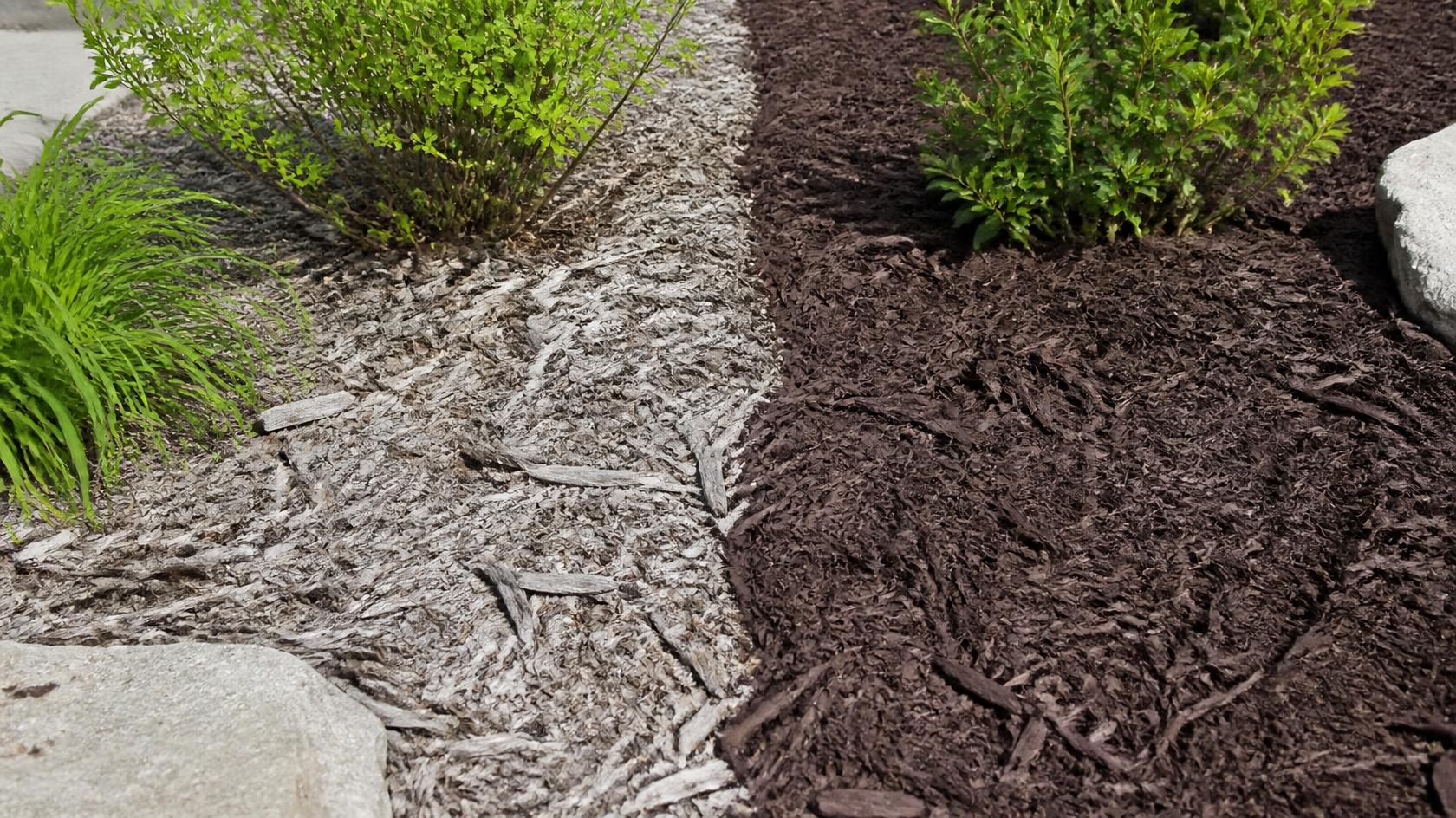
The important nuance: “once a year” doesn’t always mean a full new layer. As mulch breaks down it enriches the soil (a good thing), but it also thins and fades. If your existing mulch is still 2–3 inches deep and just looks tired, you often only need to fluff it and add a thin top layer to restore color not a full fresh installation. Piling a full new layer on top of an existing thick one year after year is how beds end up over-mulched, which causes real problems.
Not sure if your beds need a full refresh or just a top-up? We’ll tell you honestly. Get a free mulching quote [/contact-us/] or call (913) 829-4949.
How to tell when it’s time to mulch
Rather than mulching on autopilot, let the beds tell you. Signs it’s genuinely time for fresh mulch:
- Faded color. Mulch has gone gray or dull the most common cosmetic signal.
- Thin layer. The mulch has broken down to less than about 2 inches, so it’s no longer suppressing weeds or holding moisture well.
- Weeds pushing through. A thinning layer lets weeds germinate a sign the mulch is no longer doing its job.
- Visible soil. You can see bare dirt through the mulch in spots.
Conversely, if the mulch is still a healthy 2–3 inches deep and just a little faded, you don’t need a full new layer a light refresh for color is enough. Reading the beds this way saves you money and, more importantly, protects your plants from over-mulching.
The big mistake: over-mulching
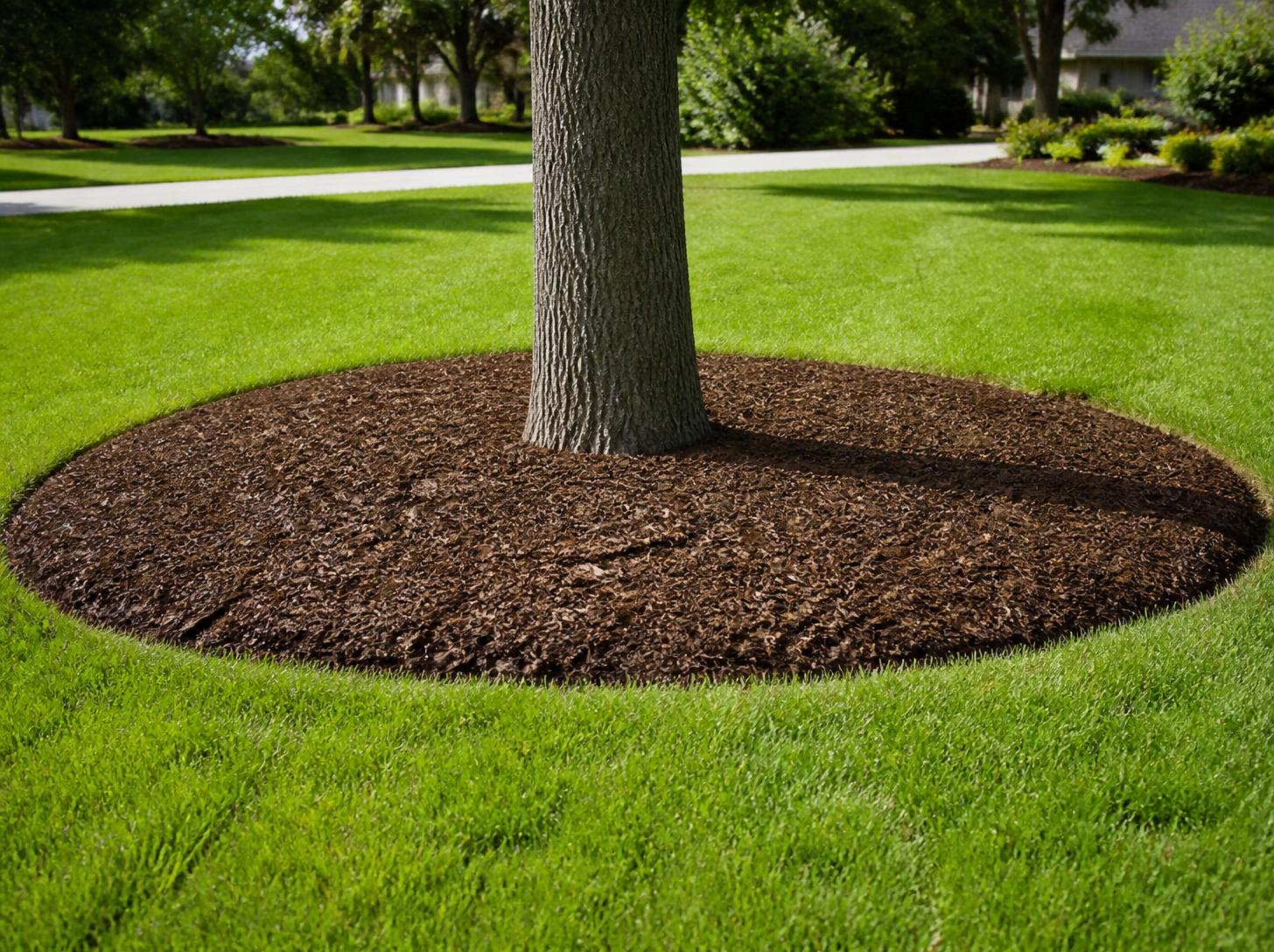
Here’s the rule that matters more than the timing: never let your total mulch depth exceed 2 to 3 inches, and never pile mulch against the trunks of trees or the stems of shrubs. Over-mulching is one of the most common and damaging landscaping mistakes, and it comes from good intentions adding a full fresh layer every year on top of what’s already there until the mulch is 5, 6, even 8 inches deep.
Too much mulch suffocates roots by blocking oxygen and water from reaching them, holds excess moisture that leads to rot, and creates a haven for pests and disease. The worst version is the “mulch volcano” mulch mounded up against a tree trunk which traps moisture against the bark and can slowly kill the tree. The correct approach is a flat 2–3 inch layer, pulled back a few inches from trunks and stems so the base of the plant stays clear. When you refresh, account for the mulch already there: if you’ve got 2 inches left, add only an inch, not three. More mulch is not better the right depth is.
DIY vs. professional mulching
Mulching is one of the more DIY-friendly landscape jobs, and for a small bed with good access it’s a reasonable weekend project the main challenges are the heavy hauling and getting the depth right. Where a professional earns their keep is on larger properties (moving several cubic yards of mulch by wheelbarrow is real labor), on correct depth and trunk clearance (avoiding the over-mulching and volcano mistakes), and on the bed prep that makes mulch look sharp edging and weeding first, so the finished result is crisp rather than just dumped. If you’re mulching one small bed, DIY away; if it’s a whole property or you want it done right and fast at the correct depth, professional installation is often worth it. For the numbers, here’s what mulch installation costs, and for why it’s worth doing at all, the full benefits of mulching.
Want it timed, edged, and installed at the right depth? Get a free mulching quote or call (913) 829-4949 delivery, edging, and installation handled.
Why Olathe homeowners choose MW Lawn & Landscape
Mulching is simple to do and easy to do badly after 25+ years in Johnson County, we get the timing and the depth right:
- Right timing. We mulch in the spring window when it does the most good, and advise on a fall top-up for perennial beds when it helps.
- Right depth, every bed. A proper flat 2–3 inches never piled on old mulch or mounded against trunks, so it protects your plants instead of smothering them.
- Honest refreshes. If your beds only need a light top-up for color, we’ll tell you not sell you a full layer you don’t need.
- Detailing included. We edge and weed your beds first, so the finished look is crisp part of professional mulch installation and bed detailing.
- Family-owned, licensed, and insured the same crew and standards every visit, since 2000.
Serving Olathe, Overland Park, and Kansas City
MW Lawn & Landscape delivers and installs mulch across Olathe, Overland Park, and the surrounding Johnson County and Kansas City communities timed to the season, installed at the right depth, with the edging and detailing that make it look sharp. Whether your beds need a full spring refresh or just a light top-up, we’ll assess them honestly and mulch them right the way we have for local homeowners since 2000.
Frequently Asked Questions
What time of year is best to mulch in Kansas City?
Mid-to-late spring roughly April into May is the best time to mulch in the Kansas City area, once the soil has warmed from winter. Spring mulching refreshes the beds as the growing season starts and goes down just before summer, when mulch’s moisture-holding and weed-blocking benefits matter most. Avoid mulching too early, while the soil is still cold, because a thick layer can delay soil warming and slow plant growth.
How often should you install new mulch?
For most beds, once a year typically a spring refresh is the standard. Quality hardwood mulch that’s holding up can stretch to every one to two years, while finer or fast-decomposing mulch may need refreshing more often. Importantly, ‘once a year’ doesn’t always mean a full new layer: if your existing mulch is still 2 to 3 inches deep and just faded, a light top-up for color is enough rather than a full installation.
Should you mulch in spring or fall?
Spring is the main mulching window in Kansas City, for appearance and pre-summer protection. Fall is an optional second, lighter mulching whose purpose is insulation protecting plant roots, especially perennials, through winter’s freeze-thaw cycles. Many homeowners do a full spring mulching and a light fall top-up for perennial beds; others simply mulch once in spring. Both work, as long as the total depth never exceeds 2 to 3 inches.
How deep should mulch be?
Two to three inches total is the correct depth deep enough to suppress weeds and hold moisture without smothering the soil. Just as important, mulch should be kept a few inches back from tree trunks and shrub stems, never piled against them. When refreshing, account for the mulch already there: if 2 inches remain, add only about an inch, not a full new layer, so you don’t exceed the 2-to-3-inch maximum.
Can you put too much mulch down?
Yes over-mulching is a common and damaging mistake. Piling a full fresh layer on top of existing mulch year after year builds up excessive depth that suffocates roots by blocking oxygen and water, holds too much moisture and causes rot, and harbors pests and disease. The worst form is a ‘mulch volcano’ mounded against a tree trunk, which can slowly kill the tree. Keep total depth to 2 to 3 inches and pull mulch back from trunks.
How do I know when it’s time to re-mulch?
Watch the beds for four signs: the mulch color has faded to gray, the layer has thinned to less than about 2 inches, weeds are pushing through, or you can see bare soil in spots. Any of these means the mulch is no longer doing its job and it’s time to refresh. If the mulch is still a healthy 2 to 3 inches deep and only slightly faded, though, a light refresh for color is all you need not a full new layer.
Do I need to remove old mulch before adding new?
Usually not, if the old mulch is in good shape you can simply top-dress a thin fresh layer over it, and the breaking-down mulch enriches the soil. You only need to remove or reduce old mulch if it has built up too deep (more than about 3 inches total) or has matted or molded. Removing healthy old mulch just to replace it wastes money and the soil benefit it provides as it decomposes.
How long does mulch last?
Good hardwood mulch generally lasts about one to two years before it needs refreshing, though its color fades sooner often within a season. Its weed-suppressing and moisture-holding benefits gradually decline as it breaks down and thins. Finer or dyed mulches vary. Because mulch decomposes into the soil (a benefit), most homeowners refresh annually in spring to keep beds looking and working their best.