
In Johnson County, most lawns are cool-season grasses tall fescue and bluegrass and for those, spring fertilization is critical to get right, not just to do. The biggest fall feeding (September) builds the lawn, but a properly timed spring feeding carries it through our brutal Kansas summers. The key word is “properly”: a light, slow-release feeding in early-to-mid May does far more good than a heavy dose of nitrogen in March, which actually works against your lawn.
Here’s what spring fertilization should look like for a Johnson County lawn, why the timing matters so much, and how to pair it with weed control for the best results.
Why spring feeding works differently for our lawns
Cool-season grasses naturally surge with leaf growth in early spring on their own no fertilizer required. If you pour nitrogen on during that surge, you push the grass to grow even faster on top, burning through its energy reserves right before the summer heat it needs them for. K-State Research and Extension is direct about this: fertilizing fescue in March or early April encourages excessive top growth, more mowing, and a higher risk of disease and weeds. The smarter move is to wait until that natural flush slows down, around early May, then feed lightly with a slow-release product. That timing builds the roots not just the blades that get your lawn through July and August.
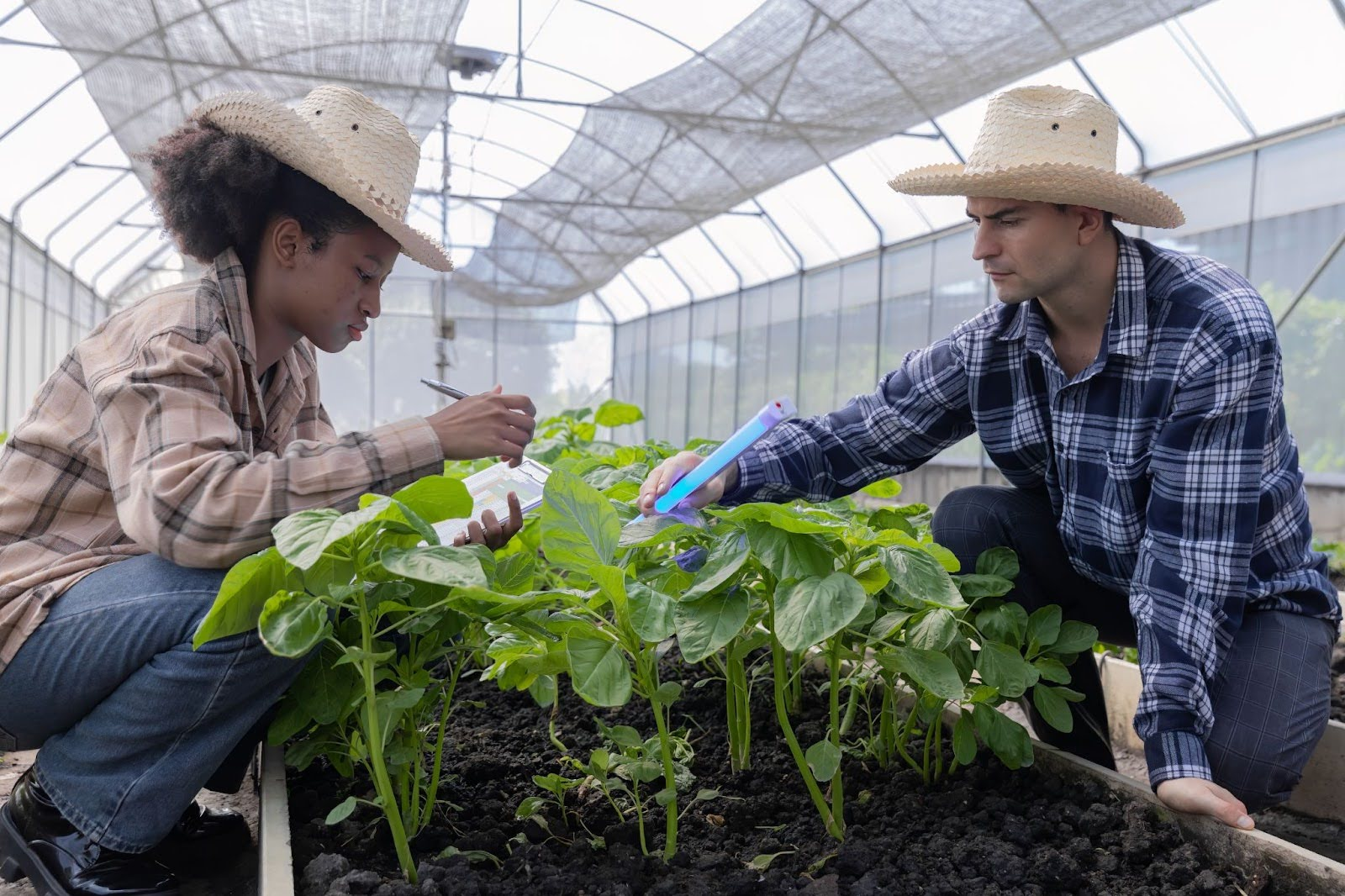
When to fertilize your lawn in spring: the Johnson County timeline
Spring lawn care here follows a sequence, and feeding is only one piece of it:
- Mid-March spot-treat broadleaf weeds. Hit dandelions, henbit, and chickweed on a day that’s 50°F or warmer. Hold off on fertilizer.
- Early April apply your crabgrass pre-emergent. The local rule of thumb is “when the redbuds bloom.” It must be watered in to activate, and timing is everything: too late and the crabgrass is already up.
- Early-to-mid May the spring feeding. Once the spring growth flush has slowed, apply a slow-release nitrogen fertilizer. This is the spring application that actually helps.
Warm-season lawns (zoysia, Bermuda) run on a different clock they want feeding in June and July when they’re actively growing but those are the minority in Johnson County.
What fertilizer to use in spring
For a spring application on fescue or bluegrass, use a slow-release nitrogen source so the grass feeds steadily instead of surging. Nitrogen (the first number on the bag) is the one that matters most for spring. Phosphorus and potassium should only be added if a soil test shows you need them guessing wastes money and can run off into nearby waterways. If you’re not sure what your lawn needs, a soil test takes the guesswork out.
Pair feeding with weed control
Spring is when weed control and feeding work hand in hand. The pre-emergent in early April stops crabgrass before it starts, while spot-treating broadleaf weeds clears out the dandelions and henbit competing with your grass. A thick, well-fed lawn is itself the best weed prevention dense turf simply doesn’t leave room for weeds to establish. That’s why a combined fertilizer-and-weed-control program tends to outperform doing either one alone.
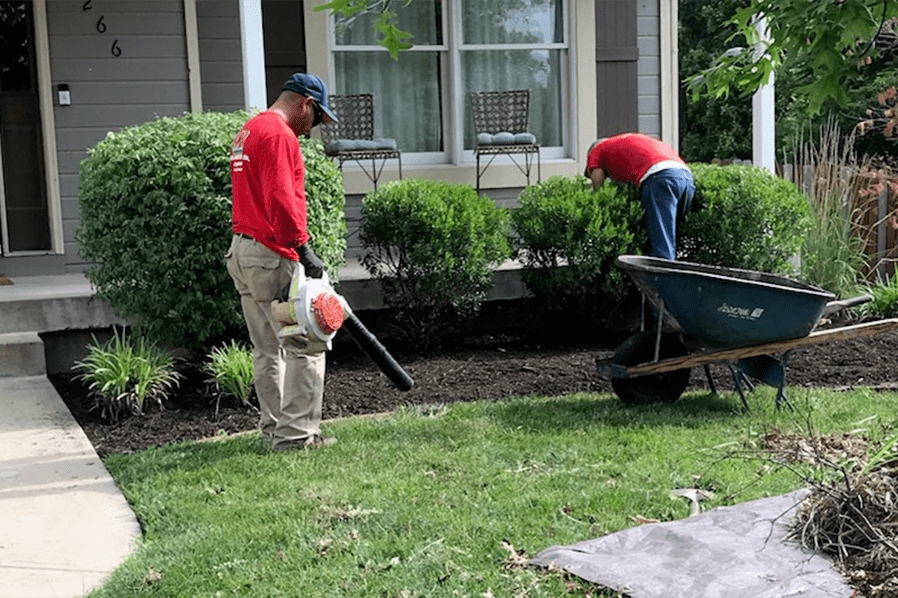
The mistake to avoid
The most common spring error in our area is feeding too early and too heavy. Early-spring nitrogen on a cool-season lawn means more mowing, weaker roots, and a lawn that’s more vulnerable not less when summer stress hits. If you only remember one thing: hold your spring feeding until the growth flush slows in May, and keep it slow-release.
Why fall is still the MVP
Spring feeding supports your lawn, but fall builds it. September is the single most important fertilization of the year for fescue and bluegrass it’s when these grasses thicken up and develop the root systems that define next year’s lawn followed by a November feeding that sets up an early, healthy green-up. A strong spring is really the payoff of a strong previous fall, which is why a year-round program beats one-off applications.
MW Lawn & Landscape builds a season-long fertilizer & weed control program around exactly this timeline for Johnson County lawns the right feeding at the right time, paired with pre-emergent and broadleaf control. To set up your lawn for fall success, we also handle lawn aeration and overseeding, and provide full lawn care across Olathe & Johnson County.
We’ve kept lawns thick and green here for 25+ years. Request a free quote or call (913) 829-4949 to get on the right fertilization schedule for your grass type.
FAQs
When should I fertilize my lawn in spring in Kansas?
For cool-season grasses like tall fescue and bluegrass which most Johnson County lawns are wait until the spring growth flush slows, around early-to-mid May, then apply a slow-release nitrogen. Avoid heavy fertilizing in March or early April, which pushes too much top growth before summer. Warm-season grasses like zoysia and Bermuda are fed later, in June and July.
What fertilizer is best for spring?
A slow-release nitrogen fertilizer is best for a spring feeding on cool-season lawns, so the grass feeds steadily rather than surging. Only add phosphorus or potassium if a soil test shows you need them. Nitrogen the first number on the bag is the key element for spring.
Why shouldn’t I fertilize my fescue lawn in early spring?
Cool-season grasses already surge with leaf growth in early spring on their own. Adding nitrogen then forces excessive top growth, burns through the plant’s energy reserves before summer, and increases mowing, disease, and weed pressure. Waiting until May to feed lightly builds stronger roots for the summer ahead.
Is spring or fall the best time to fertilize a Kansas lawn?
For cool-season lawns, fall is the most important September especially, followed by November. Spring feeding still matters but should be a lighter, well-timed application in May. If you could only fertilize once a year, fall would be the time to do it.
When should I put down crabgrass preventer in Johnson County?
Around early April the local rule of thumb is when the redbud trees bloom. It needs to be watered in to activate, and applying it too late lets crabgrass get ahead of the preventer.