
By the time fall arrives, the insects that spent the summer feeding on your trees and shrubs have already done their damage and most of them are setting up to do it again next year. Bagworms have packed hundreds of eggs into the bags hanging on your evergreens, emerald ash borer larvae are tunneling under the bark of ash trees, and scale insects are settled in for winter on stems and branches. Fall isn’t the season to spray these pests; it’s the season to assess the damage, take the steps that only work now, and get on a tree & shrub treatment program that stops the next generation before it starts.
Here’s how to identify the three big threats to Kansas City landscapes, what the damage looks like, and what you can actually do about each one this time of year.
THE SHORT ANSWER Bagworms, borers, and scale are the pests most likely to kill Kansas City shrubs and trees. Bagworms defoliate evergreens; emerald ash borer is fatal to untreated ash; scale insects weaken shrubs by sucking sap. Active treatment is seasonal bagworms are sprayed as young larvae in June, borer treatment goes in spring so fall’s job is to assess the damage, hand-remove bagworm egg-bags before they overwinter, and schedule next season’s protection and dormant oil. |
Why Fall Is When You Deal With These Pests
It’s a common mistake to wait until a plant looks sick in summer to act by then the pest has usually had a full season to feed, and the treatment window may already be closed. Fall flips the timing to your advantage. The damage from the whole season is now fully visible, so it’s the easiest time to diagnose what’s attacking what. And several of the most effective actions against these pests can only be done in the off-season: removing overwintering egg-bags, assessing which trees are worth treating, and scheduling the properly timed treatments for next spring and summer before the calendar gets away from you.
The Three Pests Most Likely to Kill Your Plants
Each of these attacks a different part of your landscape and shows different warning signs. Here’s how to tell them apart:
| Pest | What it attacks | Signs to look for | Fall action |
|---|---|---|---|
| Bagworms | Evergreens juniper, arborvitae, spruce, cedar | Small spindle-shaped ‘bags’ of needles hanging on branches; thinning, browning foliage | Hand-remove and destroy bags; plan June treatment |
| Emerald ash borer | Ash trees | Canopy thinning from the top down, D-shaped exit holes, bark splitting, woodpecker damage | Assess the tree; plan spring trunk-injection treatment |
| Scale | Shrubs and ornamentals | Small bumps on stems/leaves, sticky residue, sooty mold, yellowing | Schedule dormant oil for late winter/early spring |
Bagworms: the Evergreen Killer
Bagworms are the pest that quietly kills evergreens across Johnson County. The ‘bags’ you see hanging on a juniper or spruce are protective cases the larvae build from the plant’s own needles which is why they’re so easy to miss until the damage is done. Each female bag can hold 500 to 1,000 eggs that overwinter and hatch the following spring.
The critical point on timing, straight from K-State Research & Extension: bagworms are controlled by treating the young larvae in June (scout in late May). Spraying in fall accomplishes nothing the larvae are gone and the eggs are protected inside the bags. What fall is good for is hand-removing and destroying those bags, because every bag you pull off and discard now is 500–1,000 fewer bagworms next summer. On a heavily infested evergreen, that single off-season step dramatically reduces next year’s outbreak and it pairs with a scheduled June treatment for full control.
Borers, Especially Emerald Ash Borer
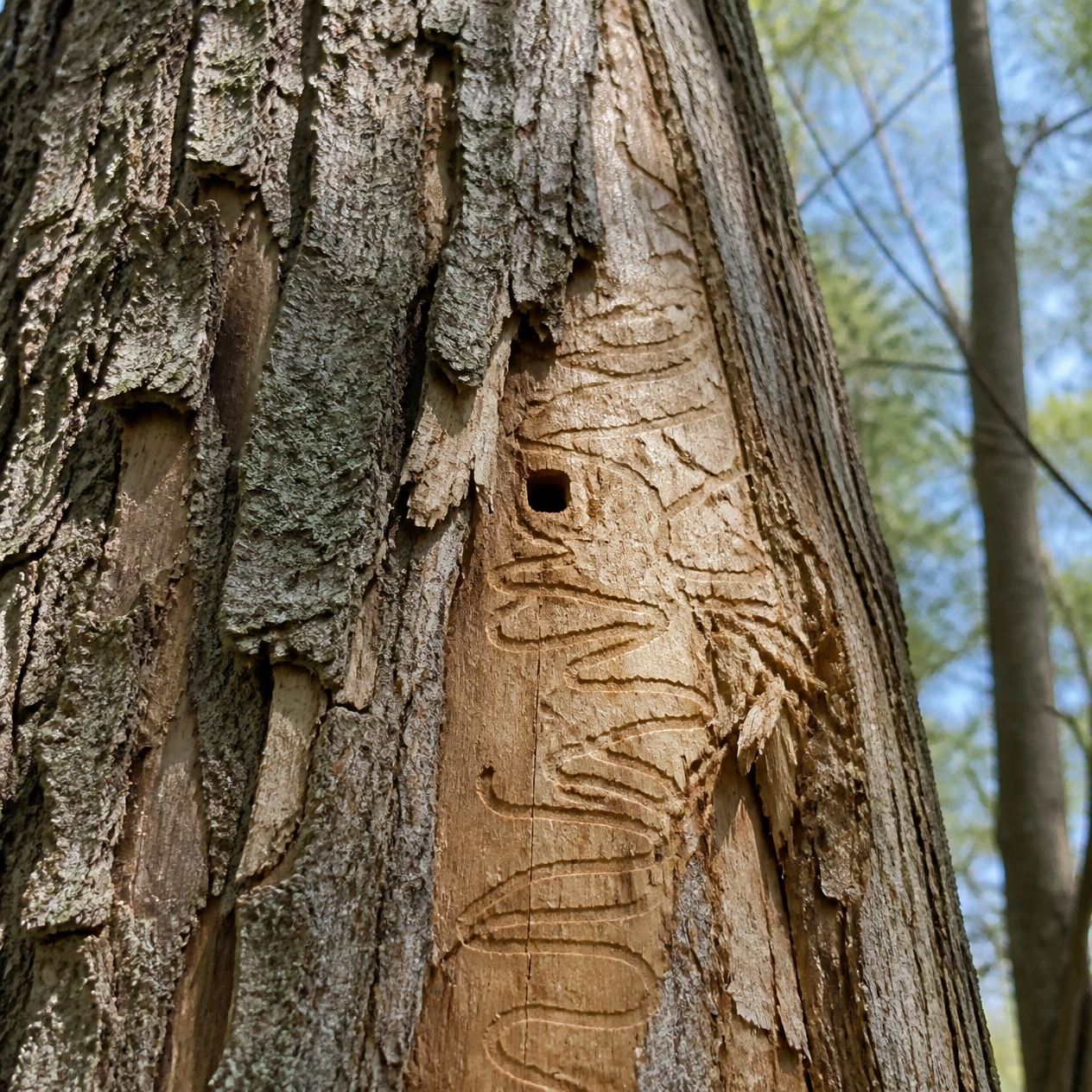
If you have an ash tree in the Kansas City metro, emerald ash borer is the single most serious threat on this list it is established across the area and is fatal to untreated ash. The larvae tunnel under the bark and cut off the tree’s ability to move water and nutrients, so the tree dies from the top down. Watch for canopy thinning starting at the crown, D-shaped exit holes in the bark, vertical bark splits, and heavy woodpecker activity (the birds are after the larvae). An ash showing these signs needs emerald ash borer treatment a systemic trunk injection, applied in spring to be saved.
Fall is the assessment window. This is when you decide which ash trees are healthy enough to be worth protecting and get them on the schedule for a spring injection, before the borer does another season of damage. A valuable, treatable ash is worth far more than the cost of protecting it; a declining one may be past saving, and knowing the difference now saves you money either way.
| Have an ash tree or struggling evergreens? Get them assessed this fall and on the schedule for the right treatment. Ask about our tree & shrub treatment program request a free quote or call (913) 829-4949. |
Scale Insects: the Hidden Sap-Suckers
Scale is the pest most homeowners never identify, because it doesn’t look like an insect. The adults are small, immobile bumps that attach to stems and the undersides of leaves and suck sap, slowly weakening the plant. The tells are indirect: a sticky residue called honeydew on leaves or the ground beneath the plant, black sooty mold growing on that residue, and yellowing or thinning foliage with no obvious cause.
Scale overwinters right on the plant, which is exactly why the control is seasonal. A dormant-oil application in late winter or early spring smothers the overwintering stages before they become active one of the four steps in a proper plant health program. Fall is when you identify the affected shrubs and get that dormant-oil treatment on the calendar, so it happens at the one time of year it actually works.
The Real Treatment Calendar
Because each pest has its own window, timing is everything and it’s where DIY usually goes wrong. Here’s when each treatment actually works:
| Pest | Treatment | When it works |
|---|---|---|
| Scale & mites | Dormant oil | Late winter / early spring |
| Emerald ash borer | Systemic trunk injection | Spring |
| Bagworms | Insecticide on young larvae | June (scout late May) |
| Japanese beetles | Targeted insecticide / grub control | Adults mid-summer; grubs June–July |
| Any pest | Hand-removal + assessment + scheduling | Fall / dormant season |
Why This Isn’t a DIY Job
You can and should hand-remove bagworm bags when you see them, and keeping plants healthy with proper watering and mulching makes them more pest-resistant. But controlling these pests comes down to two things homeowners rarely get right: timing and the right product. Miss the June bagworm window and a store spray does nothing. Emerald ash borer treatment uses license-restricted systemic products applied by injection not something available off the shelf. And correctly diagnosing scale versus a disease versus an environmental problem takes a trained eye. Timing a treatment wrong wastes the money and lets the pest win another season.
The Pest That’s Also Wrecking Your Lawn
One pest on this list does double damage: the Japanese beetle. The adults skeletonize the leaves of lindens, roses, and other ornamentals in mid-summer but their larvae are the white grubs that chew through lawn roots, leaving brown patches that pull up like carpet. If your lawn took grub damage this year, fall is the season to repair it: fall aeration and overseeding rebuilds the thinned turf while the cool-season window is open. Treating the beetles on your shrubs and the grubs in your lawn is the same fight handled together, it protects the whole property.
| Stop next year’s infestation before it starts. Fall assessment, egg-bag removal, and a scheduled program plus lawn recovery from grub damage. Request a free quote or call (913) 829-4949. |
Why Overland Park Homeowners Choose MW Lawn & Landscape
Pest control is about timing and diagnosis so it pays to have a team that knows the local calendar:
- 25+ years in Johnson County. We know which pests hit here and exactly when to treat them bagworms in June, borer injections in spring, dormant oil before bud-break.
- Diagnose first. We identify the actual pest or disease before treating, so you’re not spending on a spray that won’t touch the real problem.
- License-restricted products, correctly applied. Including the systemic treatments that save ash trees applied by trained, licensed technicians.
- One call for the whole yard. Trees, shrubs, lawn grubs, and turf recovery we handle the connected problems together.
Family-owned, licensed, and insured, serving Overland Park and Johnson County since 2000.
Serving Overland Park, Lenexa, Olathe, and Johnson County
MW Lawn & Landscape provides tree and shrub pest control across Overland Park, Lenexa, Olathe, and the surrounding Johnson County communities. Whether it’s bagworms on the evergreens, a threatened ash tree, or scale on your shrubs, we’ll identify it, time the treatment right, and protect your landscape. Request a free quote or call (913) 829-4949. Not sure where to start? See our full tree & shrub care program
Frequently Asked Questions
When should I treat bagworms?
Bagworms are treated as young larvae in June K-State recommends scouting in late May and spraying once the larvae are active. Treating in fall does nothing, because the larvae are gone and the eggs are protected inside the bags. What fall is good for is hand-removing and destroying the bags, since each one holds 500 to 1,000 eggs for next year.
How do I know if my ash tree has emerald ash borer?
Look for canopy thinning that starts at the top of the tree, small D-shaped exit holes in the bark, vertical bark splits, and heavy woodpecker activity. Emerald ash borer is established across the Kansas City metro and is fatal to untreated ash. If your tree shows these signs, have it assessed a healthy ash can often be saved with a spring trunk injection.
Can an ash tree with emerald ash borer be saved?
Often yes, if it’s caught early and still reasonably healthy. Treatment is a systemic insecticide injected into the trunk, applied in spring, and repeated on a schedule. A tree that’s already lost a large share of its canopy may be too far gone. Fall is the right time to assess which trees are worth protecting and get them scheduled.
What are the sticky residue and black mold on my shrub?
That’s a classic sign of scale insects (or aphids). Scale sucks sap and excretes a sticky substance called honeydew, and black sooty mold then grows on it. The scale itself looks like small bumps on the stems and leaves. The control is a dormant-oil application in late winter or early spring, which smothers the overwintering insects.
What is dormant oil and when is it applied?
Dormant oil is a horticultural oil applied while plants are dormant, in late winter or early spring before bud-break. It smothers overwintering insects and eggs especially scale and mites on the stems and branches. It’s one of the four steps in a full tree and shrub program, and fall is when you schedule it so it happens at the right time.
Why do my evergreens have bare, brown patches?
On junipers, spruce, and arborvitae, the usual cause is bagworms stripping the needles, or a needle-cast disease. Bagworms leave the telltale hanging bags; disease causes needles to brown and drop. Both are common here and both are treatable, but an evergreen that’s been heavily defoliated often can’t regrow from bare wood so catching it early matters.
Can I get rid of these pests myself?
You can hand-remove bagworm bags and keep plants healthy with good watering and mulching. But effective control depends on timing and the right product missing the June bagworm window makes a store spray useless, and emerald ash borer treatment uses license-restricted products applied by injection. For borers, scale, and heavy infestations, professional treatment is far more reliable.
Do you treat tree and shrub pests in Overland Park and Johnson County?
Yes. We provide tree and shrub pest control across Overland Park, Lenexa, Olathe, and the surrounding communities bagworms, emerald ash borer, scale, Japanese beetles, and more, each treated at the right time of year. Call (913) 829-4949 for a free evaluation of your trees and shrubs.