
Here’s something most homeowners never think about: the trees and shrubs in your yard are living in conditions nothing like where they evolved. In a forest, leaves and organic matter fall, break down, and feed the roots in a continuous cycle. In your yard, we rake all of that away, and the lawn around the tree competes for every bit of nutrient and water in the soil. The result is that many landscape trees and shrubs are quietly underfed and surface fertilizer mostly feeds the grass, not them. Deep-root fertilization is the fix: getting nutrients into the root zone where the plant can actually use them, as part of a tree & shrub treatment program.
Here’s how deep-root fertilization actually works, why it beats spreading fertilizer on the surface, when to do it, and which plants genuinely need it because not every tree does.
The plants that need it least are healthy, vigorous, well-established trees already growing in a regularly fertilized lawn which is why the honest answer to ‘should I deep-root feed?’ starts with looking at the plant.
| THE SHORT ANSWER Deep-root fertilization injects liquid nutrients under pressure into the soil about 8–12 inches deep into the root zone below the lawn, where a tree’s feeder roots live. It beats surface fertilizer because granules on top mostly feed the turf and run off. Fall and early spring are the best times in Kansas City. It helps most for trees and shrubs that show a real need poor growth, stress, newly planted, or in heavily competing lawns so a good provider checks need before feeding. |
Why Trees and Shrubs in Your Yard Are Often Underfed
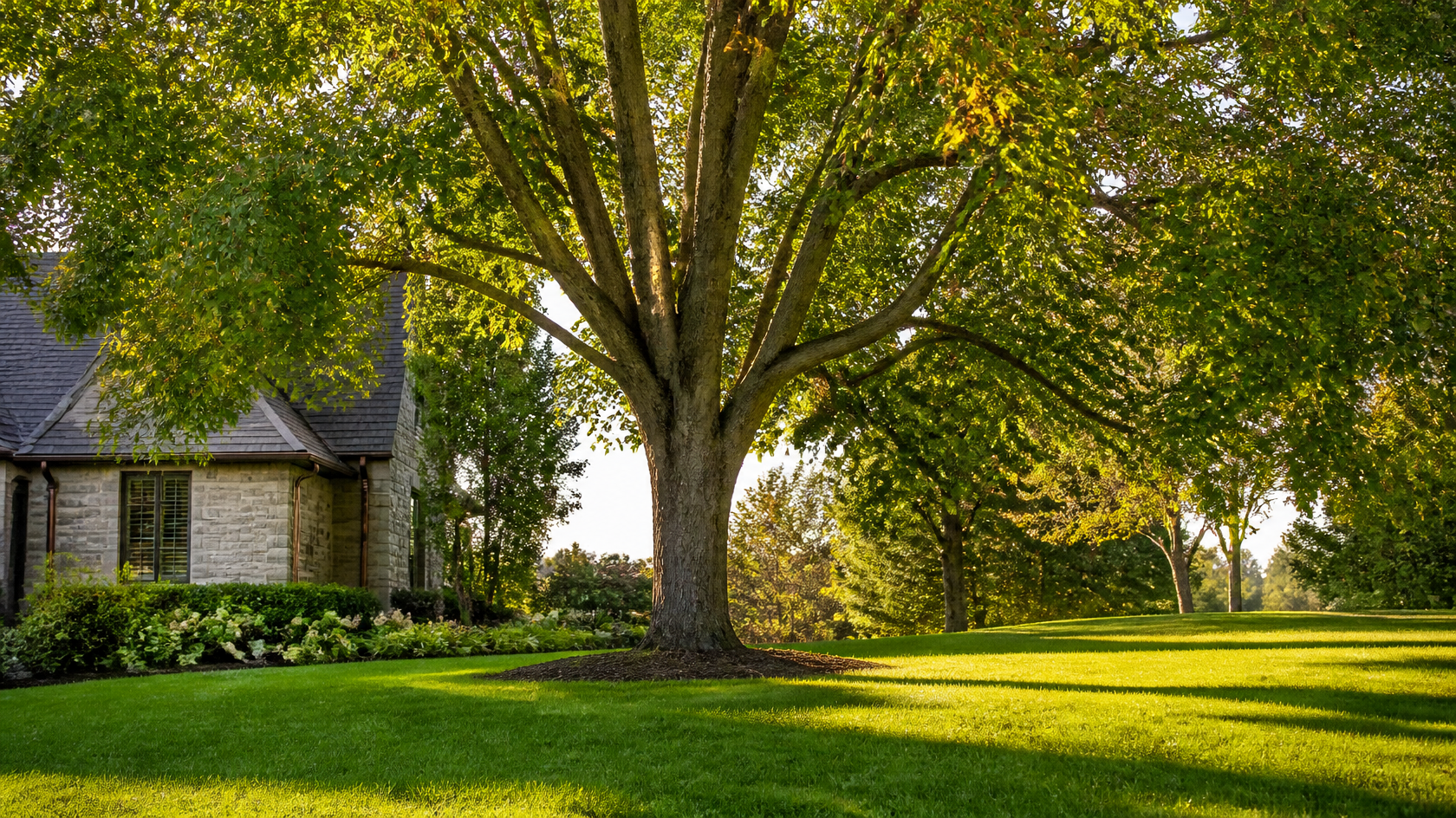
Trees are built to feed themselves in a forest, where the ground is covered in decomposing leaves and the soil is loose, rich, and uncontested. A suburban yard is the opposite environment. We remove the leaf litter every fall, so the natural nutrient cycle is broken. The soil is often compacted from construction and foot traffic. And the lawn which has a dense, shallow root system sits directly over the tree’s roots, grabbing water and nutrients first. That’s why a tree surrounded by lawn can slowly run short even though the grass around it looks fine. The grass is winning the competition. Deep-root fertilization levels the field by placing nutrients below the turf, in the tree’s root zone, where the grass roots don’t reach.What Deep-Root Fertilization Actually Is
Deep-root fertilization uses a probe connected to a pressurized tank to inject a liquid fertilizer solution directly into the soil, spaced in a grid across the root zone. The nutrients go in about 8 to 12 inches down which, despite the name, isn’t truly ‘deep.’ A tree’s feeder roots (the fine roots that actually absorb water and nutrients) live in the top foot or so of soil, not far underground. So the injection targets exactly where those roots are, just below the competing grass. The injection does two useful things at once. It places a slow-release supply of nutrients right in the root zone where the plant can take them up over time, and the pressurized water helps loosen compacted soil and improve aeration around the roots. For a tree in tight suburban soil, that second benefit matters almost as much as the first.Why It Beats Spreading Fertilizer on the Surface
The problem with scattering granular fertilizer around a tree is simple: most of it never reaches the tree. Here’s the difference:| Factor | Surface granular fertilizer | Deep-root injection |
|---|---|---|
| Where it goes | Feeds the dense lawn roots first; much runs off | Placed in the tree’s root zone below the turf |
| Who gets fed | Mostly the grass | The tree or shrub |
| Runoff risk | Higher washes off hard or compacted soil | Minimal injected into the soil |
| Soil benefit | None | Pressurized injection loosens compacted soil |
| Release | Fast, uneven | Slow-release, even across the root zone |
When to Deep-Root Fertilize in Kansas City
The two best windows are fall and early spring, and fall is the one worth prioritizing. In fall, top growth has stopped but roots keep growing into the cool soil, so the plant stores the nutrients and spends them on a strong push next spring rather than forcing tender new growth that winter would kill. An early-spring feeding supports the surge of new growth as the plant wakes up. Avoid feeding in the heat of mid-summer, which can stress a plant rather than help it. K-State’s guidance on fertilizing landscape trees makes the broader point worth repeating: feed based on need, not habit. A healthy, well-established tree in a regularly fertilized lawn may already get enough which is exactly why a good provider assesses the plant before feeding it.| Find out if your trees actually need feeding. We assess the plant first, then feed the ones that need it this fall, into the root zone. Ask about our tree & shrub treatment program request a free quote or call (913) 829-4949. |
Which Plants Benefit Most
Deep-root fertilization pays off most for the plants under the most stress or competition. The best candidates:| Plant / situation | Why it benefits |
|---|---|
| Newly planted trees & shrubs | Need help establishing a root system in their first few years |
| Mature trees in lawns | Lose the nutrient competition with dense turf roots |
| Stressed or declining plants | Poor color, sparse canopy, slow growth signs of a shortfall |
| Ornamental & specimen trees | High-value plants worth keeping in peak condition |
| Trees in compacted or poor soil | Benefit from both the nutrients and the soil aeration |
Why This Isn’t a DIY Job
Deep-root fertilization requires equipment most homeowners don’t have: a soil probe and a pressurized injection system to place the solution at the right depth and spacing. Beyond the gear, the value is in the judgment reading whether a plant actually needs feeding, choosing the right nutrient balance for the species and the soil, and placing the injections correctly across the root zone (which extends well past the branch tips, not just around the trunk). Done wrong, surface feeding wastes money on the lawn; done right, deep-root feeding puts the nutrients where they count.
Fall Is Root Season for the Whole Yard
The reason fall deep-root feeding works is the same reason fall is the best time to invest in your lawn: cool-season grass and woody plants both pour their energy into roots this time of year. And since the lawn and the tree roots are competing in the same soil, it makes sense to handle both together. If you’re already scheduling fall aeration and overseeding which relieves the same soil compaction that starves tree roots folding in a deep-root feeding for the trees and shrubs means the entire landscape goes into winter fed and comes out of it ahead.| Feed the whole landscape this fall. Deep-root feeding for the trees and shrubs, aeration and overseed for the lawn one visit, before winter. Request a free quote or call (913) 829-4949. |
Why Overland Park Homeowners Choose MW Lawn & Landscape
Feeding trees well is about judgment as much as product:- Diagnose before we feed. We assess whether a plant actually needs fertilization you’re not paying to feed a tree that’s already thriving.
- 25+ years in Johnson County. We know our compacted clay soil and how it starves tree roots, and we time feeding to our seasons.
- Proper equipment and formulation. Pressurized injection into the root zone, with the right nutrient balance for the plant and soil not a bag scattered on the grass.
- Part of a full program. Deep-root feeding fits alongside dormant oil, insect, and disease control in one season-long plant health plan.