
Deep root fertilization is a method of feeding trees by injecting liquid nutrients under pressure into the soil around the root zone typically 6 to 12 inches deep, in a grid pattern out to the edge of the canopy. For trees growing in an Olathe lawn, it solves a real problem: between competing grass roots and our heavy, compacted clay soil, fertilizer scattered on the surface rarely reaches a tree’s feeder roots. Injecting it places nutrients where the roots can actually use them and loosens the soil at the same time. That said, it’s not magic, and it shouldn’t be done on autopilot. Here’s an honest look at what it does, when it helps, and how often your trees actually need it.
What is deep root fertilization?
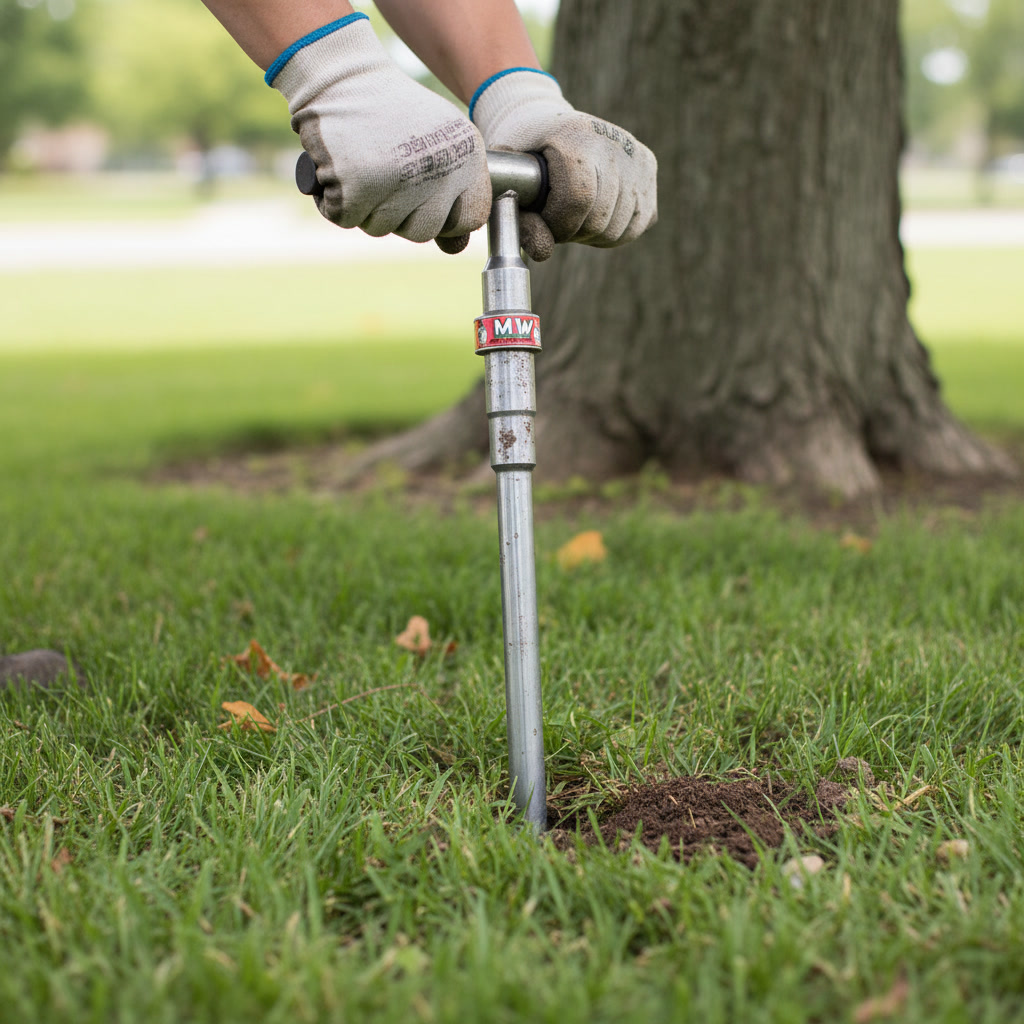
A technician uses a pressurized probe to inject a liquid fertilizer blend into the soil around the tree, working in a radial or grid pattern from about a foot off the trunk out to the drip line (the outer edge of the branches). One quick myth to clear up: despite the name, a tree’s feeder roots aren’t deep most sit within the top several inches of soil. So the injection isn’t going “deep” to chase deep roots; it’s going just deep enough to get below the grass and the compacted surface layer and into the feeder-root zone. Understanding that is the key to knowing when the service is genuinely worth it.
Why surface care falls short for trees in Olathe
Two things work against surface-applied tree fertilizer here. First, turf competition: when a tree grows in a lawn, the dense mat of grass roots intercepts most of the nutrients before they ever reach the tree. Second, our soil: Johnson County’s heavy clay compacts easily, and compacted clay both blocks fertilizer from soaking in and starves roots of oxygen. The result is that broadcasting fertilizer over the lawn does very little for the tree. Injection bypasses both problems it gets the nutrients past the grass and into the root zone, and the act of injecting loosens that tight clay so roots can breathe and absorb water.
The real benefits (and what to expect)
Done for the right tree, deep root fertilization delivers a few genuine benefits:
- Nutrients reach the feeder roots past the grass that would otherwise grab them first.
- The soil gets aerated the injection loosens compacted clay, improving oxygen and water uptake. In our soils, this is often as valuable as the fertilizer itself.
- Struggling trees get support if a tree’s decline is nutrient-related, feeding can help it rebound. (If the problem is disease or root damage, fertilizer won’t fix it.)
- Better color and fullness over time expect gradual improvement in leaf color and canopy density over a season or two, not an overnight change.
It works best as one part of overall tree health, alongside proper watering through our professional irrigation services, correct pruning, and protection from pests see how to protect your trees and shrubs from insects.
How often should trees be deep root fertilized?
For most trees, once or twice a year is plenty commonly a fall application, sometimes paired with a spring one. Spring and fall are the best windows, since the tree can take up nutrients while it isn’t heat-stressed; early fall is especially good because the tree banks the nutrients before winter. More is not better. Over-fertilizing can actually burn roots or force weak, fast growth that invites disease, so resist the urge to do it more often unless an arborist specifically recommends it for a struggling tree.
The honest caveats
Because we’d rather you trust us than oversell you, here’s the straight talk:
- Feed based on need, not habit. A healthy, well-established tree in good soil may not need fertilization at all. A soil test is the best way to know what if anything your tree is actually missing.
- It won’t save a dying tree. If a tree is declining from disease, pests, or root or trunk damage, fertilizer isn’t the cure it may even stress it further. Those cases need a proper diagnosis first.
- Don’t over-apply. Stick to once or twice a year. Excess nitrogen pushes weak growth and can harm the roots you’re trying to help.
Used thoughtfully the right tree, the right time, the right amount deep root fertilization is a smart investment. Used reflexively on every tree every season, it’s wasted money at best.
Why a professional (and a soil test) matter
Deep root fertilization needs commercial injection equipment to deliver the right dose at the right depth and spacing across the whole root zone missing spots or misjudging the rate undercuts the whole point. More importantly, a professional starts by evaluating the tree and the soil, so you’re feeding what the tree needs rather than guessing. That assessment is what separates a treatment that helps from one that just spends your money. We can also fold tree feeding into broader landscape maintenance and expert bush and shrub trimming so your trees get coordinated care and feed your lawn separately and correctly through our 7-stage fertilizer program, since trees and turf have different needs.
Tree care across Johnson County
MW Lawn & Landscape provides deep root fertilization and full tree and shrub care for homeowners in Olathe, Overland Park, and throughout Johnson County starting with an honest assessment of whether your trees even need it. As a family-owned company for 25+ years, we know our local clay soils and what actually helps trees thrive in them.
Wondering if your trees would benefit? Request a free quote or call (913) 829-4949 and we’ll take a look before recommending anything.
FAQs
What is deep root fertilization?
It’s a method of feeding trees by injecting liquid fertilizer under pressure into the soil around the root zone, usually 6 to 12 inches deep, in a grid pattern out to the drip line. It delivers nutrients directly to the feeder roots past competing grass and compacted soil and aerates the soil in the process. Despite the name, it isn’t about reaching ‘deep’ roots; tree feeder roots are actually shallow.
How often should trees be deep root fertilized?
Once or twice a year is generally enough for most trees, with spring and fall the best times early fall is especially good. Over-applying can burn roots and force weak, disease-prone growth, so avoid more frequent treatments unless a professional recommends it for a specific struggling tree.
Is deep root fertilization worth it?
For trees growing in lawns or compacted clay soil common in Olathe it can be very worthwhile, because surface fertilizer rarely reaches the roots in those conditions, and the injection also aerates the soil. For a healthy tree in good soil, it may not be necessary. A soil test and an assessment tell you whether your tree actually needs it.
Will deep root fertilization save a dying tree?
Only if the decline is caused by a nutrient deficiency. If the tree is struggling from disease, pests, or root or structural damage, fertilization won’t fix the problem and could add stress. Those cases need a proper diagnosis first.
When is the best time for deep root fertilization?
Spring and fall are the best windows, when the tree can absorb nutrients without heat stress. Early fall is a common choice because the tree banks the nutrients before winter dormancy.
Can I do deep root fertilization myself?
Homeowner root feeders exist for small trees, but proper deep root fertilization uses commercial equipment to control depth, dosage, and coverage across the whole root zone. For larger or mature trees and to make sure you’re feeding based on a real need professional application is the safer, more effective choice.