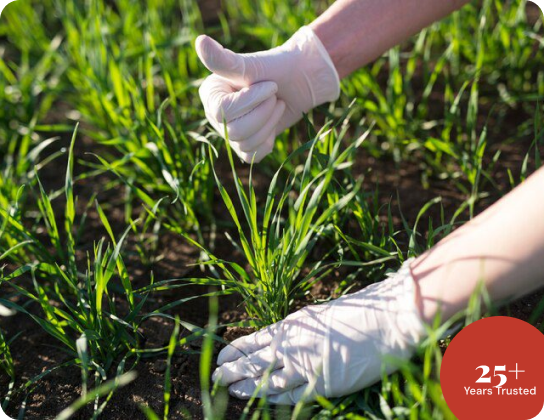
Now accepting new clients for the season. Request your consultation today. 

Lawn Disease Treatment in Olathe, KS

MW Lawn & Landscape diagnoses and treats lawn disease across Olathe, Overland Park, Lenexa, and Johnson County brown patch, dollar spot, rust, red thread, and the other fungal diseases that hit our fescue and bluegrass. We confirm it’s actually disease before we spray, then treat it preventively on a schedule or curatively when it appears and fix what’s feeding it. Licensed applicators, 25+ years local.

Request Fungicide Treatment

We’ll respond within 24 hours

About This Service

Professional Lawn Disease Treatment in Olathe & Johnson County KS

 Here’s the mistake that costs Johnson County homeowners the most money: spraying fungicide on a lawn that doesn’t have a disease. Brown patch looks almost identical to drought stress, heat stress, pet spots, and a lawn scalped by a dull mower blade and fungicide does nothing for any of those. Worse, applying it to a drought-stressed lawn can actually make things worse. That’s why every fungicide job we do starts with a diagnosis, not a sprayer. We confirm what’s actually happening and if it isn’t fungus, we tell you, and we save you the cost of a treatment you don’t need.

 When it IS disease, we treat it two ways. If your lawn has a history of brown patch or you’re protecting a lawn you’ve invested in, we apply preventive fungicide on a schedule through the disease window the approach K-State’s own research, run right here at their Olathe research center, has shown works. If disease shows up unexpectedly, we treat it curatively to stop it from spreading. Either way, we pair the fungicide with the cultural fixes that actually keep disease away, because chemicals alone are never the whole answer.

We Diagnose Before We Spray

Disease or drought? Fungus or dull-blade scalping? We identify what’s really going on before any product goes down and won’t sell you fungicide you don’t need.

Preventive & Curative

Preventive treatment on a schedule for at-risk lawns, or curative treatment to stop an active outbreak matched to what your lawn needs

Local Disease Expertise

Brown patch, dollar spot, large patch we know which diseases hit Johnson County fescue, when, and how to manage each one.

Culture, Not Just Chemicals

We fix the conditions that feed disease watering timing, mowing height, compaction, nitrogen so you’re not spraying the same problem every year.

What's Included

What’s Included in Our Disease Treatment

 Diagnosis first, the right treatment second, and the cultural fixes that keep it from coming back.

Disease Diagnosis

We confirm it’s actually a fungal disease not drought, heat, pets, or mower damage and identify which one before we treat.

Preventive Fungicide Program

For at-risk lawns, scheduled applications through the disease window to stop brown patch before it starts.

Curative Treatment

When disease is already active, professional broad-spectrum fungicide to stop it spreading through your lawn.

Cultural Recommendations

The watering, mowing, and nitrogen adjustments that reduce disease pressure the part that keeps you from spraying every year.

Product Rotation

For diseases prone to resistance like dollar spot, we rotate modes of action so treatments keep working.

Recovery Plan

Where disease killed the turf, we’ll tell you what it takes to bring it back usually fall aeration and overseeding.

COMMON PROBLEMS

Circles of Dead Grass? Let’s Find Out Why

 The lawn disease symptoms Johnson County homeowners bring us and how we handle each one.

Common Problems

Circular brown patches with a gray ring at the edge

Small silver-dollar-sized bleached spots

Reddish or pinkish threads and patches in cool, wet spells

Orange dust on your shoes and an orange tint to the lawn

Dead patches that might be drought, might be fungus

Patches spreading fast during humid, muggy weather

You sprayed a store product and it didn’t work

How We Fix It

That’s the classic brown patch ‘smoke ring’ we confirm it and treat

That’s dollar spot we treat it and rotate products so it can’t resist

That’s red thread usually a sign of low fertility; we feed first, treat if needed

That’s rust mostly cosmetic; proper feeding and mowing usually clear it

We diagnose which fungicide on a dry lawn wastes money and can harm it

We fix the cause watering timing, mowing, nitrogen not just the symptom

Fungus moves quickly in those conditions we act fast to stop the spread

Often wrong diagnosis or wrong timing we handle both correctly

WHY CHOOSE MW LAWN

Why Olathe Homeowners Trust MW Lawn t With Lawn Disease

25+ years diagnosing and treating Johnson County lawn disease and honest about when you don’t need a spray

We Know What ‘Winterizer’ Really Means

We Diagnose First Half of ‘lawn fungus’ turns out to be drought, heat, or dull-blade damage. We find out before we spray and tell you the truth.

25+ Years of Local Expertise

We know the diseases that hit Johnson County fescue, the humid nights that trigger them, and how to manage each one.

Licensed & Certified Applicators

Professional broad-spectrum fungicides applied at label rates by licensed applicators with product rotation where it matters.

We Fix the Cause, Not Just the Spot

Watering, mowing, nitrogen, compaction we address what feeds disease so you’re not spraying the same lawn every summer.
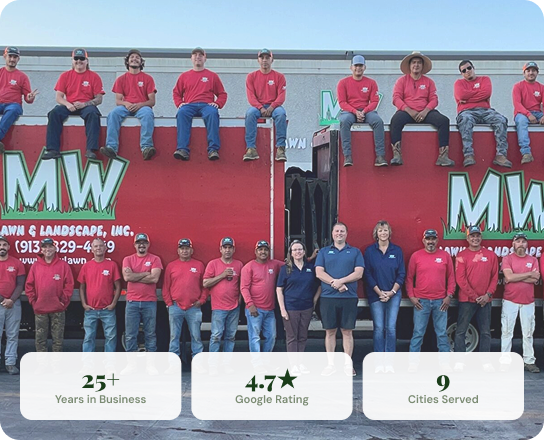
How It Works

Treating Lawn Disease is Simple

 Three steps to an earlier, thicker Fall lawn.

Request a Quote

Fill out the form or call 9138294949 Tell us what you’re seeing and we’ll come diagnose it.

We Diagnose & Treat

We confirm the disease, treat it preventively or curatively, and adjust the conditions feeding it.

We Help It Recover

We watch the response and, where disease killed the turf, get it back with fall aeration and overseeding.

faq

Common Lawn Disease Questions

What homeowners in Olathe and Johnson County ask us about lawn fungus and fungicide.

Still Have Questions?

Still Have Questions? Call our team or submit a quote request we’re happy to answer anything before you book.

What is brown patch and how do I know I have it?

Brown patch is the most common fungal disease on tall fescue in our area, caused by Rhizoctonia and triggered by hot, humid weather especially nights above about 65 degrees, which is a typical Kansas July and August. It shows up as roughly circular patches of tan or brown grass, often with a darker gray ‘smoke ring’ around the edge, and on dewy mornings you may see a fine cobwebby growth in the turf. The tricky part is that it looks a lot like drought stress, so the safest move is to have it confirmed before treating.

Usually not as the first step, and that’s worth knowing before you pay to spray. Rust (an orange, powdery coating that rubs off on your shoes) and red thread (fine reddish-pink threads binding the grass, with ragged tan patches) are both often signs of a lawn that’s under-fed and growing slowly they tend to show up on low-nitrogen turf. The first-line fix for both is usually proper fertilization and good cultural care, which lets the grass grow through the problem. Rust in particular is mostly cosmetic. We’ll tell you honestly whether your lawn needs a fungicide or just a better feeding program often it’s the latter.

It’s genuinely hard by eye, which is exactly why it matters. A few tells: fungus usually appears and spreads quickly, often in distinct circles or patterns, and tends to show up after humid, muggy weather; drought and heat stress develop gradually and usually track with sun exposure, slopes, and spots the sprinklers miss. Pet damage, dull-blade scalping, and compaction add more look-alikes. The reason to get it right is money: applying fungicide to a drought-stressed lawn does nothing and can even make it worse. We diagnose before we treat so you’re not paying to spray the wrong problem.

It depends on the lawn, and we do both. If your lawn has a history of brown patch, or it’s one you’ve put real money into, preventive treatment on a schedule through the summer disease window is the reliable play it’s far easier to keep brown patch out than to chase it once it’s established. If your lawn doesn’t normally have disease problems, curative treatment when something shows up makes more sense than spraying on a calendar. We’ll look at your lawn’s history and risk and recommend which fits.

For brown patch on fescue, the disease window is mainly the hot, humid stretch of summer July and August here, though it can start earlier in a wet, warm year. Preventive fungicides work best applied before symptoms appear and reapplied on a schedule (commonly every two to four weeks) through that window, which is how the research done at K-State’s Olathe center approaches it. Curative treatment goes down whenever disease is confirmed active. Timing is a big part of why professional treatment outperforms a single store-bought application.

Yes, when it’s the right product, correctly timed, on a lawn that actually has the disease it targets. Preventive applications have a strong track record against brown patch in tall fescue. Two honest caveats: some diseases, like dollar spot, can develop resistance, so products need to be rotated which we do and fungicide only treats disease, so it does nothing if the real problem is drought or another stress. And it works best alongside the cultural fixes: proper watering, mowing height, and nitrogen timing do a lot of the heavy lifting.

In most cases mature turf recovers once the disease is stopped, though it takes time and here’s an important expectation: a curative treatment halts the disease’s spread, but the visible green-up of damaged areas may not fully show until the lawn’s next strong growth period, sometimes the following spring. Where disease actually killed the grass, those areas will need reseeding, and the ideal time for that is fall, with aeration and overseeding. We’ll lay out the recovery timeline honestly so you know what to expect.

Customer Reviews

What Our Lawn Care Customers Say

4.7 ★★★★★ · 180+ Reviews

Explore Our Complete Lawn Care Program

Disease control works best as part of a healthy-lawn plan. Here’s what pairs with it

Related Services

Other Services We Offer in Olathe KS

Spring Fertilizer & Weed Control

What starts the next year: pre-emergent to stop crabgrass and a light green-up feeding. Learn More →

Grub & Insect Control

The other summer threat that gets mistaken for disease patches that pull up like carpet are grubs, not fungus. Learn More →

Late Summer Lawn Fertilizer

The Labor Day feeding the single most important of the year that comes before the winterizer. Learn More →

Don’t Spray Blind Get It Diagnosed

Brown patch or drought? Fungus or something else? Let MW Lawn & Landscape find out first, then treat it right preventively or curatively and fix what’s feeding it. Free quote, no pressure.