
There’s no single right month to trim shrubs and that’s exactly why so many Kansas City yards end up with shrubs that never bloom, evergreens with permanent bare spots, or growth that gets killed off by the first hard freeze. The correct timing depends on what kind of shrub you have and when it flowers. Get it right and you’re rewarded with fuller plants and better blooms; get it wrong and you can spend a whole year paying for one bad afternoon with the hedge trimmers. Here’s the timing that actually works in our climate, straight from Kansas horticultural guidance, plus the two mistakes we see most often in Johnson County yards and what professional shrub and bush trimming costs if you’d rather not risk it.
THE SHORT ANSWER
Spring bloomers (lilac, forsythia, spirea flower before June 1): prune right after they finish flowering. Summer bloomers (rose of Sharon, butterfly bush, crepe myrtle): prune in late winter to early spring. Evergreens (juniper, yew, boxwood): late March to mid-May. Spruce & pine: after new growth, finish by end of June. Dead or damaged wood: anytime. Hard stop: no significant pruning after mid-August.
Why timing matters more than technique
Most homeowners think of trimming as tidying something you do when the shrubs look shaggy. But a shrub responds to a cut based on where it is in its growth cycle, and that response is what makes timing the single most important decision in pruning.
There are two big reasons the calendar matters. First, flowers: shrubs form their flower buds at specific times, and cutting at the wrong moment removes next season’s blooms before they ever open. Second, healing: pruning in late winter through early spring just before the surge of spring growth means the cut seals over quickly, while a late-season cut can leave a wound and tender new shoots heading into freezing weather. Everything below flows from those two facts.
When should you trim shrubs? The Kansas City calendar
The correct time depends on your shrub’s flowering habit. Here’s how it breaks down:
Spring-flowering shrubs prune right after they bloom
These are shrubs that flower before about June 1, and the key detail is that they bloom on “old wood” growth from last year. Their flower buds were set last summer, which means if you prune them in winter or early spring, you’re cutting off this year’s flowers before they open. Prune them instead immediately after flowering finishes, ideally within about four to six weeks of bloom. That gives them all summer to put on new growth and set next year’s buds. Common Kansas City examples: lilac, forsythia, bridal wreath spirea, mockorange, flowering quince, and viburnum.
Worth knowing: pruning a spring bloomer at the wrong time doesn’t hurt the plant’s health it just costs you the flower show. The plant will be fine; your springtime view won’t be.
Summer and fall bloomers prune in late winter to early spring
Shrubs that flower after June 1 bloom on “new wood” the growth they put on this season. Because the flower buds haven’t formed yet, pruning them in late winter or early spring is ideal: you shape the plant and it flowers on the fresh growth that follows. Examples here include rose of Sharon, butterfly bush, crepe myrtle, shrub roses, spirea (summer-blooming types), caryopteris, pyracantha, and buttonbush.
Foliage shrubs late winter to early spring
Shrubs grown for their leaves rather than flowers (burning bush, privet, barberry and the like) follow the same rule as summer bloomers: prune in late winter to early spring, just before growth takes off, so cuts heal fast and the new season’s growth fills in the shape you’ve set.
Evergreens it depends on how they grow
Evergreens split into two groups, and the difference matters:
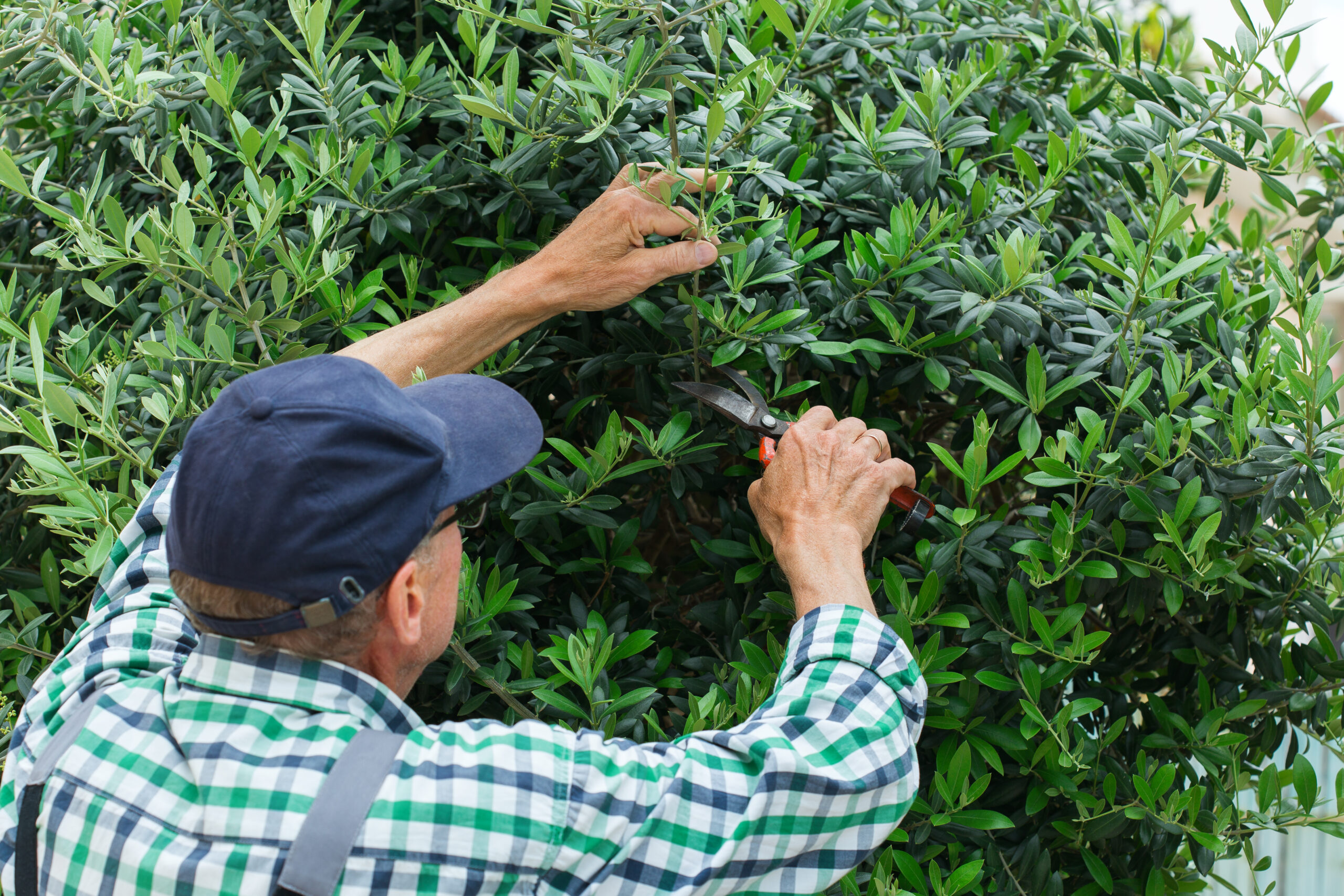
- Multiple growth flushes (juniper, yew, boxwood, arborvitae): prune from late March through mid-May, just before or just after new growth emerges. These can be selectively pruned as needed, cutting individual branches back to upward-growing side shoots so cuts stay hidden.
- Single spring flush (spruce, pine, fir): prune after the new growth appears and finish by the end of June. Only cut back about halfway into the new growth never into the old bare wood behind it.
Evergreens are also where the most permanent damage gets done, which we’ll get to in a moment. If you’re already up close with your junipers and arborvitae, it’s a good time to check for bagworms, which target the same evergreens and can be easy to miss until they’ve done real harm.
Trees late February through April
If you’re doing shrubs and trees in the same pass, note that trees go slightly earlier: late February through April, ideally before bud break, when the bare structure is visible and problems are easy to spot.
Dead, damaged, or hazardous wood any time
This is the universal exception. Broken, dead, diseased, or hazardous branches can and should be removed whenever you find them, regardless of season. Waiting doesn’t help there are no flowers or growth to protect on a dead branch.
Not sure which of your shrubs is which? We are. Book a shrub trimming visit or call (913) 829-4949 for a free quote.
Can you trim shrubs in fall?
This is the question we get most and the honest answer is one most homeowners don’t expect: not really, and it’s one of the most common mistakes made in Kansas City yards.
Here’s why. Pruning signals a plant to push new growth. In late summer and fall, that new growth is soft and tender, and it doesn’t have time to harden off before winter arrives so it gets killed by the first hard freeze, wasting the plant’s energy and leaving it damaged going into the cold. The practical rule for our area is a hard cutoff around mid-August: no significant pruning after that point.
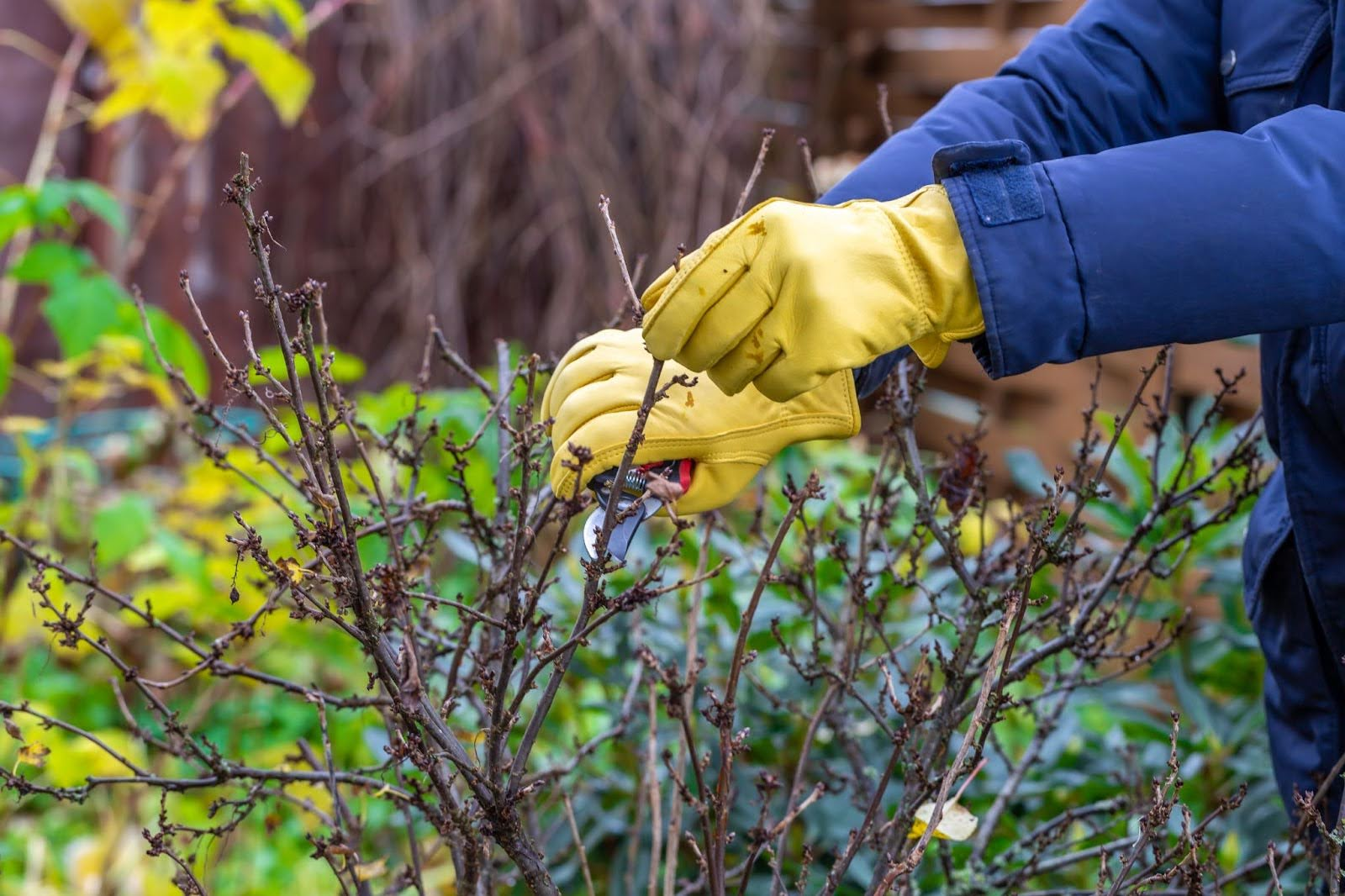
So what can you do in fall? Cleanup only. From September through November, limit yourself to removing dead, broken, or diseased wood and defer any real shaping or structural cuts until dormancy in late winter. If your shrubs look overgrown by October, the right move is to plan the work for February or March, not to reach for the shears. Waiting a few months protects the plant and gets you a better result.
What about trimming shrubs in summer?
Summer is a light-touch season. Deadheading spent flowers, snipping off wayward shoots, and minor shaping are all fine. What you want to avoid is heavy pruning during the peak of Kansas heat and drought the plant is already under stress, and a hard cut adds to it while pushing growth it can’t easily support. One useful upside: summer pruning naturally slows vigorous growth, so a light trim can help keep an over-enthusiastic shrub in bounds without stimulating a fresh surge. Keep it modest, keep it early in the day, and save the real work for the right window.
The mistake that permanently ruins evergreens: shearing
If there’s one thing worth taking away from this article beyond the calendar, it’s this. Kansas State’s horticulture guidance puts it bluntly: pruning evergreens into little boxes, balls, and rectangles isn’t pruning it’s shrub mutilation. Shearing belongs only on formal, intentionally geometric hedges. Everywhere else, evergreens look their best when their natural branching shape shows.
And there’s a hard mechanical reason, not just an aesthetic one. Evergreens don’t regenerate growth from old interior wood the way deciduous shrubs do. Shear one too tightly and you expose the “dead zone” the bare, brown interior and it will not fill back in. Ever. You’re left with a gaping hole in the shrub, and the only real fix is years of patient recovery or replacement. The rule is simple and unforgiving: never prune deeper into an evergreen than where green growth is showing.
Proper technique is the opposite of a hedge trimmer sweep. You look at the branching structure, then use hand clippers and loppers to cut individual branches back to side shoots keeping the natural flow, just smaller. It takes a few minutes longer because it requires thinking rather than whacking, and it’s the difference between a shrub that looks intentional and one that looks butchered.
Overgrown shrubs: rejuvenation pruning
What if a shrub is already too big and woody? For many deciduous shrubs there’s a rescue option: rejuvenation pruning cutting every stem back to a 5- to 6-inch stub, essentially starting the plant over. It sounds brutal, but it works well for lilac, forsythia, spirea, dogwood, privet, rose of Sharon, elderberry, honeysuckle, ninebark, pyracantha, shrub roses, and flowering quince. Expect reduced or no flowers for up to two years while it rebuilds a fair trade for a plant that’s outgrown its spot.
Two important caveats. First, evergreens cannot be rejuvenation pruned they won’t come back from bare wood. Second, if an overgrown spring bloomer needs a hard renovation, do it in late winter even though you’ll lose that year’s flowers; waiting until after bloom to make severe cuts puts far more stress on the plant. And if a shrub has been sheared into submission for years or is simply the wrong plant for the space, replacement may genuinely be the better answer that’s a conversation worth having as part of a considered landscape design rather than fighting the same plant every year.
Why trim at all? (Beyond looks)
Well-timed trimming does more than tidy the front of the house:
- Better blooms correct timing preserves and increases next season’s flowers.
- Healthier plants thinning opens the interior to light and airflow, reducing disease pressure.
- Early problem detection hands-on trimming surfaces insect problems worth catching early, before they cost you a plant.
- Safety and access keeping growth off walkways, windows, and the foundation.
- Curb appeal shaped shrubs alongside fresh mulch and crisp bed edges is what makes a property read as genuinely cared-for.
Trimming also works best alongside the rest of shrub health feeding them properly and watering well means the plant recovers from cuts quickly and fills back in the way you want.
What does shrub trimming cost in the Kansas City area?
Shrub trimming is usually priced by the number and size of shrubs, how overgrown they are, and whether debris haul-away is included. Realistic local ranges:
Scenario | Typical range | Notes |
|---|---|---|
Per-shrub trim (routine, small–medium) | ~$15 – $50 each | Volume pricing typically applies as the count rises. |
Typical residential visit | ~$150 – $500+ | Depends on shrub count, size, and access. |
Overgrown / rejuvenation work | Quoted per project | More labor and debris; often paired with cleanup. |
Debris haul-away | Often included | Confirm some companies charge separately. |
Most homeowners with a typical foundation planting are in the mid range for a full visit. Price drivers include how tall the shrubs are (anything requiring ladders costs more), how long since the last trim, and how much material comes off. These are estimates we quote per property, free, and we’ll tell you honestly if some of your shrubs should simply be left alone until their correct window.
DIY vs. Hiring a Pro
Trimming shrubs looks like a Saturday job, and for a few small, forgiving plants it can be. The stakes rise fast with evergreens and mature shrubs:
Factor | DIY | Professional service |
|---|---|---|
Timing knowledge | Requires identifying each shrub and its bloom habit | We know the species and the window for each |
Technique | Hedge trimmers tempt shearing the #1 cause of dead zones | Hand cuts to side shoots; natural shape preserved |
Risk | A bad cut on an evergreen is permanent | Correct depth never past the green |
Effort & cleanup | Cutting is the easy part; hauling debris isn’t | Trimming, shaping, and haul-away done |
Result | Often boxy, thinned in the wrong places, or bloomless next spring | Shaped, healthy, and set up to bloom |
The honest read: DIY is reasonable for young deciduous shrubs where mistakes grow out. For evergreens, mature plantings, or anything you’d be upset to lose, the permanence of a bad cut is the whole argument for a pro.
Why choose MW Lawn & Landscape
We’ve been trimming Johnson County shrubs for over 25 years, and we do it the way the plants actually want:
- We prune by species and season not by whatever’s on the schedule. If your lilacs shouldn’t be cut this month, we’ll tell you and come back at the right time.
- Natural-shape trimming. Hand tools and thoughtful cuts, not a hedge-trimmer sweep so your evergreens keep their form and never get pushed into the dead zone.
- Honest recommendations. If a shrub is beyond rescue or wrong for the spot, we’ll say so instead of billing you to trim it forever.
- Complete care. Trimming pairs naturally with ongoing landscape maintenance [/landscape-maintenance/] one team keeping the whole property sharp, with debris cleaned up before we leave.
- Family-owned, licensed, and insured. Local accountability, the same standards every visit.
Shrubs overgrown, or not sure when to cut? Book a shrub trimming visit or call (913) 829-4949 free quote, honest timing advice.
Serving Olathe and the Kansas City metro
MW Lawn & Landscape provides shrub and bush trimming across Olathe, Overland Park, and the surrounding Johnson County communities from routine foundation plantings to overgrown rescues. We’ll identify what you have, trim it in its correct window, and leave the beds clean, the way we have for local homeowners for 25+ years.
Frequently Asked Questions
When should you trim shrubs?
It depends on when the shrub flowers. Spring-flowering shrubs (lilac, forsythia, spirea blooming before June 1) should be pruned immediately after they finish flowering, within about four to six weeks. Summer and fall bloomers (rose of Sharon, butterfly bush, crepe myrtle) and foliage shrubs are pruned in late winter to early spring. Evergreens like juniper, yew, and boxwood are pruned late March through mid-May. Dead or damaged wood can be removed any time.
Can you trim shrubs in fall?
Not for anything significant. Pruning stimulates tender new growth that won’t harden off before winter, so it gets killed by the first hard freeze. The rule for the Kansas City area is no major pruning after mid-August. From September through November, limit work to removing dead, broken, or diseased wood and save shaping for late winter.
Is it OK to trim shrubs in summer?
Light work only. Deadheading, minor shaping, and removing wayward shoots are fine, but avoid heavy pruning during peak heat and drought when the plant is already stressed. Light summer pruning has one benefit it slows overly vigorous growth without triggering a big new flush.
Why didn’t my lilac (or forsythia) bloom this year?
Almost always a timing problem. Spring-flowering shrubs set their flower buds the previous summer and bloom on old wood, so pruning them in fall, winter, or early spring cuts off the flowers before they open. Prune them right after they finish blooming instead, and the display returns the following spring.
What’s the best time to prune evergreens?
Junipers, yews, boxwood, and arborvitae which push growth several times a season are best pruned late March through mid-May. Spruce, pine, and fir grow once each spring and should be pruned after that new growth appears, finishing by the end of June, cutting only about halfway into the new growth. Never cut back into old bare wood.
Why is shearing shrubs bad?
Because evergreens don’t regrow from old interior wood. Shearing into balls and boxes exposes the bare ‘dead zone,’ which will not fill back in leaving a permanent hole. Kansas State’s guidance calls shearing shrub mutilation outside of formal hedges. Proper pruning uses hand cuts back to side shoots so the plant keeps its natural shape.
Can overgrown shrubs be saved?
Often, yes, through rejuvenation pruning cutting every stem back to a 5 to 6 inch stub. It works well for lilac, forsythia, spirea, dogwood, privet, rose of Sharon, and similar deciduous shrubs, though flowering may be reduced for up to two years. Evergreens cannot be rejuvenation pruned. If an overgrown spring bloomer needs hard cuts, do it in late winter even though you’ll lose that year’s flowers.
How much does shrub trimming cost in Kansas City?
Routine trimming often runs roughly $15 to $50 per shrub depending on size, with a typical residential visit landing around $150 to $500+ based on shrub count, height, and how overgrown they are. Overgrown or rejuvenation work is quoted per project. We provide free quotes and will tell you honestly if some shrubs should wait for their proper window.
How often should shrubs be trimmed?
Most established shrubs benefit from trimming once a year in their correct seasonal window, with light touch-ups as needed. Fast-growing shrubs or formal hedges may need more frequent attention, while slow-growing and dwarf varieties should be trimmed sparingly.