Now accepting new clients for the season. Request your consultation today.
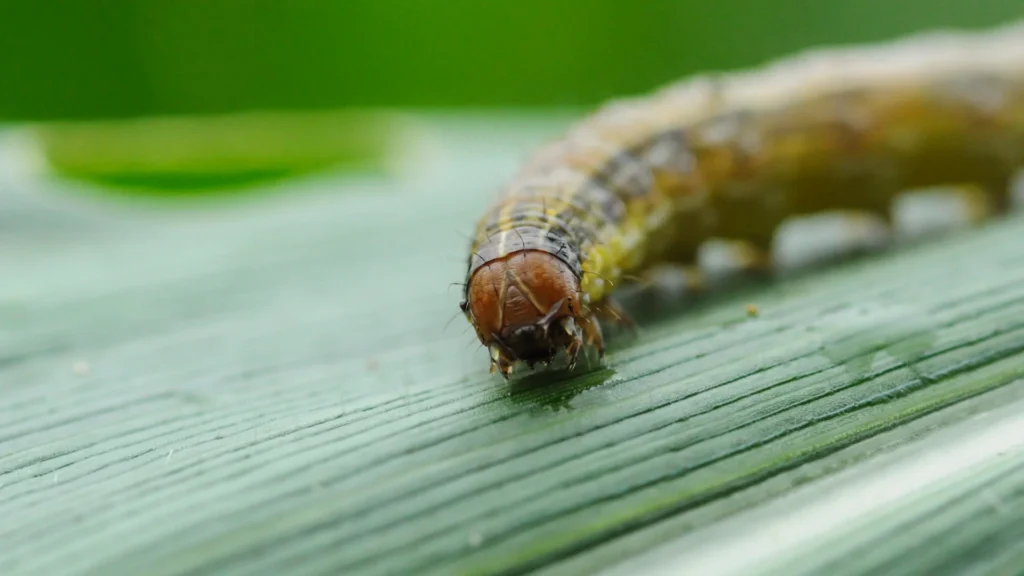
Fall armyworms can turn a healthy lawn brown in two or three days — they sweep in from the south in late summer, feed in huge numbers, and leave a sharp line of chewed, bare turf behind them. MW Lawn & Landscape treats armyworm infestations fast across Olathe, Overland Park, Lenexa, and Johnson County: we confirm them with a soap test, treat while the caterpillars are still small and stoppable, and help your lawn recover. Licensed local technicians, 25+ years, and we prioritize armyworm calls because every day counts.
We’ll respond within 24 hours
Armyworms earn their name they move across a lawn in a feeding army, and they are fast. The fall armyworm doesn’t survive our Kansas winters; instead it migrates up from the south every year in late summer, and in a bad year the moths arrive in waves and lay eggs that hatch into caterpillars capable of stripping a healthy lawn in just two or three days. Most people don’t realize what’s happening until a patch of grass that looked fine on Monday is brown and chewed to the stems by Wednesday. The giveaway is a sharp line where green, healthy turf meets a spreading dead zone the chew front often with birds feeding aggressively on the caterpillars and small dark droppings in the grass.
The good news is that caught in time, this is very treatable, and your lawn usually survives. We confirm armyworms with a simple soap test rather than guessing, because a brown patch can also be heat, drought, grubs, or disease and each needs a different fix. Once confirmed, the key is treating while the caterpillars are still small; a fast-acting treatment stops the feeding quickly. Because armyworms eat the grass blades and not the roots, a cool-season fescue or bluegrass lawn will often green back up once they’re stopped, and we can overseed any truly bare spots in the early-fall window that happens to line up perfectly with armyworm season.

Armyworms can’t wait a week. We prioritize armyworm calls and treat quickly, because the difference of a few days is the difference between a recovering lawn and a lost one.

A soap test tells us it’s actually armyworms and not drought, grubs, or disease so you pay for the treatment your lawn actually needs.

Treatment works best on small caterpillars. We treat early instars, when a single application stops the feeding not large larvae that are nearly done anyway.

Stopping the armyworms is step one. We help the lawn come back with proper watering guidance and early-fall overseeding for the bare areas.
Confirm it, stop it fast, and bring the lawn back handled the right way.

We confirm armyworms with a soap flush and read the damage pattern so you’re not treating for the wrong problem.

We check the classic starting points fence lines, foundations, new sod where egg masses and the first feeding usually appear.

A targeted insecticide that stops active feeding quickly, applied while the caterpillars are small enough to control.

We treat when it’s warranted around three or more caterpillars per square foot not when a quick fix won’t help.

Watering guidance to protect the surviving grass crowns, plus an honest read on which areas will green back up on their own.

Where armyworms left bare dirt, we can overseed in the early-fall window which lines up with peak armyworm season.
The armyworm situations Johnson County homeowners bring us and how we handle each.


25+ years on Johnson County lawns and the speed and honesty an armyworm emergency calls for.

Treatment only works well on small caterpillars. Knowing that window and the threshold that justifies treating is the expertise that makes it stick

Armyworms strip a lawn in days, so we prioritize these calls and get out quickly because waiting is what turns a treatable problem into a lost lawn.

A soap test tells us it’s really armyworms. We won’t sell you an insecticide for what’s actually drought or grubs.

One local team treats the armyworms and handles the recovery watering guidance and fall overseeding so you’re not left with bare dirt.
Three steps to stop the damage and save the lawn.
Fill out the form or call (913) 829-4949. Tell us what you’re seeing with armyworms, the sooner we get out, the more lawn we save.
We run a soap test to confirm armyworms, then apply a fast-acting treatment while the caterpillars are still small and stoppable.
We guide the watering that protects surviving grass and overseed the bare spots in the fall window so the lawn comes back.
What Olathe and Johnson County homeowners ask us when armyworms show up.
Still Have Questions? Armyworms move fast call our team or request treatment and we’ll get to you quickly
The reliable approach is confirm, then treat fast while they’re small. First, confirm it’s actually armyworms with a soap flush test mix a couple tablespoons of dish soap in a gallon of water and pour it over about a square yard of the affected edge; if armyworms are there, the caterpillars crawl to the surface within a few minutes. If you’re finding roughly three or more per square foot, it’s time to treat. A fast-acting insecticide stops the feeding, and it works far better on small caterpillars than on large ones that are nearly done eating. The whole thing is time-sensitive, which is why most people call a professional to confirm and treat the same week rather than lose the lawn while they experiment.
Usually not permanently and that’s the reassuring part. Armyworms eat the grass blades, not the roots and crowns, so even a lawn that looks devastated often has living grass underneath that will green back up once the feeding stops. For the cool-season fescue and bluegrass most common here, recovery is the typical outcome if you catch it in time and keep the lawn watered afterward. The exceptions are areas where the crowns were damaged, and new sod or newly seeded lawns, which are more vulnerable and can be killed outright. That’s why a fast response matters: the sooner the feeding stops, the more of the lawn recovers on its own.
It’s the simple, reliable way to confirm armyworms before spending money on treatment. Mix about two to three tablespoons of liquid dish soap into a gallon of water and pour it over roughly a square yard of grass at the edge of the damage where green meets brown, not the dead center. The soap irritates the caterpillars and drives them up to the surface within a few minutes, so you can see them and count them. It also helps rule out armyworms if the real culprit is something else, like drought or grubs. We run this test as a standard first step so treatment is based on what’s actually there.
They damage a lawn in opposite directions, which makes them easy to tell apart once you know what to look for. Armyworms are caterpillars that feed on top, chewing the grass blades down and leaving a sharp, advancing front of brown, chewed turf and a soap test brings them to the surface. Grubs are beetle larvae that feed below ground on the roots, so grub-damaged turf lifts up like a loose carpet when you tug it, with no chewing visible on the blades. Each needs a different treatment and a different timing, so correctly identifying which one you have is the whole ballgame. If you’re dealing with grubs instead, that’s a separate service.
Late summer into fall which is why they’re called fall armyworms. They don’t survive our Kansas winters, so every year they migrate up from the southern states, generally arriving in our area from around August into September. Some years are mild and some years bring heavy outbreaks, depending on the weather and how far north the moths push. Because the timing is seasonal and the damage is sudden, late summer is when to start watching your lawn for the telltale brown chew front, especially along fences, foundations, and any new sod.
We can, on request. A preventive surface treatment isn’t part of our standard program, mainly because fall armyworms are migratory and unpredictable in a mild year they may never arrive, so blanket preventive spraying often isn’t the best value. For most customers, the smart approach is to watch for them in late summer and treat quickly if they show up. That said, if you’ve had armyworm trouble before, have new sod to protect, or simply want the peace of mind, we’re glad to add a preventive treatment just ask and we’ll set it up.
4.7 ★★★★★ · 180+ Reviews
![]()
Stacey and Rob AndersonTrustindex verifies that the original source of the review is Google.
Matt Engstrom is our property manager. He did nothing short of an excellent job providing information, advice, service and support for several issues that we are currently experiencing with our yard. Give this man a raise.![]()
Neil WilsonTrustindex verifies that the original source of the review is Google.
I couldn’t be happier with the professionalism demonstrated by MW Lawn. The grounds at the hospital have never looked better. Service and attention to detail is top notch. Thank you!![]()
Kathleen ClevelandTrustindex verifies that the original source of the review is Google.
We have had many services from MW Landscaping and we are always very happy with their work. They came out to address a few irrigation issues and were on time as promised![]()
Joey Rayburn-ThomasTrustindex verifies that the original source of the review is Google.
Gave notice before coming w describtion of serve so we were prepared & learning what to expect as new customers.![]()
karen dillonTrustindex verifies that the original source of the review is Google.
The work the lawnmaintenance workers did for us was exceptional. I have many shrubs and bushes and they trimmed everything beautifully. And just as important, they cleaned up all the trimmings _ and there was a lot _ as well as some other yard waste. We so appreciate such good work. Thank you.![]()
Tom SandersTrustindex verifies that the original source of the review is Google.
Professional, knowledgeable and service oriented. They follow through on detail and requests.

Armyworms are one of several threats to a Johnson County lawn. Here’s how it connects to the rest of our care.

The other major lawn pest but grubs eat roots from below, not blades from above. Different pest, different treatment. Learn More →

Not every brown patch is armyworms brown patch and other fungal diseases look similar and need a different fix. We diagnose which it is. Learn More →

The fall service that repairs armyworm damage overseeding the bare spots right when the timing lines up. Learn More →
Armyworms can take a lawn in a matter of days but caught in time, it’s very treatable. Let MW Lawn & Landscape confirm it, stop it fast, and bring your lawn back. We prioritize armyworm calls across Johnson County