
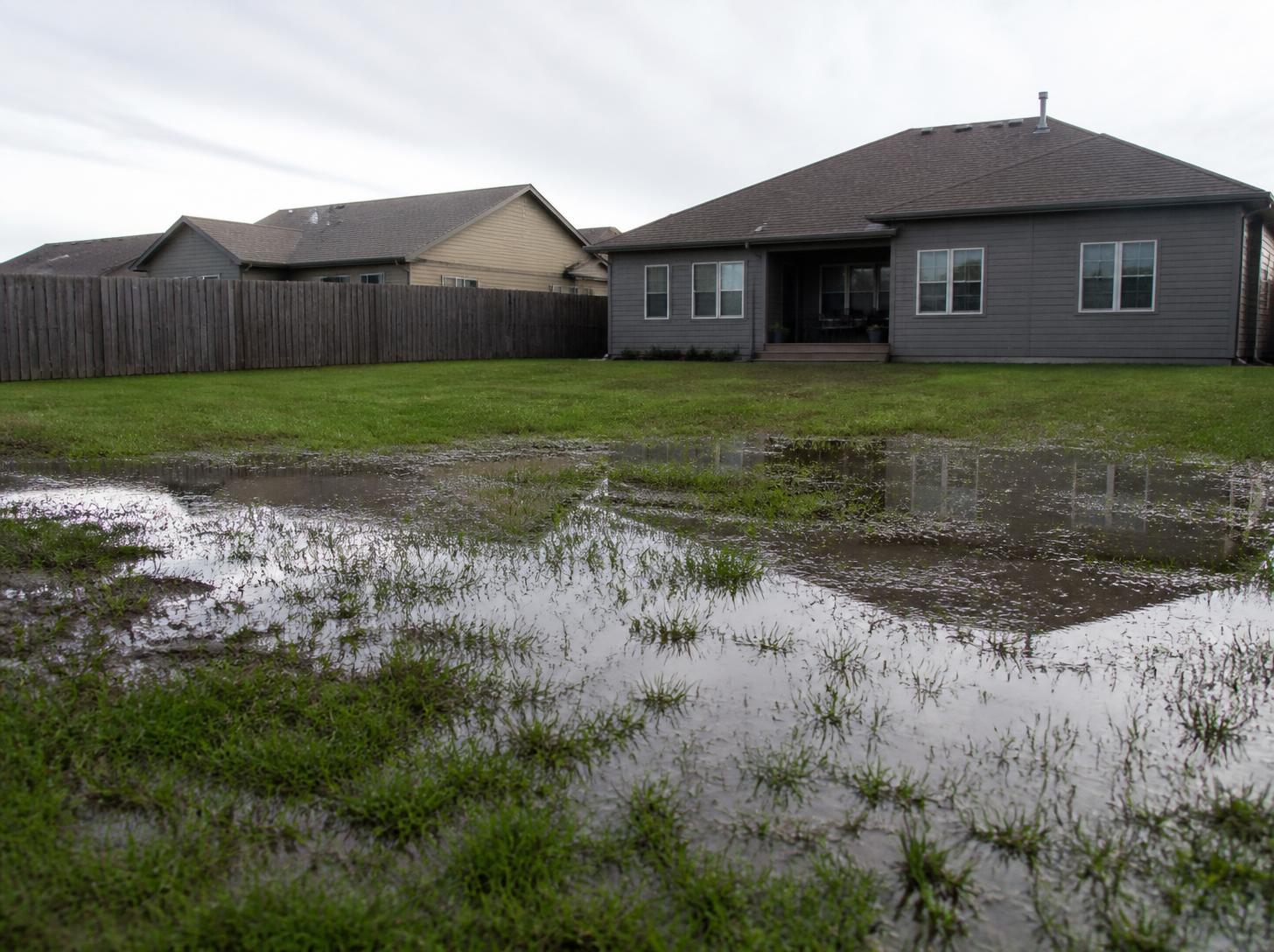
If your backyard turns into a swamp after every storm and stays soggy for days, don’t blame yourself blame the clay. Johnson County sits on heavy clay soil, and clay is genuinely bad at draining. It’s the single biggest reason standing water is so common here, and it’s also why the drainage fix that works in a sandy yard somewhere else may do nothing in ours. Draining a clay-soil backyard takes solutions built for clay specifically, plus a realistic understanding that you can’t simply “fix” clay overnight. This guide explains exactly why clay holds water, which drainage solutions actually work in it, how to improve the soil over the long term, and the one common “fix” that makes clay dramatically worse. When you want it solved properly, our landscape drainage and enhancement services are built around how our clay actually behaves.
THE SHORT ANSWER
Why clay floods: its tiny, tightly packed particles barely let water through, so it saturates and stays wet. What works in clay: a combination a French drain for subsurface water, catch basins and regrading for surface water, and long-term soil improvement (compost, core aeration, deep-rooted plants). Never do this: add sand to clay it makes something like concrete. The reality: clay needs a system, not a single trick.
Why clay soil drains so poorly
To fix clay drainage, it helps to understand what you’re up against. Soil is made of particles, and their size determines how water moves through it. Sandy soil has large particles with big gaps between them, so water drains right through. Clay is the opposite: its particles are microscopically small and pack together tightly, leaving almost no space for water to pass. The result is very low permeability water simply can’t move down through it fast enough.
So when rain falls on a clay yard, it can’t soak in at a useful rate. Instead it pools on the surface, runs off toward the lowest point (often your foundation), or saturates the top layer of soil and just sits there, staying soggy for days. Clay does two more things that make it especially troublesome:
- It expands when wet by as much as 10% which creates real pressure against foundation walls and can cause cracks and basement seepage.
- It shrinks and cracks when dry, then compacts further, so the drainage problem tends to get worse over time, not better.
This is why standing water is so stubborn in Johnson County, and why a quick surface fix often doesn’t hold. The soil itself is working against you so the solutions have to account for that.
How do you drain a backyard with clay soil?
The honest answer is that clay usually needs a combination of solutions, not a single one something to move surface water, something to handle the saturated subsurface, and, over time, something to improve the soil itself. Here’s how they fit together:
| Solution | What it does in clay | Best for |
|---|---|---|
| French drain | Gives trapped subsurface water an easy path out through gravel + pipe | Soggy ground, seepage, water at the foundation |
| Catch basin + piping | Captures surface water pooling in low spots and carries it away | Puddles that form in the same spot every storm |
| Regrading / sloping | Reshapes the ground so water runs away from the house | Yards that slope toward the home; broad low areas |
| Dry creek bed / swale | Redirects surface runoff along a deliberate path | Directing water across the yard; runoff from uphill |
| Dry well / rain garden | Collects water where there’s no lower outlet to drain to | Nowhere lower to send the water |
| Soil improvement (long-term) | Slowly makes the clay itself more permeable | Every clay yard, as a foundation for the rest |
Most clay-soil backyards end up using two or three of these together for example, regrading to move surface water plus a French drain for the saturated soil, or a catch basin feeding a dry well. Picking the right combination starts with diagnosing whether your water is mostly on the surface or trapped below it. For the complete breakdown of each option, see the full menu of yard drainage solutions
The French drain: clay’s most reliable subsurface fix
When the problem is saturated soil ground that stays soggy, seepage, or water pushing against the foundation a French drain is the go-to answer in clay. It’s a gravel-filled trench with a perforated pipe that gives trapped water a path far easier than the surrounding clay, collecting it and carrying it by gravity to a safe outlet. But clay makes correct installation non-negotiable: the fine clay particles will silt up a poorly built drain fast, so it must use washed (not fine) gravel, a non-woven filter fabric to keep silt out, and a continuous proper slope. Done right, it lasts decades; done lazily in clay, it clogs in a couple of seasons. It’s worth understanding how a French drain works in clay and what a French drain costs before you commit.
Not sure whether your water is on the surface or trapped below? In clay, that diagnosis is everything. Get a free drainage assessment or call (913) 829-4949.
What helps drainage in clay soil (the long game)
Drainage systems move water off the yard; improving the clay itself helps water soak in so there’s less to move. You can’t transform clay overnight, but over a few seasons these genuinely help and they make every other solution work better:
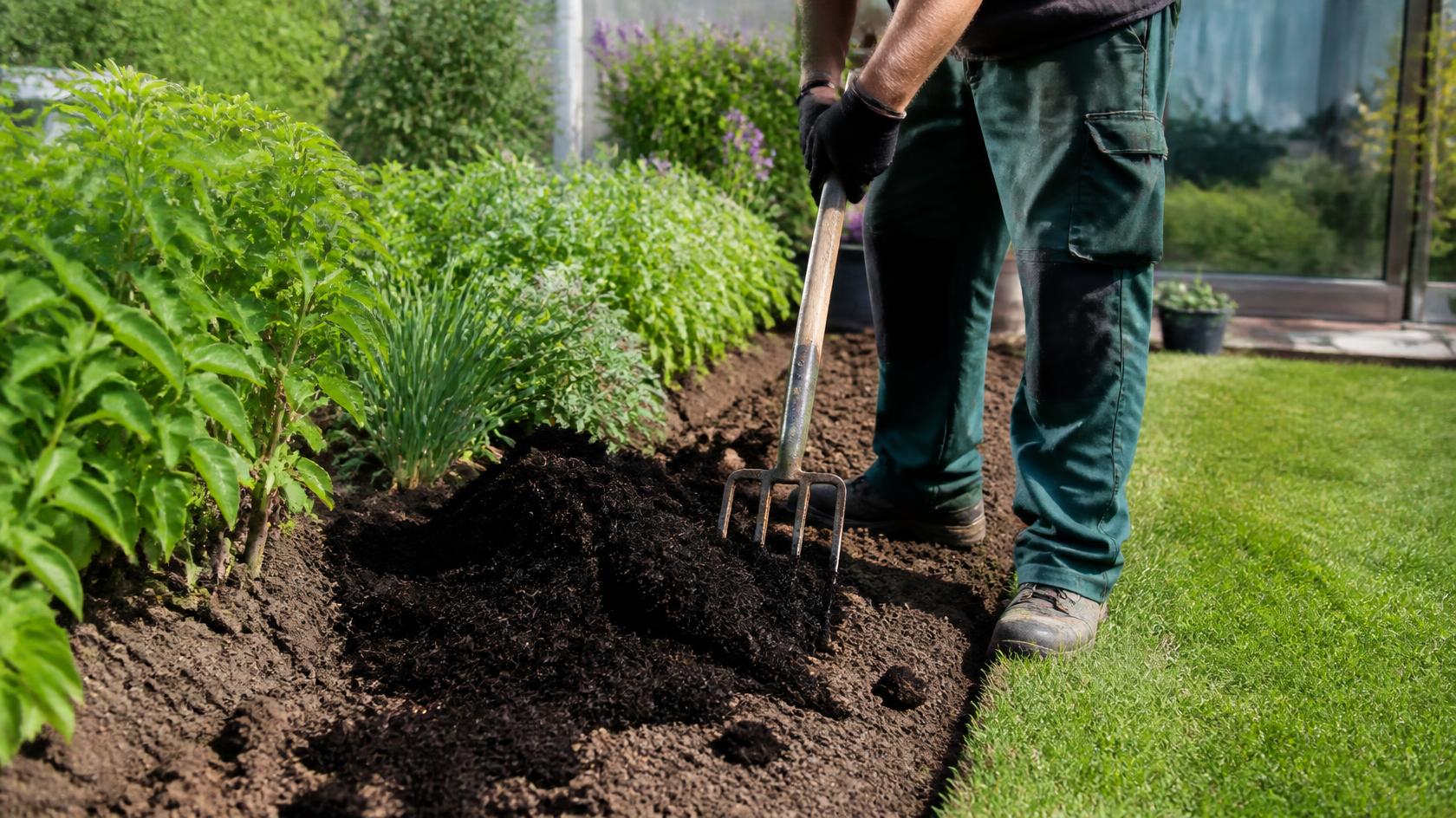
- Add organic matter. Working compost and other organic material into the soil over time is the single best way to improve clay. It gradually loosens the structure, creating more space for water and air. This is a multi-year effort, but it’s the real fix for the soil itself.
- Core aeration. Pulling plugs from compacted clay opens channels for water and air to penetrate core aeration to relieve compacted clay is one of the most effective things you can do for a clay lawn, and it pairs perfectly with topdressing compost.
- Plant deep-rooted natives. Deep-rooted plants and native grasses drive roots down through the clay, creating natural channels for water to follow and improving infiltration where they grow.
- Build raised beds or berms. Where you can’t beat the clay, rise above it raised beds and gentle berms give plants well-draining soil above the clay layer.
- Topdress and mulch. Organic mulch and compost topdressing slowly feed organic matter into the soil surface, improving it from the top down over time.
The biggest mistake: adding sand to clay
Here’s the one that seems logical and is completely wrong: “clay drains badly, sand drains well, so I’ll mix sand into my clay.” Don’t. Adding sand to clay soil in typical amounts doesn’t create well-draining soil it creates something closer to concrete. The fine clay particles fill the gaps between the sand grains and bind into a dense, brick-hard mass that drains even worse than the clay you started with. It would take an enormous, impractical amount of sand to actually change clay’s texture, and anything less makes the problem worse.
The right amendment for clay is organic matter compost, aged manure, leaf mold not sand. Organic matter loosens clay’s structure and improves it over time; sand just cements it. If you take one thing from this article, let it be this: amend clay with compost, never sand.
Why fixing clay drainage matters more here
It’s tempting to live with a soggy backyard, but in clay the stakes are higher than just a muddy lawn:
- Foundation risk. Clay’s expansion against foundation walls, plus chronic moisture, leads to cracks and basement seepage and foundation repair costs vastly more than drainage.
- Lawn and plant loss. Grass and most plants drown in waterlogged clay; roots rot and lawns thin out in the wettest areas.
- It worsens over time. Clay compacts and cracks with each wet-dry cycle, so an unaddressed drainage problem tends to grow rather than settle.
- Mosquitoes and lost use. Standing water breeds mosquitoes and keeps you off your own yard for days after every storm.
Because clay makes water damage both more likely and more expensive, addressing drainage early is one of the higher-return things a Johnson County homeowner can do.
DIY vs. professional in clay soil
Some clay drainage steps are DIY-friendly; the bigger ones really aren’t, and clay is less forgiving than most soils. Simple moves extending downspouts, topdressing compost, aerating, planting deep-rooted natives are great homeowner projects. But the heavy solutions (French drains, catch basins, regrading) are where clay punishes shortcuts: trenching clay by hand is brutal, and a drain built without proper slope, washed gravel, and filter fabric silts up fast in our soil. The single most valuable thing a professional brings is the diagnosis correctly reading whether your water is surface or subsurface, and designing the combination that actually works in clay, rather than installing one fix and hoping.
Clay soil is our specialty. Get a free drainage assessment or call (913) 829-4949 we’ll diagnose your yard and build the right combination.
Why Johnson County homeowners choose MW Lawn & Landscape
Draining a clay-soil backyard is a local specialty, and after 25+ years in Johnson County it’s one we’ve earned:
- We know this clay. We’ve worked our soil for decades and design drainage around how it actually behaves not from a generic playbook that assumes it drains like sand.
- We diagnose first. Surface water or subsurface saturation? One fix or a combination? We figure out what’s really happening before recommending anything including pointing you to a cheaper fix when that’s the honest answer.
- We build for clay. Correct slope, washed gravel, filter fabric, and a real outlet the details that decide whether a drain lasts two years or twenty in our soil.
- We think long-term too. Beyond the drain, we can improve the soil with aeration, compost topdressing, and planting as part of ongoing landscape maintenance so the clay itself gets better over time.
- Family-owned, licensed, and insured local accountability on work built to last.
Serving Olathe, Overland Park, and Johnson County
MW Lawn & Landscape solves clay-soil drainage problems across Olathe, Overland Park, and the surrounding Johnson County communities from a soggy low spot to a whole backyard that won’t drain. Because our clay is the root of the problem, we start by understanding exactly how water moves on your property, then build the combination of solutions that actually holds up in it. If your yard becomes a swamp after every storm, there’s a fix built for clay and it starts with a straight assessment.
Frequently Asked Questions
How do you drain a backyard with clay soil?
Clay usually needs a combination of solutions rather than one fix. Use a French drain for subsurface water saturating the soil, catch basins and regrading for surface water pooling on top, and a dry creek bed or swale to redirect runoff. Over the long term, improve the clay itself with compost, core aeration, and deep-rooted plants so more water can soak in. The right combination depends on whether your water is mostly on the surface or trapped below it.
What helps drainage in clay soil?
The best long-term help is adding organic matter compost, aged manure, leaf mold which gradually loosens clay’s tight structure. Core aeration opens compacted clay so water can penetrate, deep-rooted native plants create natural channels, and raised beds let you rise above the clay where needed. Avoid adding sand, which binds with clay into a concrete-like mass and makes drainage worse.
Why does clay soil drain so poorly?
Clay is made of microscopically small particles that pack together tightly, leaving almost no space between them for water to pass. This gives clay very low permeability, so rain can’t soak in fast enough and instead pools, runs off, or saturates the top layer and sits. Clay also expands about 10% when wet and shrinks and cracks when dry, which pressures foundations and worsens compaction over time.
Should I add sand to clay soil to improve drainage?
No this is a common mistake that backfires. In typical amounts, sand mixed into clay fills the gaps between grains and binds into a dense, brick-hard mass that drains worse than the original clay. It would take an impractically huge amount of sand to actually change the texture. Use organic matter like compost instead, which genuinely loosens clay and improves it over time.
Is a French drain good for clay soil?
Yes it’s one of the most reliable subsurface fixes for clay, giving trapped water an easy path out through gravel and perforated pipe. But clay makes correct installation essential: it must use washed (not fine) gravel, a non-woven filter fabric to keep clay silt out, and a continuous proper slope. Built correctly it lasts decades; built poorly in clay it silts up and fails within a couple of seasons.
Can you fix clay soil drainage permanently?
You can permanently solve the water problem with the right drainage system, but improving the clay itself is a gradual, ongoing process rather than a one-time fix. Drainage systems like French drains and regrading provide lasting relief, while soil improvement through compost, aeration, and deep-rooted plants slowly makes the clay more permeable over several seasons. The best results combine both.
Does aeration help clay soil drainage?
Yes. Core aeration pulls plugs from compacted clay, opening channels that let water and air penetrate instead of sitting on the surface. It’s one of the most effective and affordable things you can do for a clay lawn, and it works even better when combined with topdressing compost afterward, which works organic matter into the openings the aeration creates.
Why is standing water worse in Johnson County?
Because the area sits on heavy clay soil, which drains slowly and holds water. Combined with our intense summer storms, that means water pools and lingers rather than soaking in, and often runs toward foundations. The clay also expands when wet and compacts over time, so drainage problems here tend to be more stubborn and more damaging than in sandy-soil regions.