
River rock is a one-time investment that pays off for decades no annual mulch refresh, no washouts, just clean stone that holds up to Kansas storms. But “how much does it cost?” gets a frustratingly vague answer online, because the price depends on the stone, the size of the area, and how hard it is to move several tons of rock into place. Here’s the clear version for Kansas homeowners. In 2026, professional river rock installation runs about $2.00 to $4.25 per square foot installed, with most projects landing between $365 and $1,500 depending on size. This guide breaks that down per square foot, per ton, and per project, explains the labor cost specifically (it’s a bigger piece than you’d think), and shows where the real savings are. When you want it quoted and installed right, our river rock and stone bed installation comes with a free, itemized estimate.
THE SHORT ANSWER
Per square foot installed: about $2.00–$4.25. Material: $45–$130 per ton, or $50–$160 per cubic yard. Labor: $25–$100 per ton (roughly $50–$100/hour). Typical project: $365–$1,500+ depending on size. Biggest money tip: buy bulk, never bagged bagged costs 3–8× more.
River rock cost per square foot
The number most homeowners want is the all-in installed cost per square foot, which bundles material, delivery, and labor. For most Kansas projects that’s about $2.00 to $4.25 per square foot, and where you land in that range depends mainly on depth and stone type:
| Depth | Installed cost per sq ft | Notes |
|---|---|---|
| 2 inches (paths, borders) | ~$2.00 – $2.75 | Less material and labor per square foot. |
| 3 inches (standard beds) | ~$2.75 – $3.50 | The typical depth for decorative beds. |
| 4 inches (drainage areas) | ~$3.50 – $4.25+ | More stone, more weight to move. |
Deeper coverage costs more because it uses more stone and takes more labor to spread. Premium or polished decorative stone pushes the top of these ranges; standard river rock sits at the lower end.
River rock cost per ton and per cubic yard
Rock is sold by weight (ton) or volume (cubic yard), so it helps to know both, especially when comparing supplier quotes:
| Unit | 2026 cost | Coverage |
|---|---|---|
| Per ton (material) | $45 – $130 | ~100 sq ft at 2″, ~70 at 3″, ~50 at 4″ |
| Per cubic yard (material) | $50 – $160 (avg ~$85) | ~160 sq ft at 2″, ~110 at 3″, ~80 at 4″ |
| Specialty / polished stone | +20–40% | Colored, polished, or imported stone runs higher |
One cubic yard of river rock weighs roughly 1.2 to 1.4 tons which matters more than it sounds, because all that weight has to be moved by hand or machine into your beds. That weight is exactly why labor is a bigger line item for rock than for lighter materials.
What is the labor cost for river rock?
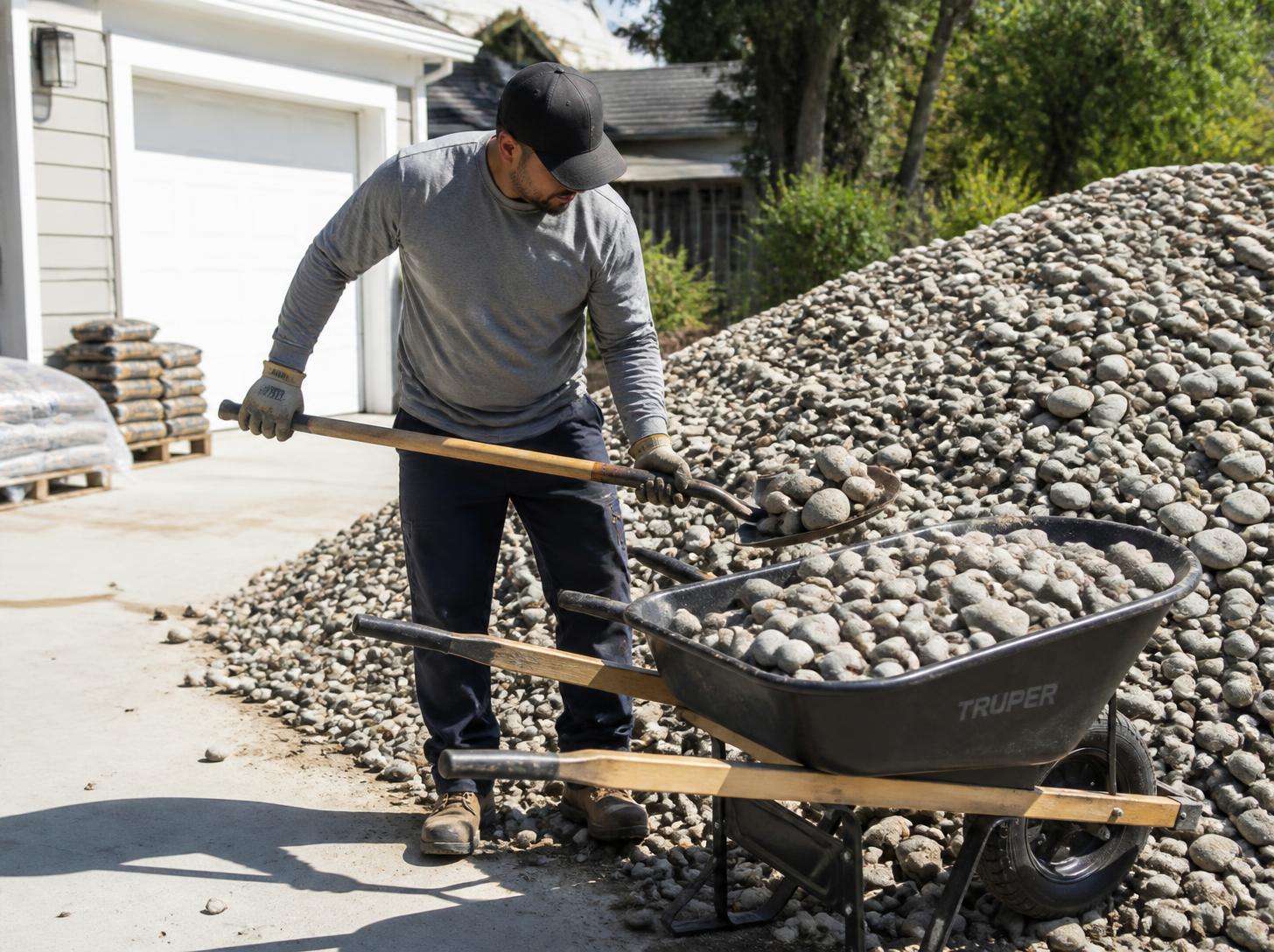
Labor typically runs $25 to $100 per ton, or roughly $50 to $100 per hour and it’s a larger share of a rock project than most homeowners expect. The reason is simple: river rock is heavy, and moving it is the job. One cubic yard is about 1.3 tons, which works out to roughly 25 to 30 wheelbarrow loads, each shoveled, wheeled, and dumped by hand. A modest 300-square-foot bed at 3 inches is around 4 tons eight thousand pounds of stone to move.
That’s why the single biggest thing that moves your labor cost isn’t the stone it’s access:
- Easy access (bulk pile dropped right next to the bed): lowest labor cost.
- Hard access (backyard behind a fence, up stairs, tight side yard, no machine access): labor climbs fast, because every ton is carried farther by hand.
- Prep work (excavation, removing old material, hauling debris): adds labor on top of spreading.
When you get a quote, access is often the hidden reason two bids differ. A bed a skid steer can reach costs far less to fill than the same bed a wheelbarrow has to reach one load at a time.
Want a real number instead of a range? Access and depth decide the price so a quick look at your yard is the only accurate quote. Get a free river rock quote or call (913) 829-4949.
River rock installation cost by project size
Most people think in beds, not tons, so here’s what typical Kansas projects run all-in:
| Project size | Typical installed cost | Roughly |
|---|---|---|
| Small bed (100–300 sq ft) | $300 – $900 | ~2–4 tons of stone |
| Medium project (300–800 sq ft) | $900 – $1,500 | ~4–10 tons |
| Large / multiple areas (800+ sq ft) | $1,500 – $3,000+ | 10+ tons |
| Per square foot (any size) | $2.00 – $4.25 installed | At standard depth |
Add-ons change these totals: bed excavation, steel edging (to keep rock out of the lawn), and woven landscape fabric (essential under rock in our clay so stone doesn’t sink) each add cost, but they’re what make the installation last. A quote that skips edging and fabric isn’t cheaper it’s a bed that’ll spill into your lawn and sink into the clay within a couple of years.
What drives your river rock cost up or down
Two rock projects on the same street can be priced very differently. The main factors:
- Area size and depth more square footage and greater depth mean more stone and labor.
- Stone type standard river rock is cheapest; colored, polished, or imported stone runs 20–40% more.
- Access the biggest labor swing, as covered above; machine-accessible beds cost far less than hand-carry ones.
- Prep excavation, removing sod or old mulch, and hauling debris add labor.
- Edging and fabric steel edging and woven geotextile add cost but are worth it for a lasting result.
- Delivery $50–$200 per load depending on distance and quantity.
How to save money on river rock installation
- Buy bulk, never bagged. This is the single biggest saving bagged rock costs roughly three to eight times more per cubic yard than bulk delivery. Bagged only makes sense for a tiny patch.
- Order 10+ cubic yards for a discount. Bulk orders often earn 10–20% off, and splitting a delivery with a neighbor can get you there.
- Give the crew good access. If you can clear a path for a machine or let the pile drop close to the bed, you cut the most expensive part the hand-carrying.
- Choose standard stone. Unless a specialty color matters to you, standard river rock delivers the same function at the lower end of the range.
- Order in the off-season. Late fall and winter avoid peak-demand pricing.
- Make sure rock is the right call first. Rock is permanent and costly to remove, so confirm whether rock or mulch is right for the bed before committing the cheapest rock is the rock you didn’t put in the wrong place.
Should you DIY to save on labor?
Since labor is a real share of the cost, DIY can save money on paper. The catch is the weight: doing it yourself means personally moving those tons of stone, one wheelbarrow at a time, usually in Kansas heat. For a small, accessible bed, that’s a legitimate weekend project and a real saving. For a large project or a hard-access yard, the labor you’re “saving” is exactly the brutal part, and many DIY rock projects stall with half the pile still in the driveway. If you do go DIY, the full step-by-step on installing river rock walks through doing it right excavation, edging, and fabric included, since skipping those is what turns a cheap job into a redo.
Skip the tonnage and the wheelbarrows. Get a free river rock quote or call (913) 829-4949 delivered, excavated, edged, and spread in a day.
Why Olathe homeowners choose MW Lawn & Landscape
River rock is priced by weight and labor, and the value is in getting the invisible parts right after 25+ years in Johnson County, that’s where we earn it:
- Fair, itemized pricing. Material, delivery, and labor spelled out plus edging and fabric so you can see exactly what you’re paying for and compare bids honestly.
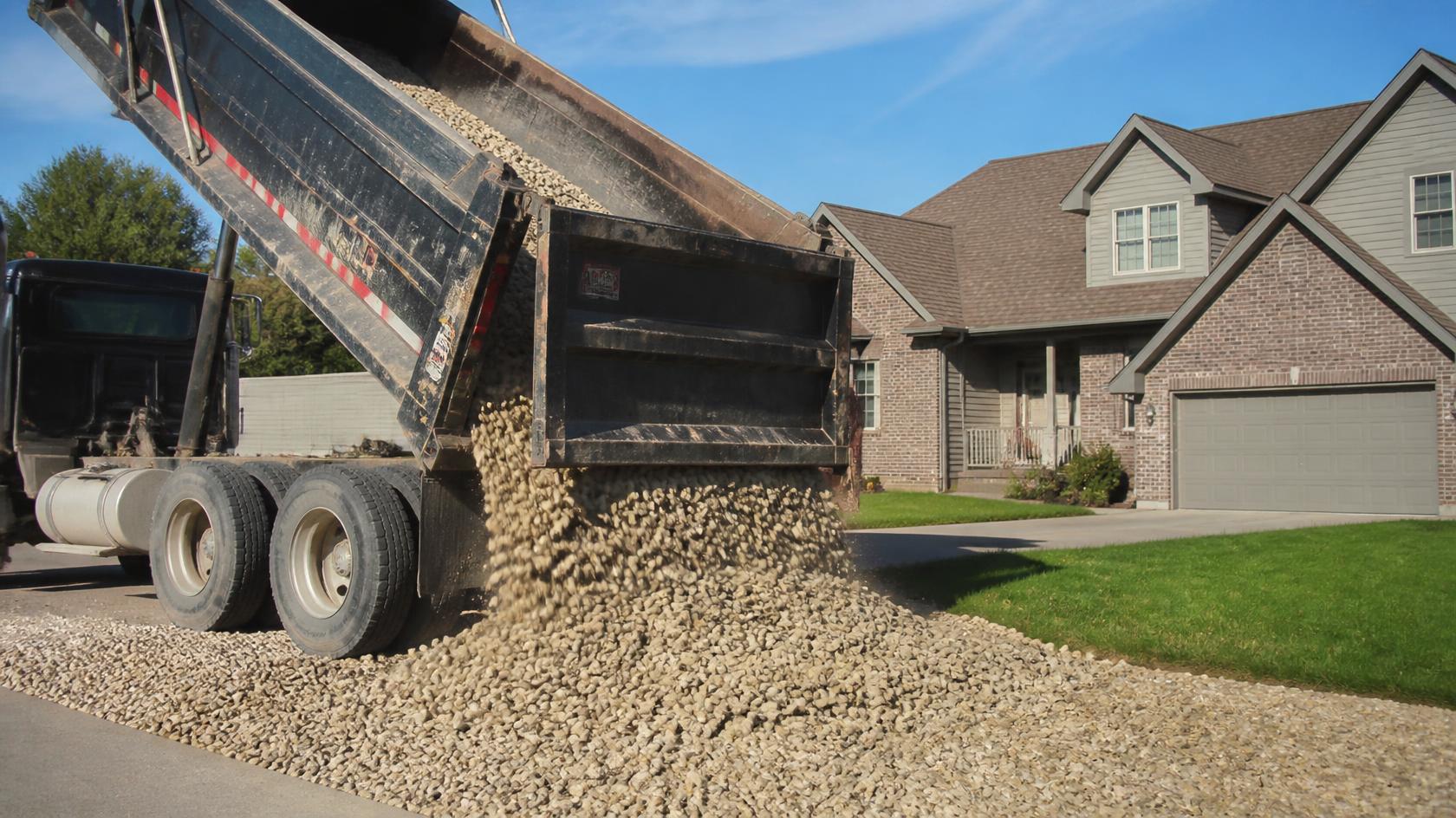
- Bulk pricing and the right equipment. We deliver in bulk at better rates than bagged, and move the tonnage with machines where access allows which keeps your labor cost down.
- Built to last. Proper excavation, steel edging, and woven fabric for our clay, so the bed stays put and doesn’t sink the difference between a cheap install and a lasting one.
- Honest recommendations. We’ll tell you if a bed should be mulch instead, and fold rock into ongoing landscape maintenance or a larger project when it makes sense.
- Family-owned, licensed, and insured local accountability on work built to last decades (about as long as your rock).
Serving Olathe, Overland Park, and Johnson County
MW Lawn & Landscape installs river rock beds, borders, splash zones, and dry creek beds across Olathe, Overland Park, and the surrounding Johnson County communities with the excavation, edging, and fabric our clay soil demands. Every yard prices differently based on size, stone, and access, so rather than quoting from a chart, we’ll walk your property and give you one clear, itemized number.
Frequently Asked Questions
How much does it cost to install river rock?
In 2026, professional river rock installation runs about $2.00 to $4.25 per square foot installed, or roughly $365 to $1,500 for a typical project depending on size. Material costs $45 to $130 per ton (or $50 to $160 per cubic yard) and labor adds $25 to $100 per ton. Your exact price depends on the area size, stone type, depth, and how easy it is to access the beds.
What is the labor cost for river rock?
Labor typically runs $25 to $100 per ton, or roughly $50 to $100 per hour, and it’s a significant share of a rock project because the stone is so heavy to move one cubic yard is about 1.3 tons. The biggest factor is access: a bed a machine or wheelbarrow can reach easily costs far less in labor than one that requires hand-carrying stone through a tight or fenced yard.
How much does river rock cost per square foot?
All-in installed cost is about $2.00 to $4.25 per square foot, depending mainly on depth: roughly $2.00 to $2.75 at a 2-inch depth for paths and borders, $2.75 to $3.50 at the standard 3 inches for beds, and $3.50 to $4.25 or more at 4 inches for drainage areas. Premium or polished stone pushes toward the top of the range.
How much river rock do I need?
One ton covers about 100 square feet at 2 inches, 70 at 3 inches, or 50 at 4 inches; one cubic yard covers about 160, 110, or 80 square feet at those depths. Multiply your bed’s square footage by the depth in inches, and use these figures to estimate tonnage then add about 10 to 15 percent for waste and settling.
Is bagged or bulk river rock cheaper?
Bulk is dramatically cheaper bagged river rock costs roughly three to eight times more per cubic yard than bulk delivery. For anything larger than a very small patch, bulk wins clearly even after the delivery fee. Bagged only makes sense when you need a tiny amount and a bulk delivery minimum would be overkill.
Why is river rock installation labor so expensive?
Because moving the rock is the job, and rock is heavy a single cubic yard weighs about 1.3 tons, or roughly 25 to 30 wheelbarrow loads. A typical 300-square-foot bed can involve moving four tons of stone by hand or machine. The more difficult the access to your beds, the more of that weight must be carried by hand, which drives the labor cost up.
Does river rock installation include edging and fabric?
It should, for a lasting result. Steel edging keeps the rock in the bed and out of your lawn, and woven landscape fabric under the rock stops it from sinking into clay soil. Both add to the cost but are what make the installation last. A quote that leaves them out isn’t truly cheaper it’s a bed that will spill and sink within a couple of years.
Is river rock worth the cost compared to mulch?
It depends on the bed. River rock costs more upfront but never needs replacing, so over a decade it often costs less than repeated mulch refreshes and breaks even in about seven to ten years. But rock radiates heat and doesn’t feed the soil, so it’s not ideal in planting beds. It’s worth comparing rock and mulch for your specific area before deciding.